Und dann auf "Zum Home-Bildschirm [+]".

Stöbern
genialokal zum Startbildschirm hinzufügen
Installieren Sie die genialokal App auf Ihrem Startbildschirm für einen schnellen Zugriff und eine komfortable Nutzung.
Installieren Sie die genialokal App auf Ihrem Startbildschirm für einen schnellen Zugriff und eine komfortable Nutzung.
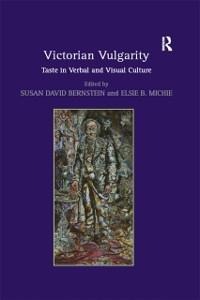
Originally describing language use and class position, vulgarity became, over the course of the nineteenth century, a word with wider social implications. Variously associated with behavior, the possession of wealth, different races, sexuality and gender, the objects displayed in homes, and ways of thinking and feeling, vulgarity suggested matters of style, taste, and comportment. This collection examines the diverse ramifications of vulgarity in the four areas where it was most discussed in the nineteenth century: language use, changing social spaces, the emerging middle classes, and visual art. Exploring the dynamics of the term as revealed in dictionaries and grammars; Mayhew's London Labour and the London Poor; fiction by Dickens, Eliot, Gissing, and Trollope; essays, journalism, art, and art reviews, the contributors bring their formidable analytical skills to bear on this enticing and divisive concept. Taken together, these essays urge readers to consider the implications of vulgarity's troubled history for today's writers, critics, and artists.
Susan David Bernstein is Professor of English at the University of Wisconsin, Madison. Elsie B. Mitchie is Associate Professor of English at Louisiana State University, USA.
Contents: Introduction: varieties of vulgarity, Elsie B. Mitchie and Susan David Bernstein; Part I Vulgar Words: The vulgarity of elegance: social mobility, middle-class diction, and the Victorian novel, Beth Newman; Wulgarity and witality: on making a spectacle of oneself in Pickwick, James Buzard; Rudeness, slang, and obscenity: working-class politics in London Labour and The London Poor, Ellen Bayuk Rosenman. Part II Common Places: Vulgar Christianity, Elsie B. Michie; Breeding, education, and vulgarity: George Gissing and the lower-middle classes, Rosemary Jann; Too common readers at the British Museum, Susan David Bernstein; 'A religion of pots and pans': Jewish materialism and spiritual materiality in Israel Zangwill's Children of the Ghetto, Meri-Jane Rochelson. Part III Vulgar Middles: Gross vulgarity and the domestic ideal: Anthony Trollope's The Small House at Allington, Carolyn Dever; 'It went through and through me like an electric shock': celebrating vulgar female desire and the realist novel in Trollope's Ayala's Angel, Deborah Denenholz Morse; Vulgarity, stupidity, and worldliness in Middlemarch, Joseph Litvak. Part IV Visual Vulgarity: Poison books and moving pictures: vulgarity in The Picture of Dorian Gray, Ronald R. Thomas; James Tissot's 'coloured photographs of vulgar society', Nancy Rose Marshall; Vulgar India from nabobs to nationalism: imperial reversals and the mediation of art, Julie F. Codell; Afterword: how Victorian was vulgarity?, John Kucich; Index.
Dieses eBook wird im PDF-Format geliefert und ist mit einem Adobe Kopierschutz (DRM) versehen. Sie können dieses eBook mit allen Geräten lesen, die das PDF-Format und den Adobe Kopierschutz (DRM) unterstützen.
Zum Beispiel mit den folgenden Geräten:
• tolino Reader
Laden Sie das eBook direkt über den Reader-Shop auf dem tolino herunter oder übertragen Sie das eBook auf Ihren tolino mit einer kostenlosen Software wie beispielsweise Adobe Digital Editions.
• Sony Reader & andere eBook Reader
Laden Sie das eBook direkt über den Reader-Shop herunter oder übertragen Sie das eBook mit der kostenlosen Software Sony READER FOR PC/Mac oder Adobe Digital Editions auf ein Standard-Lesegeräte mit epub- und Adobe DRM-Unterstützung.
• Tablets & Smartphones
Möchten Sie dieses eBook auf Ihrem Smartphone oder Tablet lesen, finden Sie hier unsere kostenlose Lese-App für iPhone/iPad und Android Smartphone/Tablets.
• PC & Mac
Lesen Sie das eBook direkt nach dem Herunterladen mit einer kostenlosen Lesesoftware, beispielsweise Adobe Digital Editions, Sony READER FOR PC/Mac oder direkt über Ihre eBook-Bibliothek in Ihrem Konto unter „Meine eBooks“ - „online lesen“.
Schalten Sie das eBook mit Ihrer persönlichen Adobe ID auf bis zu sechs Geräten gleichzeitig frei.
Bitte beachten Sie, dass die Kindle-Geräte das Format nicht unterstützen und dieses eBook somit nicht auf Kindle-Geräten lesbar ist.