Und dann auf "Zum Home-Bildschirm [+]".

Stöbern
genialokal zum Startbildschirm hinzufügen
Installieren Sie die genialokal App auf Ihrem Startbildschirm für einen schnellen Zugriff und eine komfortable Nutzung.
Installieren Sie die genialokal App auf Ihrem Startbildschirm für einen schnellen Zugriff und eine komfortable Nutzung.
Ihr gewünschter Artikel ist in 0 Buchhandlungen vorrätig - wählen Sie hier eine Buchhandlung in Ihrer Nähe aus:

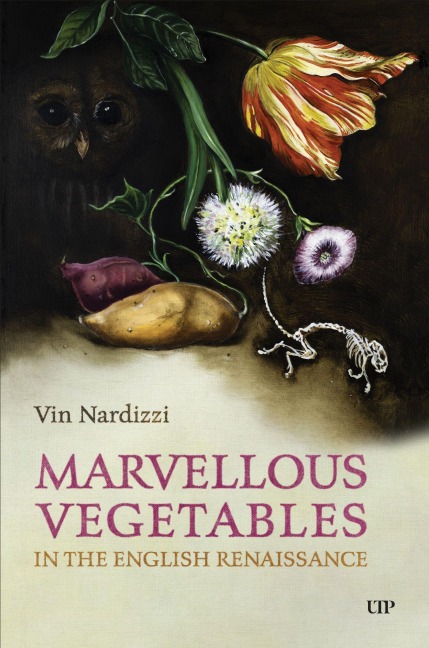
John Gerard’s natural history of plants, The Herball (1597), is considered a failure in the history of science. Despite this reputation, it has endured as an aesthetic resource. Its illustrations were used as needlework patterns, and strewn across its pages are extracts of classical poetry, including Ovid’s Metamorphoses, that delight and instruct. It is little wonder that early modern poets, like Shakespeare and Milton, gathered inspiration from this storehouse of plants. In Marvellous Vegetables in the English Renaissance, Vin Nardizzi offers a reparative reading of Gerard’s “failed” text, particularly its chapters on leeks, laurels, tulips, and potatoes. Through a series of experiments in speculative natural history, which require an analysis of both word and image, Nardizzi distills The Herball’s logic and poetics, its distinctions and infelicities, and demonstrates the entanglements of humans and plants at the core of Shakespeare’s plays. Exploring these “cross-kingdom” encounters, Nardizzi contributes to the burgeoning field of queer ecologies by treating plant natural history as a serious intellectual resource for writing a counter-history of embodiment at the turn of the seventeenth century. All we need do, Nardizzi proposes, is smell the flowers.
Vin Nardizzi is a professor in the Department of English Language and Literatures at the University of British Columbia.
List of Illustrations Acknowledgments Introduction Part One: Leeks 1. Like a Leek: Transplant Figures in Natural History, the Leek Family, and the Porrophagus of Henry V 2. As Green as Leeks: Vegetable Blazons, Leaky Eyes, and the Transplant Poetics of Arcimboldo and Shakespeare Part Two: Laurels 3. In Pursuit of Laurels: Description, Ovid’s Plant-Blazons, and Les Mains of Daphne 4. In Praise of Daphnes: Philodendrism, Two Elizabethan Laurels, and “that well timber’d body” Part Three: Tulips 5. Tulips (I): Counting Infinite Kinds, Nature’s Face-Paintings, and Two Tulip Miniatures 6. Tulips (II): Tracking Two Turban Errors, Bellicose Flowers, and Three Talkative Tulips Part Four: Potatoes 7. The Real Potatoes of Peru: Gerard’s Signature Plant, Mixed Roots, and the Golden Potatoes of The Merry Wives of Windsor Epilogue: Gerard’s “Fatal Crime”: Barnacle Geese, the Most Marvellous of All Vegetables Notes Bibliography Index