Und dann auf "Zum Home-Bildschirm [+]".

Stöbern
genialokal zum Startbildschirm hinzufügen
Installieren Sie die genialokal App auf Ihrem Startbildschirm für einen schnellen Zugriff und eine komfortable Nutzung.
Installieren Sie die genialokal App auf Ihrem Startbildschirm für einen schnellen Zugriff und eine komfortable Nutzung.



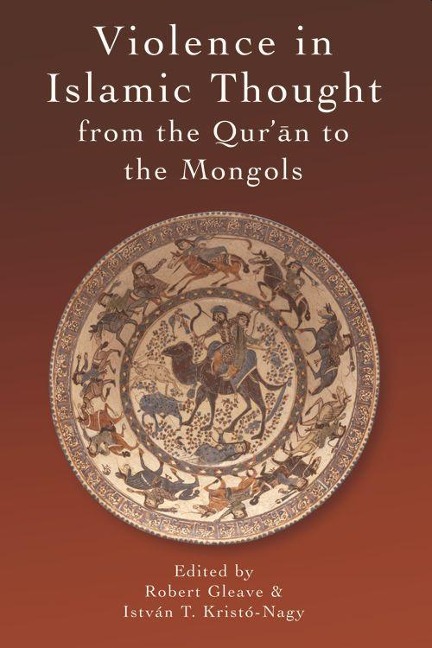
How was violence justified in early Islam? What role did violent actions play in the formation and maintenance of the Muslim political order? How did Muslim thinkers view the origins and acceptability of violence? These questions are addressed by an international range of eminent authors through both general accounts of types of violence and detailed case studies of violent acts drawn from the early Islamic sources. Violence is understood, widely, to include jiha¯d, state repressions and rebellions, and also more personally directed violence against victims (women, animals, children, slaves) and criminals. By understanding the early development of Muslim thinking around violence, our comprehension of subsequent trends in Islamic thought, during the medieval period and up to the modern day, become clearer.
Robert Gleave was Director of the Legitimate and Illegitimate Violence Project 2010-2013, and is Professor of Arabic Studies at the University of Exeter. He specializes in Islamic legal theory (uṣūl al-fiqh) and Shīʿī legal thought. His most recent publications include Islam and Literalism: Literal Meaning and Interpretation in Islamic Legal Theory (EUP, 2012) István Kristó-Nagy is a Lecturer in Arab and Islamic Studies at the University of Exeter. He is the author of La pensée d'Ibn al-Muqaffaʽ (2013).
1. Violence, Our Inherent Heritage: Introduction, Istvan T. Kristo-Nagy and Robert Gleave Section I. Jihaad and Conquest: Attitudes to Violence against the External Enemies of the Muslim Community 2. The Question of Divine Help in the Jihad, Dominique Urvoy 3. Reading the Qur'an on jihad: two early exegetical texts, Andrew Rippin 4. Ibn al-Mubarak's Kitab al-Jihad and early renunciant literature, Christopher Melchert 5. Shaping Memory of the Conquests: The Case of Tustar, Sarah Bowen Savant Section II. The Challenged Establishment: Attitudes to Violence against the State and in its Defence within the Muslim Community 6. Who Instigated Violence: A Rebelling Devil or a Vengeful God?, Istvan T. Kristo-Nagy 7. Attitudes to the use of fire in executions in late antiquity and early Islam: the burning of heretics and rebels in late Umayyad Iraq, Andrew Marsham 8. 'Abbasid State Violence and the Execution of Ibn 'A'isha, John A. Nawas 9. The Sultan and the Defiant Prince in Hunting Competition: Questions of legitimacy in hunting episodes of T-abaristan, Miklos Sarkozy Section III. Lust and Flesh: Attitudes to Violence against the Defenceless, Intra-Communitarian Violence by Non-State Actors 10. Violence against Women in Andalusi Historical Sources (third/ninth-seventh/thirteenth centuries), Maribel Fierro 11. Sexual Violence in Verse: The Case of Ji'thin, al-Farazdaq's sister, Geert Jan van Gelder 12. Bandits, Michael Cooperson 13. Eating People Is Wrong: Some Eyewitness Accounts of Cannibalism in Arabic Sources, Zoltan Szombathy 14. Animals Would Follow Shafi'ism: Legitimate and illegitimate violence to animals in Medieval Islamic Thought, Sarra Tlili Bibliography Index