Und dann auf "Zum Home-Bildschirm [+]".

Stöbern
genialokal zum Startbildschirm hinzufügen
Installieren Sie die genialokal App auf Ihrem Startbildschirm für einen schnellen Zugriff und eine komfortable Nutzung.
Installieren Sie die genialokal App auf Ihrem Startbildschirm für einen schnellen Zugriff und eine komfortable Nutzung.
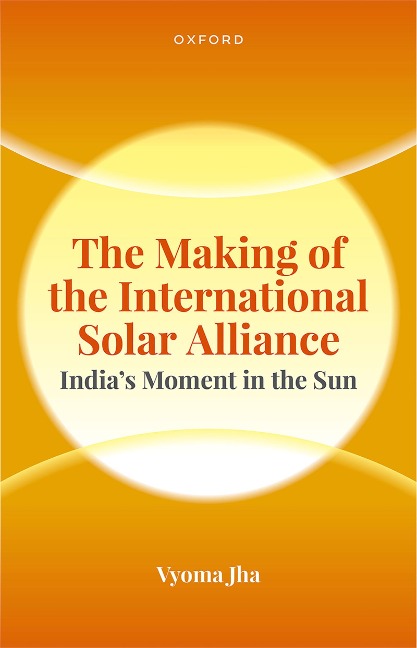
This book is the first empirical account on the making of the International Solar Alliance (ISA). Announced jointly by India and France on the first day of the Paris climate talks in 2015, the ISA was conceived as a coalition of 'solar-rich' countries located between the Tropic of Cancer and the Tropic of Capricorn for optimal absorption of the sun's rays. Crucially, these 'solar-rich' countries are developing countries that witness almost three hundred sunny days in a year but face major gaps in the deployment of solar energy. In less than two years, the ISA-led by India and backed primarily by developing countries-became a legal entity. With no perceivable competitive advantage in solar manufacturing or technologies, what explains India's relative success in bringing together countries to form a new international organization focused on solar energy? Why did India insist on a treaty structure for the ISA? What are the transaction costs of bringing the 'solar rich' countries vis-à-vis the 'solar poor' countries on board? What was the role of France in the treaty-making process? Responding to these questions, the book draws on the political economy approach to analyse the motivations for India to steer a new treaty-based international organization. It presents the empirical evidence and arguments using three frames: process, politics, and players. Ultimately, the book illustrates a new kind of Indian economic diplomacy, making the ISA the first deliberate instrument of India's foreign policy on climate change and energy.
Vyoma Jha is a socio-legal scholar and completed her doctoral degree in law and political economy from Stanford University. She holds law degrees from Stanford Law School, New York University School of Law, and National Law University, Jodhpur. She writes and teaches on issues of climate change law and policy; international economic law and its linkages with climate change; and India's energy foreign policy. She is a Senior Advocate for the India Program at the Natural Resources Defense Council (NRDC).
- 1: Introduction - 2: Channeling the Sun: Political Economy of Solar Energy in India - 3: Process: India, International Rulemaking, and the International Solar Alliance - 4: Politics: India's Political Leadership and Climate Change - 5: Players: The Role of India's Foreign Policy in Shaping a New Global Identity - 6: Conclusion
Dieses eBook wird im PDF-Format geliefert und ist mit einem Adobe Kopierschutz (DRM) versehen. Sie können dieses eBook mit allen Geräten lesen, die das PDF-Format und den Adobe Kopierschutz (DRM) unterstützen.
Zum Beispiel mit den folgenden Geräten:
• tolino Reader
Laden Sie das eBook direkt über den Reader-Shop auf dem tolino herunter oder übertragen Sie das eBook auf Ihren tolino mit einer kostenlosen Software wie beispielsweise Adobe Digital Editions.
• Sony Reader & andere eBook Reader
Laden Sie das eBook direkt über den Reader-Shop herunter oder übertragen Sie das eBook mit der kostenlosen Software Sony READER FOR PC/Mac oder Adobe Digital Editions auf ein Standard-Lesegeräte mit epub- und Adobe DRM-Unterstützung.
• Tablets & Smartphones
Möchten Sie dieses eBook auf Ihrem Smartphone oder Tablet lesen, finden Sie hier unsere kostenlose Lese-App für iPhone/iPad und Android Smartphone/Tablets.
• PC & Mac
Lesen Sie das eBook direkt nach dem Herunterladen mit einer kostenlosen Lesesoftware, beispielsweise Adobe Digital Editions, Sony READER FOR PC/Mac oder direkt über Ihre eBook-Bibliothek in Ihrem Konto unter „Meine eBooks“ - „online lesen“.
Schalten Sie das eBook mit Ihrer persönlichen Adobe ID auf bis zu sechs Geräten gleichzeitig frei.
Bitte beachten Sie, dass die Kindle-Geräte das Format nicht unterstützen und dieses eBook somit nicht auf Kindle-Geräten lesbar ist.