Und dann auf "Zum Home-Bildschirm [+]".

Stöbern
genialokal zum Startbildschirm hinzufügen
Installieren Sie die genialokal App auf Ihrem Startbildschirm für einen schnellen Zugriff und eine komfortable Nutzung.
Installieren Sie die genialokal App auf Ihrem Startbildschirm für einen schnellen Zugriff und eine komfortable Nutzung.
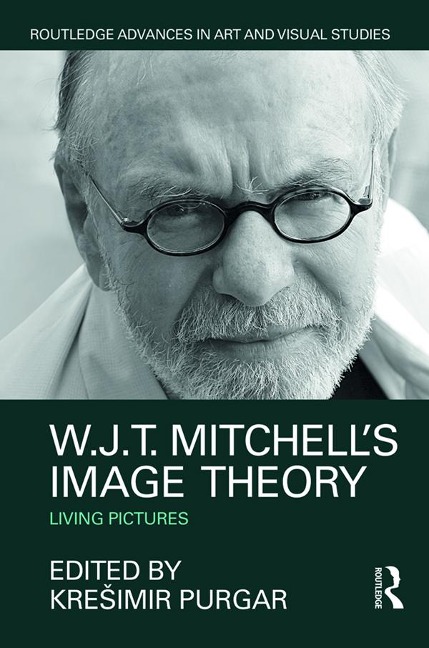
W.J.T. Mitchell - one of the founders of visual studies - has been at the forefront of many disciplines such as iconology, art history and media studies. His concept of the pictorial turn is known worldwide for having set new philosophical paradigms in dealing with our vernacular visual world. This book will help both students and seasoned scholars to understand key terms in visual studies - pictorial turn, metapictures, literary iconology, image/text, biopictures or living pictures, among many others - while systematically presenting the work of Mitchell as one of the discipline's founders and most prominent figures. As a special feature, the book includes three comprehensive, authoritative and theoretically relevant interviews with Mitchell that focus on different stages of development of visual studies and critical iconology.
KreSimir Purgar is Assistant Professor of Visual Studies at the University of Zagreb, Croatia. Among his recent titles is the co-edited volume Theorizing Images (2016), as well as the articles "Coming to Terms with Images: Visual Studies and Beyond" (2016) and "What is not an Image (Anymore)? Iconic Difference, Immersion, and Iconic Simultaneity in the Age of Screens" (2015).
Introduction KreSimir Purgar Part 1: Towards a Critical Iconology 1. The Changing Patterns of Iconology: Seven Questions to Mitchell from the 20th Century Timothy Erwin 2. What is an Image? W.J.T. Mitchell's Picturing Theory Francesco Gori 3. Post-Structuralist Iconology: Genealogical and Historical Concerns of Mitchell's Image Science György E. Szonyi 4. Iconology as Cultural Symptomatology: Dinosaurs, Clones and the Golden Calf in Mitchell's Image Theory KreSimir Purgar 5. Words and Pictures in the Age of the Image: An Interview with W.J.T. Mitchell Andrew McNamara Part II: (Post)Disciplinary Context 6. From Image/Text to Biopictures: Key Concepts in W.J.T. Mitchell's Image Theory Michele Cometa 7. The Birth of the Discipline: W.J.T. Mitchell and the Chicago School of Visual Studies Ian Verstegen 8. What Discipline? On Mitchell's "Interdisciplinarity" and German Medienwissenschaft Jens Schröter 9. Mitchell and Boehm - A Dialogue: Image Science in the European Context Luca Vargiu 10. Images and their Incarnations: An Interview with W.J.T. Mitchell Asbjørn Grønstad, Øyvind Vågnes Part III: Interpretive Readings 11. What Do Photographs Want? Mitchell's Theory of Photography from the Camera Obscura to the Networked Lens Thomas Stubblefield 12. The Eyes Have Ears: Sound in W.J.T. Mitchell's Pictures from Paragone to Occupy Wall Street Hannah Higgins 13. Living Pictures of Democracy: W.J.T. Mitchell's Iconology as Political Philosophy Maxime Boidy 14. Showing Showing: Reading Mitchell's "Queer" Metapictures John Paul Ricco 15. After the Pictorial Turn: An Interview with W.J.T. Mitchell KreSimir Purgar KreSimir Purgar
Dieses eBook wird im PDF-Format geliefert und ist mit einem Adobe Kopierschutz (DRM) versehen. Sie können dieses eBook mit allen Geräten lesen, die das PDF-Format und den Adobe Kopierschutz (DRM) unterstützen.
Zum Beispiel mit den folgenden Geräten:
• tolino Reader
Laden Sie das eBook direkt über den Reader-Shop auf dem tolino herunter oder übertragen Sie das eBook auf Ihren tolino mit einer kostenlosen Software wie beispielsweise Adobe Digital Editions.
• Sony Reader & andere eBook Reader
Laden Sie das eBook direkt über den Reader-Shop herunter oder übertragen Sie das eBook mit der kostenlosen Software Sony READER FOR PC/Mac oder Adobe Digital Editions auf ein Standard-Lesegeräte mit epub- und Adobe DRM-Unterstützung.
• Tablets & Smartphones
Möchten Sie dieses eBook auf Ihrem Smartphone oder Tablet lesen, finden Sie hier unsere kostenlose Lese-App für iPhone/iPad und Android Smartphone/Tablets.
• PC & Mac
Lesen Sie das eBook direkt nach dem Herunterladen mit einer kostenlosen Lesesoftware, beispielsweise Adobe Digital Editions, Sony READER FOR PC/Mac oder direkt über Ihre eBook-Bibliothek in Ihrem Konto unter „Meine eBooks“ - „online lesen“.
Schalten Sie das eBook mit Ihrer persönlichen Adobe ID auf bis zu sechs Geräten gleichzeitig frei.
Bitte beachten Sie, dass die Kindle-Geräte das Format nicht unterstützen und dieses eBook somit nicht auf Kindle-Geräten lesbar ist.