Stöbern
genialokal zum Startbildschirm hinzufügen
Installieren Sie die genialokal App auf Ihrem Startbildschirm für einen schnellen Zugriff und eine komfortable Nutzung.
Installieren Sie die genialokal App auf Ihrem Startbildschirm für einen schnellen Zugriff und eine komfortable Nutzung.
Tippen Sie einfach auf Teilen:
 Und dann auf "Zum Home-Bildschirm [+]".

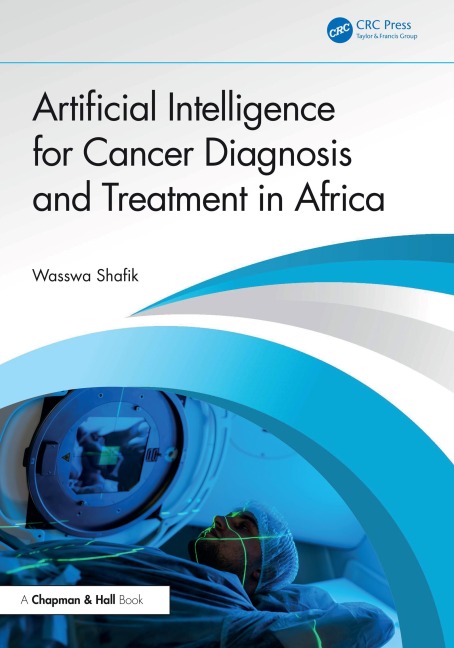
This book provides a comprehensive exploration of how artificial intelligence and digital health innovations are reshaping cancer care across Africa. Beginning with the foundational epidemiological and health system realities of the continent, it examines Africa's readiness for oncology transformation and the ethical, legal, and social considerations of adopting AI in cancer diagnosis and treatment. The book presents advanced applications, from deep learning-driven imaging and precision oncology to telepathology, mobile health platforms, and digital tools for survivorship, relapse prediction, and palliative care. It further highlights strategies for scaling AI systems, strengthening rural health infrastructure, fostering public-private partnerships, and building a skilled workforce equipped for the next era of oncology. Designed as a timely resource for clinicians, cancer researchers, AI scientists, digital health innovators, public health professionals, policymakers, medical educators, and postgraduate students, this work bridges cutting-edge technology with urgent public health needs. It offers actionable frameworks, contextual adaptations for low-resource settings, and a forward-looking vision for equitable, AI-enabled cancer care in Africa. This book serves as both a guide and catalyst for sustainable, inclusive, and technologically empowered oncology systems across the continent. Wasswa Shafik (Member, IEEE) is a Computer Scientist, Information Technologist, and Educator, serving as Research Director at the Dig Connectivity Research Laboratory (DCRLab), Kampala, Uganda. He earned a Bachelor's degree in Information Technology from Ndejje University (Uganda), a Master's in Information Technology Engineering (Communication and Computer Networks) from Yazd University (Iran), and a PhD in Digital Science (Computer Science) from the Universiti Brunei Darussalam (Brunei Darussalam). His research focuses on developing computationally and statistically efficient models and algorithms for complex artificial intelligence and machine learning challenges to support a sustainable future. His interests span Applied AI, Deep Learning, Smart Agriculture, Computer Vision, Digital Health and Education, Ecological Informatics, and Sustainable Computing. Shafik has authored, edited, and co-edited numerous books and published extensively in peer-reviewed journals, book chapters, and IEEE international conferences. He has taught and supported academic programs in Mathematics for Data Science, Advanced Topics in Computing, Advanced Algorithms, and Systems Performance and Evaluation. His professional experience includes roles in research, data management, and leadership across organizations such as PSI, TechnoServe, and Asmaah Charity Organisation.
Wasswa Shafik (Member, IEEE) is a Computer Scientist, Information Technologist, and Educator, serving as Research Director at the Dig Connectivity Research Laboratory (DCRLab), Kampala, Uganda. He earned a Bachelor's degree in Information Technology from Ndejje University (Uganda), a Master's in Information Technology Engineering (Communication and Computer Networks) from Yazd University (Iran), and a PhD in Digital Science (Computer Science) from the Universiti Brunei Darussalam (Brunei Darussalam). His research focuses on developing computationally and statistically efficient models and algorithms for complex artificial intelligence and machine learning challenges to support a sustainable future. His interests span Applied AI, Deep Learning, Smart Agriculture, Computer Vision, Digital Health and Education, Ecological Informatics, and Sustainable Computing. Shafik has authored, edited, and co-edited numerous books and published extensively in peer-reviewed journals, book chapters, and IEEE international conferences. He has taught and supported academic programs in Mathematics for Data Science, Advanced Topics in Computing, Advanced Algorithms, and Systems Performance and Evaluation. His professional experience includes roles in research, data management, and leadership across organizations such as PSI, TechnoServe, and Asmaah Charity Organisation.
1. The Epidemiological Landscape of Cancer in Africa: Challenges and Opportunities 2. Digital Health Ecosystems in Africa: Readiness for Oncology Transformation 3. Artificial Intelligence in Global Oncology: Relevance and Adaptation to African Contexts 4. Ethical, Legal, and Social Implications of Artificial Intelligence in African Cancer Diagnosis and Care 5. Data Governance, Interoperability, and Equity in Digital Health Systems 6. Artificial Intelligence-Driven Cancer Imaging and Diagnostics: Deep Learning for Early Detection 7. Natural Language Processing and Clinical Decision Support in Oncology 8. Telepathology, Teleradiology, and Remote Diagnostics in Low-Resource African Settings 9. Precision Oncology in Africa: Genomic Data, Artificial Intelligence Algorithms, and Local Adaptation 10. Integrating Artificial Intelligence into National Cancer Treatment Guidelines and Protocols 11. Artificial Intelligence and Mobile Health Platforms for Cancer Treatment Monitoring and Adherence 12. Digital Navigation Tools for Cancer Survivorship and Follow-Up Care 13. Predictive Analytics for Managing Cancer Relapse and Long-Term Risk 14. Artificial Intelligence in Palliative Care: Personalizing Pain Management and End-of-Life Support 15. Building Resilient Digital Infrastructure for Cancer Care in Rural and Underserved Areas 16. Scaling Artificial Intelligence for Oncology Across African Health Systems: Frameworks and Best Practices 17. Public-Private Partnerships for Artificial Intelligence and Digital Health Integration in Cancer Care 18. Measuring Impact: Evaluation Metrics and Health Outcomes for Artificial Intelligence Interventions 19. Capacity Building, Training, and Workforce Development in Artificial Intelligence for Cancer Care 20. Future Horizons: Emerging Trends, Innovations, and a Vision for Equitable Cancer Care in Africa