Und dann auf "Zum Home-Bildschirm [+]".

Stöbern
genialokal zum Startbildschirm hinzufügen
Installieren Sie die genialokal App auf Ihrem Startbildschirm für einen schnellen Zugriff und eine komfortable Nutzung.
Installieren Sie die genialokal App auf Ihrem Startbildschirm für einen schnellen Zugriff und eine komfortable Nutzung.
Ihr gewünschter Artikel ist in 0 Buchhandlungen vorrätig - wählen Sie hier eine Buchhandlung in Ihrer Nähe aus:

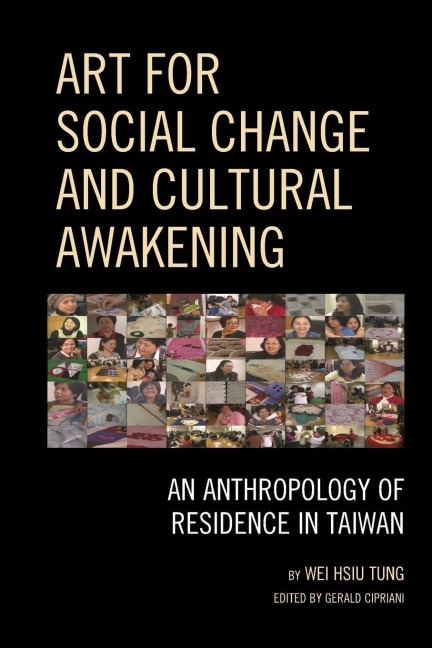
Artistic residency has become widely adopted in Western countries while only recently having become popular and well-supported within Taiwan. This book explores the challenges that this form of art practice faced in contemporary Taiwan from the revocation of Martial Law in 1987 to the 2000s—arguably one of the most exciting periods in the sociocultural history of the island. Case studies show what is at stake politically, historically, and socially in artists’ endeavors to give shape to a sense of Taiwanese identity.
About the Author Wei Hsiu Tung was born and brought up in Kaohsiung, Taiwan. She studied art education at Warwick University and social anthropology of art at the Birmingham Institute of Art and Design, United Kingdom. She has been teaching the theory of art at National University of Tainan, Taiwan, and was in 2010-2011 Visiting Research Fellow in public art in the Sir John Cass Department of Art, Media and Design at London Metropolitan University. Her publications include "The Return of the Real': Art and Identity in Taiwan's Public Sphere" (2012). About the Editor Gerald Cipriani is professor at Kyushu University, Japan. He studied Western aesthetics in Leeds (LMU) and East Asian philosophy in London (SOAS). He has taught both in Europe and East Asia and was a British Academy Fellow at Kyoto University. His current writing focuses on dialogical aesthetics. He is the Chief Editor of Culture and Dialogue (Cambridge Scholars Publishing).
Table of Contents Acknowledgments Introduction Chapter 1: Art as Sociocultural Representation Chapter 2: Concepts and Practices in Artistic Residence Chapter 3: Art in Taiwan: The Quest for Identity Chapter 4: Artistic Residence in Taiwan Chapter 5: Towards a New Genre of Artistic Residence Conclusion Bibliography About the Authors