Und dann auf "Zum Home-Bildschirm [+]".

Stöbern
genialokal zum Startbildschirm hinzufügen
Installieren Sie die genialokal App auf Ihrem Startbildschirm für einen schnellen Zugriff und eine komfortable Nutzung.
Installieren Sie die genialokal App auf Ihrem Startbildschirm für einen schnellen Zugriff und eine komfortable Nutzung.
Ihr gewünschter Artikel ist in 0 Buchhandlungen vorrätig - wählen Sie hier eine Buchhandlung in Ihrer Nähe aus:

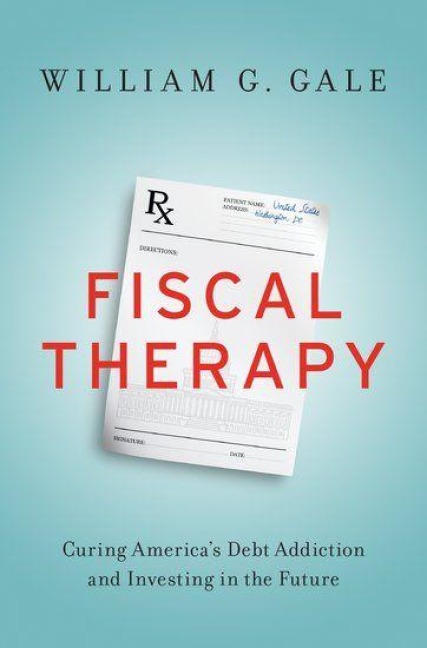
Fiscal Therapy takes a critical look at how and why the U.S. has run up its debt so high in the last four decades, what other countries have done to dig themselves out of this level of red ink, and what needs to be done now if the U.S. is to avoid bankruptcy in the 2050s and beyond.
William G. Gale is Arjay and Frances Miller Chair in Federal Economic Policy, Director, Retirement Security Project, and Co-Director, Urban Institute-Brookings Tax Policy Center, Brookings Institution
INTRODUCTION
1. Introduction
THE PROBLEM
2. Meet the federal budget - basics, vocabulary, etc.
3. The Budget Outlook -- where we are headed
4. Economic Effects of Public Debt - why where we are headed is a problem
5. What would a solution look like? The right target, the fiscal gap, timing and uncertainty
ON THE ROAD TO A SOLUTION
6. History - How did we get here? What do we learn from that?
7. Growth - Effect of tax and spending policy changes on growth
8. Fairness - How income distribution and economic mobility issues affect fiscal choices
9. Politics - Political factors and public opinion as they influence fiscal policy
SOLUTIONS
10. Health care
11. Social security and retirement
12. Defense and national security
13. The safety net and government investment
14. Income tax reform
15. Corporate/business tax reform
16. Consumption tax/value-added tax
17. Energy taxes/Carbon tax
18. Budget process
CONCLUSION
19. Conclusion