Und dann auf "Zum Home-Bildschirm [+]".

Stöbern
genialokal zum Startbildschirm hinzufügen
Installieren Sie die genialokal App auf Ihrem Startbildschirm für einen schnellen Zugriff und eine komfortable Nutzung.
Installieren Sie die genialokal App auf Ihrem Startbildschirm für einen schnellen Zugriff und eine komfortable Nutzung.

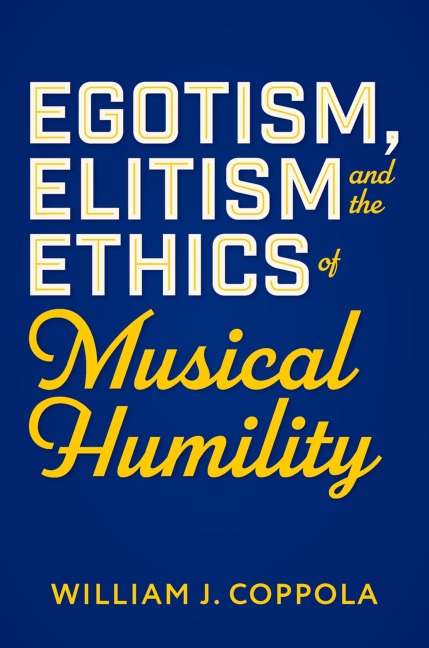
Egotism, Elitism, and the Ethics of Musical Humility examines how cultures of superiority pervade our musical lives and explores ways in which we can challenge them. Combining philosophical inquiry, empirical research, and pop culture examples, William J. Coppola takes a look at how striving for individual achievement can lead us to grow disconnected from one another--and how humility can help us restore our common humanity. To begin, Coppola critiques the damaging effects of egotism on individual musical development and highlights the importance of knowing one's strengths and limitations and engaging with other artists as equal partners. He then goes further, examining how institutional structures like racial oppression, gender inequity, and the neoliberal drive for continual growth and achievement perpetuate ideologies of elitism and exclusion. Ethical responsibility, he argues, extends beyond individual failings into confronting these systemic societal ailments. Finally, Coppola outlines the transformative potentials of musical humility as an empowering virtue for musicians and music educators to achieve the fullest artistic realization of themselves and others. Musical humility is more than just knocking ourselves down a peg from time to time; it is about uplifting ourselves--and others--to celebrate our shared humanity and artistic dignity. By embracing musical humility, musicians and music educators can contribute to social change by fostering self-reflection, facilitating dialogue, and embracing the ethical tensions inherent to our musical lives.
William J. Coppola is Assistant Professor of Music Teaching and Learning at the University of Southern California Thornton School of Music, where he teaches graduate courses in music education philosophy, research methodologies, and cultural diversity. He is also co-author of World Music Pedagogy, Volume IV: Instrumental Music Education (2018) and World Music Pedagogy, Volume VII: World Music in Higher Education (2020). He was previously an elementary music teacher for New York City Public Schools in Bayside, Queens.
Prologue Chapter 1. Introduction: In Pursuit of an Artistic Virtue Part I: Egotism Chapter 2. A Study of Artistic Vices Chapter 3. Egotism as Artistic Vice Chapter 4. Egotism and Inadequacy Part II: Elitism Chapter 5. From Individual to Structural Vices Chapter 6. Elitism as Structural Egotism Chapter 7. Elitism and Exclusion Part III: The Ethics of Musical Humility Chapter 8. A Study of Artistic Virtues Chapter 9. Musical Humility as an Artistic Virtue Chapter 10. Healthy Pride Chapter 11. Teaching and Learning Musical Humility Chapter 12. Structural Humility for Social Change Notes Bibliography Index