Und dann auf "Zum Home-Bildschirm [+]".

Stöbern
genialokal zum Startbildschirm hinzufügen
Installieren Sie die genialokal App auf Ihrem Startbildschirm für einen schnellen Zugriff und eine komfortable Nutzung.
Installieren Sie die genialokal App auf Ihrem Startbildschirm für einen schnellen Zugriff und eine komfortable Nutzung.
Ihr gewünschter Artikel ist in 0 Buchhandlungen vorrätig - wählen Sie hier eine Buchhandlung in Ihrer Nähe aus:

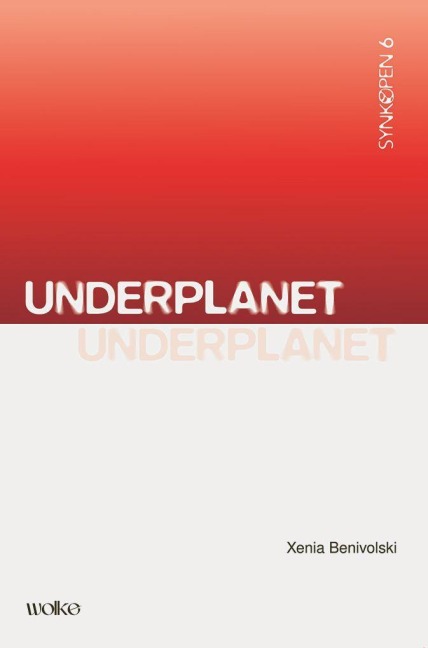
What happens when sound is no longer understood merely as something we hear, but as a material force-a trace of colonial violence, ecological devastation, and hidden resistance? In UNDERPLANET, Xenia Benivolski radically rethinks the relationship between sound, matter, and the Earth. Through three material thresholds-glass, metal, and worms-she unfolds a dense, poetic inquiry that intertwines experimental sound art with decolonial ecology and speculative materialism. From Annea Lockwood's resonant glass works and Suzanne Kite's proposition that computers are nothing more than pulverized stones to the posthumous sounds of Cheb Terro, the book renders audible what pulses beneath the surface of global capitalism. Here, decomposition is understood not as an ending but as a generative force. Rot, stuttering, and scratched vinyl records all carry a subterranean knowledge that resists the logistical order of the dominant world. A book at the intersection of sound studies, art theory, ecology, and decolonial philosophy-volume 6 of the SYNKOPEN series.
Xenia Benivolski is a Canadian writer and scholar working across sound studies, material culture, and visual art at LUCA and KU Leuven in Brussels, where she is completing "The Sky Is a Bell-the Moon Is Its Tongue," a project examining the church bell as a political instrument connecting the underground to the cosmic, aural, and divine. Between 2021 and 2023, she curated "You Can't Trust Music" at e-flux, a research project and digital exhibition bringing together sound-based artists, musicians, writers, and thinkers whose work considers how landscape, acoustics, and musical thought contribute to the formation of social and political structures. Her research traces the material and ideological lives of musical instruments and compositions, considering how they act as agents of spiritual and territorial transformation and register as living, sculptural forms. Broader interests include the ontological status of the voice, the metabolism of monumental form, and the acoustics of memory and violence. Her writing on music and visual art appears regularly in Frieze, The Wire, and e-flux journal.