Und dann auf "Zum Home-Bildschirm [+]".

Stöbern
genialokal zum Startbildschirm hinzufügen
Installieren Sie die genialokal App auf Ihrem Startbildschirm für einen schnellen Zugriff und eine komfortable Nutzung.
Installieren Sie die genialokal App auf Ihrem Startbildschirm für einen schnellen Zugriff und eine komfortable Nutzung.
Ihr gewünschter Artikel ist in 0 Buchhandlungen vorrätig - wählen Sie hier eine Buchhandlung in Ihrer Nähe aus:

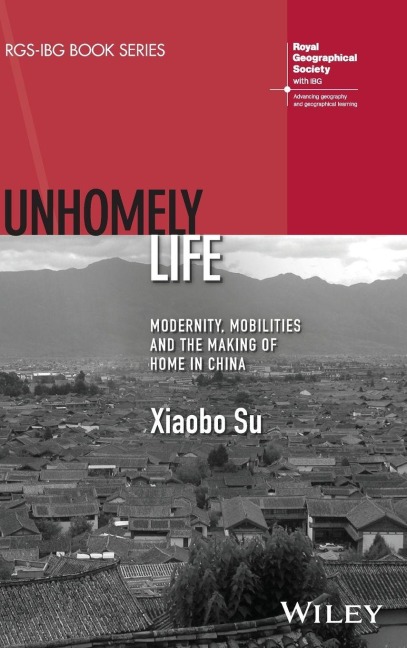
"In this exciting and innovative exploration of one tourist town in southwest China, Xiaobo Su traces the outlines of a new 'homelessness' among the temporary migrants and tourists who move from cities such as Shanghai and Beijing in search of a 'lost' or 'inner' China to call home. The meanings of home in contemporary China come into focus in a town in which escape from the homelessness of modern urbanity has become its leitmotif."
-John Agnew (UCLA) "Su's steadfast and sustained study of a single site - in the best tradition of deep ethnography - has afforded him the opportunity to observe the impact of China's great transformation in intimate terms. Su is masterful in presenting the life stories of individuals, situating them at the local level and within epochal transformations in China. This book is very compellingly written and deserves to be read by all interested in the major shifts in Chinese society across disciplines."
-Lily Kong (Singapore Management University) A journey-based critical analysis of the process and implications of homemaking in post-Mao China Unhomely Life examines why mobile individuals in China experience the loss of home feelings and how they search for home in a rapidly changing world. Offering new insights into the continuity and disruption of home in the context of China's great transformation, Xiaobo Su narrates the subjective experiences of lifestyle migrants, retreat tourists, displaced natives, and rural migrants attempting to bridge the gap between the home they leave behind and the ideal home they imagine. Developing an original theory that integrates a robust theoretical framework, in-depth research data, and traditional Chinese ideas of home, the author explores how 'unhomely' life reflects and reinforces the unevenness of mobilities and modernity while considering the socio-cultural costs of China's high-speed economic growth. The making of home is not a solely economic calculation for maximum return, Su argues, but rather a search for balance between meaning and money in everyday life under the disappointing conditions of modernity. Unhomely Life: Modernity, Mobilities, and the Making of Home in China is an invaluable resource for advanced undergraduates, graduate students, lecturers, and academic researchers in cultural studies, migration, tourism, China studies, cultural anthropology, sociology, social geography, and cultural geography.
Xiaobo Su is a Professor of Urban and Regional Development in the Department of Geography at the University of Oregon. He is the co-author of The Politics of Heritage Tourism in China: A View from Lijiang and serves on the editorial boards of Geopolitics and Tourism Tribute. His research investigates China's transformation from a planned economy to a market economy, focused on urban and regional development, tourism, migration, urban entrepreneurialism, and border politics.
Preface and Acknowledgments ix Notes on Fieldwork xiv 1. Introduction: From Xiangtu China to Unhomely China 1 Modernity as a Deal 10 Two Dimensions of Uneven Mobilities 15 Lijiang Old Town: The Case 19 Structure of the Book 27 Notes 29 2. A Sense of Home in China: Then and Now 31 Home: An Ensemble of Representations and Experiences 32 A Sense of Home in Traditional Chinese Culture 40 Home as a Destination for Return 41 Home as a Balanced Way of Living 46 Modernization and Loss of Home Feelings in Post- Mao China 50 Unhomely Life: An Analytic Framework 59 Notes 65 3. Lifestyle Migration and the (Un)making of an Ideal Home 68 Representing Lijiang as an Ideal Home 70 Making Home in its Material and Lived Aspects 75 Unmaking Home: The Spatial Politics of Belonging and Alienation 83 External Pressure for Home Unmaking 83 Internal Struggle between Here and There 86 Divergence between Busyness and Slowness 89 Conclusion: The Ambivalence of an Ideal Home 92 Notes 95 4. The Act of Retreat: Tourism, Loafing, and the Consumption of Home 96 Solitude and a Natural Way of Living 98 Loafing through Socialization 105 Regarding Lijiang Old Town as a Home 109 Being Unhomely in a Mobile World 113 Conclusion 117 Notes 119 5. Displacing Native Residents: Money, Meaning, and the Remaking of Home 120 A Sense of Home in the Town 122 A True Love for Courtyard Houses 123 A Close- knit Community in the Town 125 From Familiar to Strange: In- situ Displacement 129 Age Difference: Departure or Stay 134 Making and Remaking Home in Daily Life: Four Stories 140 Story 1: Making a Home for Tourists 141 Story 2: Promoting Naxi Culture for Profit 143 Story 3: The Life Cycle of a New Lijiang Local 145 Story 4: Being at Home Forever 149 Conclusion 153 Note 155 6. Hometown Babies: Immobility and Lijiang Locals' Struggles for Home 156 Speed and Slowness: The Supply of Homely Service to the Old Town 158 Guesthouse A'Jie and the Commodification of Domestic Work 158 Delivery A'Ge and Time Discipline 161 Freelance Workers for Tourists 164 Free Time, Away from Lijiang Old Town 166 Pain and Joy: Embracing Hometown in Lijiang 169 The Shadow of Patriarchal Society 169 In Celebration of Hometown Babies 172 Stay and Departure: The Longing for Settlement 176 Conclusion 182 Notes 185 7. Homemaking in a Relentless World 186 The Politics of Homemaking in Lijiang 188 Remembering Home in China: By Whom and for What? 195 Being Unhomely in Modern Times 200 Notes 205 References 206 Index 221