Und dann auf "Zum Home-Bildschirm [+]".

Stöbern
genialokal zum Startbildschirm hinzufügen
Installieren Sie die genialokal App auf Ihrem Startbildschirm für einen schnellen Zugriff und eine komfortable Nutzung.
Installieren Sie die genialokal App auf Ihrem Startbildschirm für einen schnellen Zugriff und eine komfortable Nutzung.
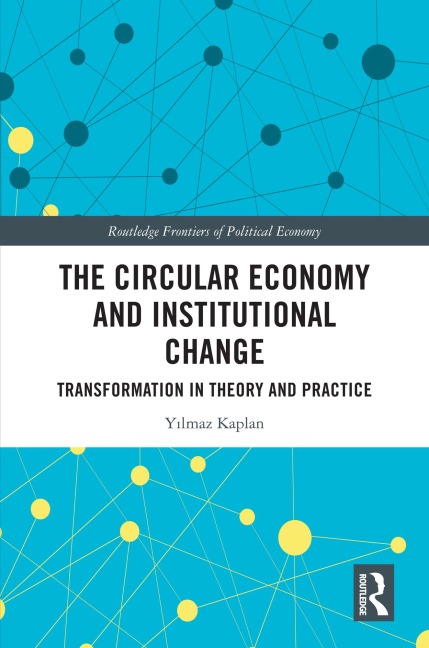
The climate crisis has emerged as a consequence of the linear economic system that developed in the aftermath of the Industrial Revolution. In recent years, global actors have recognised the need for institutional change from the linear economy to a more sustainable alternative: The circular economy. This book analyses the potential for transformative institutional change to a circular economy, both in theory and in practice. At the theoretical level, the book evaluates the feasibility of transitioning from a linear economy system to a circular economy by drawing on the principles of New Institutionalism. It thoroughly examines the key parameters of institutional change, focusing on the role of actors and new ideas within the institutional change process. Building upon this theoretical framework, the book then delves into the practical implementations of key actors. It first explores the role of the state and the market as crucial institutional actors, referencing the historical debate between these two entities. Additionally, the book critically assesses the agenda-setting power of influential international organisations, specifically the United Nations and the World Trade Organization, in driving a circular institutional change. Furthermore, it analyses the circular economy policies of influential global actors such as the European Union, China, Japan, and the USA. Aligned with these analyses, the book also examines the potential of a circular institutional change to bring about a paradigm shift from the prevailing industrial and consumer-centric society to an ecologically oriented society. This book is invaluable for readers interested in the circular economy, new institutionalism, the impacts of climate change, and alternative economic policy.
Yilmaz Kaplan received his PhD from the Department of Politics at the University of York, UK. His research interests include international political economy, the circular economy, environmental governance, globalisation, and new institutionalism.
1: Introduction: The Circular Economy as a Transformative Idea 2: Ideas, Actors and System Change: An Institutionalist Analysis 3: The State versus the Market: How to Govern an Institutional Change 4: Analysing the Leading Actors: China, Japan, the EU, and the USA 5: International Organizations and the Circular Economy: the UN, the Bretton Woods Institutions and the WTO 6: Conclusion
Dieses eBook wird im PDF-Format geliefert und ist mit einem Adobe Kopierschutz (DRM) versehen. Sie können dieses eBook mit allen Geräten lesen, die das PDF-Format und den Adobe Kopierschutz (DRM) unterstützen.
Zum Beispiel mit den folgenden Geräten:
• tolino Reader
Laden Sie das eBook direkt über den Reader-Shop auf dem tolino herunter oder übertragen Sie das eBook auf Ihren tolino mit einer kostenlosen Software wie beispielsweise Adobe Digital Editions.
• Sony Reader & andere eBook Reader
Laden Sie das eBook direkt über den Reader-Shop herunter oder übertragen Sie das eBook mit der kostenlosen Software Sony READER FOR PC/Mac oder Adobe Digital Editions auf ein Standard-Lesegeräte mit epub- und Adobe DRM-Unterstützung.
• Tablets & Smartphones
Möchten Sie dieses eBook auf Ihrem Smartphone oder Tablet lesen, finden Sie hier unsere kostenlose Lese-App für iPhone/iPad und Android Smartphone/Tablets.
• PC & Mac
Lesen Sie das eBook direkt nach dem Herunterladen mit einer kostenlosen Lesesoftware, beispielsweise Adobe Digital Editions, Sony READER FOR PC/Mac oder direkt über Ihre eBook-Bibliothek in Ihrem Konto unter „Meine eBooks“ - „online lesen“.
Schalten Sie das eBook mit Ihrer persönlichen Adobe ID auf bis zu sechs Geräten gleichzeitig frei.
Bitte beachten Sie, dass die Kindle-Geräte das Format nicht unterstützen und dieses eBook somit nicht auf Kindle-Geräten lesbar ist.