Und dann auf "Zum Home-Bildschirm [+]".

Stöbern
genialokal zum Startbildschirm hinzufügen
Installieren Sie die genialokal App auf Ihrem Startbildschirm für einen schnellen Zugriff und eine komfortable Nutzung.
Installieren Sie die genialokal App auf Ihrem Startbildschirm für einen schnellen Zugriff und eine komfortable Nutzung.

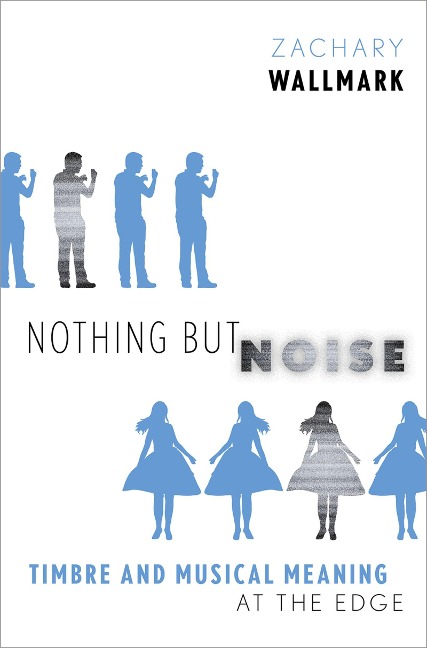
Nothing but Noise: Timbre and Musical Meaning at the Edge explores how timbre shapes musical affect and meaning. Integrating perspectives from musicology with the cognitive sciences, author Zachary Wallmark advances a novel model of timbre interpretation that takes into account the bodily, sensorimotor dynamics of sound production and perception. The contribution of timbre to musical experience is clearest in drastic situations where meaning is itself contested; that is, in polarizing contexts of reception where evaluation of "musical" timbre by some listeners collides headlong against a competing claim-that it is just "noise." Taking this ubiquitous moment as a starting point, the book explores affect, reception, and timbre semantics through diverse cultural-historical case studies that frustrate the acoustic and perceptual boundary between musical sound and noise. Nothing but Noise includes chapters on the racial and gender politics in the reception of free jazz saxophone "screaming" in the late 1960s; an analysis of contested timbral ideals in the performance practices of the Japanese shakuhachi flute; and an historical examination of the overlooked role of "brutal" timbres in the moral panic over heavy metal in the eighties and nineties. The book closes with a discussion of the slippery social fault lines separating perceptions of musical sound from noise and the ethical stakes of encountering another's "aural face."
Zachary Wallmark teaches musicology and music cognition at the University of Oregon. His interdisciplinary research on timbre and popular music has been supported by the NEH and the GRAMMY Museum Foundation. He is coeditor (with Robert Fink and Melinda Latour) of The Relentless Pursuit of Tone: Timbre in Popular Music (Oxford, 2018).
Introduction The Meaning of Timbre I. Fundamental Chapter 1: Body and Emotion in the Sonic Act Chapter 2: Conceptualizing Timbre: From Material to Metaphor II. Spectrum Chapter 3: The Most Powerful Human Sound Ever Created: Theorizing the Saxophonic Scream in Free Jazz Chapter 4: Sound and Embodiment in the Japanese Shakuhachi Chapter 5: Vector of Brutality: Madness, Violence, and Contagion in Heavy Metal Reception III. Resonance Chapter 6: The Aural Face Notes Bibliography Index