Und dann auf "Zum Home-Bildschirm [+]".

Stöbern
genialokal zum Startbildschirm hinzufügen
Installieren Sie die genialokal App auf Ihrem Startbildschirm für einen schnellen Zugriff und eine komfortable Nutzung.
Installieren Sie die genialokal App auf Ihrem Startbildschirm für einen schnellen Zugriff und eine komfortable Nutzung.
Ihr gewünschter Artikel ist in 0 Buchhandlungen vorrätig - wählen Sie hier eine Buchhandlung in Ihrer Nähe aus:

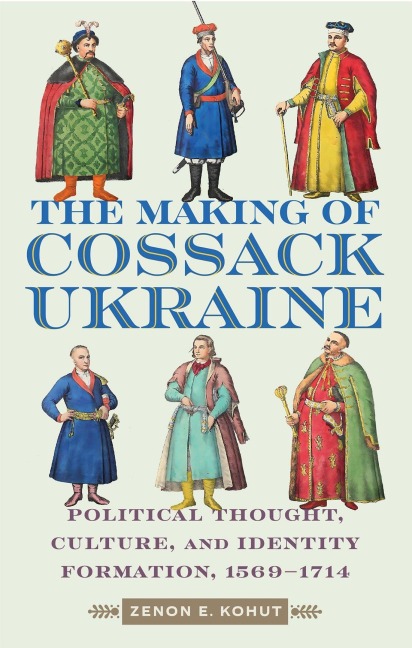
Both modern Ukrainian nationhood and the historical preconditions of the country's contemporary conflict with Russia are rooted in a complex period of development in Cossack Ukraine. The Making of Cossack Ukraine traces the evolution of early modern Ukrainian political thought and culture from their sixteenth-century origins to 1714. Early modern Ukraine was home to a multitude of interrelated political cultures, including those of the Ruthenian nobility, the Kyivan clergy, and the Cossacks. Zenon Kohut shows how constant interplay between these cultures contributed to the development of political, territorial, religious, ethnic, and national collective visions that reflected early modern concepts of nation, state, and identity. Two persistent narratives - the idea of Ukrainian autonomy and perpetual rights, and the idea of a continuous "Russian" tsardom stemming from medieval times - formed the foundation for not only Ukrainian state- and nation-building but also Russia's modern identity and sense of nationhood, creating the ideological underpinning for Russian imperialism. Based in a classical analysis of ethnic, religious, and political ideas developed by early modern Ukrainian intellectuals, The Making of Cossack Ukraine brings to light the origins of present-day Ukrainian political thought.
Zenon E. Kohut is professor emeritus at the University of Alberta.
Note on Transliteration, Translations, Dates, and Terminology vii Acknowledgments xi Abbreviations xiii Maps xiv Introduction 3 1 Ruthenian-Ukrainian Political Culture in the Polish-Lithuanian Commonwealth (1569–1640s) 17 2 Establishing Goals, Political Concepts, and Values: The Khmel'nyts'kyi Uprising and the Hetmanate (1648–68) 41 3 Uniting the Fatherland: Hetman Petro Doroshenko (1665–75) 74 4 The Left-Bank Hetmanate: Hetman Ivan Samoilovych (1672–87) 102 5 The Construction of Historical-Political Narratives (1660–80s) 146 6 In Service to Tsar and Ukraine: Hetman Ivan Mazepa 212 7 Mazepa: Modernizer and Enlightened Ruler (1687–1708) 250 8 Mazepa: Hetman of a Sacred Rutheno-Rossian Realm 286 9 From Tsarist Service to Swedish Protection (1705–09) 332 10 From Reprisals to Ideological Combat: Peter vs Mazepa 360 11 Liberating Ukraine: Hetman Pylyp Orlyk (1709–14) 391 12 Rethinking Ukraine: Envisioning a Free Cossack Commonwealth 428 Conclusions 455 Epilogue 467 Notes 479 Bibliography 553 Index 59