
Stöbern
genialokal zum Startbildschirm hinzufügen
Installieren Sie die genialokal App auf Ihrem Startbildschirm für einen schnellen Zugriff und eine komfortable Nutzung.
Installieren Sie die genialokal App auf Ihrem Startbildschirm für einen schnellen Zugriff und eine komfortable Nutzung.
Tippen Sie einfach auf Teilen:
 Und dann auf "Zum Home-Bildschirm [+]".
Bei genialokal.de kaufen Sie online bei Ihrer lokalen, inhabergeführten Buchhandlung!
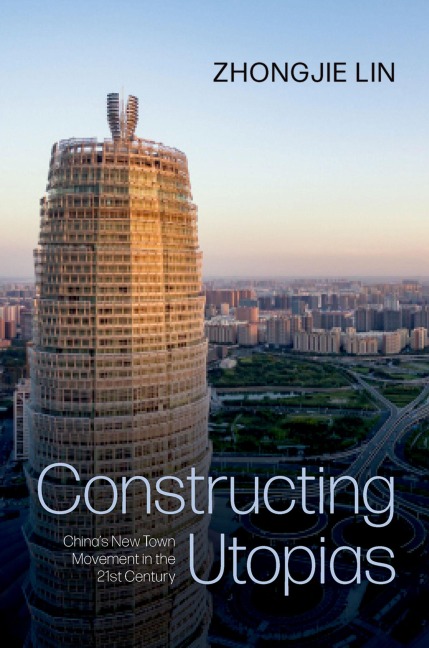
Amid its groundbreaking political reforms and "largest mass migration ever seen in human history," China created over 3,800 new towns to accommodate its burgeoning urban population and sustain economic growth. Economic marketization, global trade, inter-city competition, and the exponentially growing real estate industry have driven tremendous investment in infrastructure and large-scale developments, stimulating continuous urban expansion. Surpassing any urbanization initiatives in history, contemporary Chinese new towns emerged as the national campaign to reimagine Chinese cities while reshaping the global geo-economic landscape. Constructing Utopias examines four decades of Chinese urbanization through the lens of urbanism and utopianism. After exploring the theoretical foundations and historical precedents of new town development, the book delves into a series of "model new towns" that showcase innovative planning, design, technologies, policies, and China's broader vision for a modern urban nation. Case studies of the Suzhou Industrial Park, One City and Nine Towns in Shanghai, prototypical eco-cities, and the notorious "ghost towns" form the core of this book, highlighting fundamental issues in urbanization including economic vitality, cultural identity, environmental sustainability, and socio-spatial dynamics. The author scrutinizes these new towns not only as grand visions of governments, planners, and developers but also as physical spaces embodying the struggles and aspirations of residents and migrant workers. By examining both the successes and failures of Chinese new town planning and development, this book illuminates the complex interplay between space production and social transformation within the context of neoliberalism and globalization.
Zhongjie Lin is the Benjamin Z. Lin Presidential Professor of Urban Design at the University of Pennsylvania Weitzman School of Design, where he serves as Head of the Urban Design program and directs the Future Cities Initiative. He is a co-founder of Futurepolis, an award-winning interdisciplinary practice of planning and architecture. An internationally renowned expert in urbanism, Dr. Lin has published numerous books on the theory and practice of urban design, sustainable urbanism, planning history, and Asian architecture and cities. His work has been recognized by prestigious awards including a Woodrow Wilson Fellowship and a Guggenheim Fellowship.
1. Introduction: New Towns as a National Movement
2. The Precursors
3. Suzhou Industrial Park
4. One City and Nine Towns
5. The Eco-Cities
6. The Ghost Towns
7. Epilogue: New Towns after the End of New Towns
Appendix: List of Notable Chinese New Towns
Dieses eBook wird im PDF-Format geliefert und ist mit einem Adobe Kopierschutz (DRM) versehen. Sie können dieses eBook mit allen Geräten lesen, die das PDF-Format und den Adobe Kopierschutz (DRM) unterstützen.
Zum Beispiel mit den folgenden Geräten:
• tolino Reader
Laden Sie das eBook direkt über den Reader-Shop auf dem tolino herunter oder übertragen Sie das eBook auf Ihren tolino mit einer kostenlosen Software wie beispielsweise Adobe Digital Editions.
• Sony Reader & andere eBook Reader
Laden Sie das eBook direkt über den Reader-Shop herunter oder übertragen Sie das eBook mit der kostenlosen Software Sony READER FOR PC/Mac oder Adobe Digital Editions auf ein Standard-Lesegeräte mit epub- und Adobe DRM-Unterstützung.
• Tablets & Smartphones
Möchten Sie dieses eBook auf Ihrem Smartphone oder Tablet lesen, finden Sie hier unsere kostenlose Lese-App für iPhone/iPad und Android Smartphone/Tablets.
• PC & Mac
Lesen Sie das eBook direkt nach dem Herunterladen mit einer kostenlosen Lesesoftware, beispielsweise Adobe Digital Editions, Sony READER FOR PC/Mac oder direkt über Ihre eBook-Bibliothek in Ihrem Konto unter „Meine eBooks“ - „online lesen“.
Schalten Sie das eBook mit Ihrer persönlichen Adobe ID auf bis zu sechs Geräten gleichzeitig frei.
Bitte beachten Sie, dass die Kindle-Geräte das Format nicht unterstützen und dieses eBook somit nicht auf Kindle-Geräten lesbar ist.