Und dann auf "Zum Home-Bildschirm [+]".

Stöbern
genialokal zum Startbildschirm hinzufügen
Installieren Sie die genialokal App auf Ihrem Startbildschirm für einen schnellen Zugriff und eine komfortable Nutzung.
Installieren Sie die genialokal App auf Ihrem Startbildschirm für einen schnellen Zugriff und eine komfortable Nutzung.
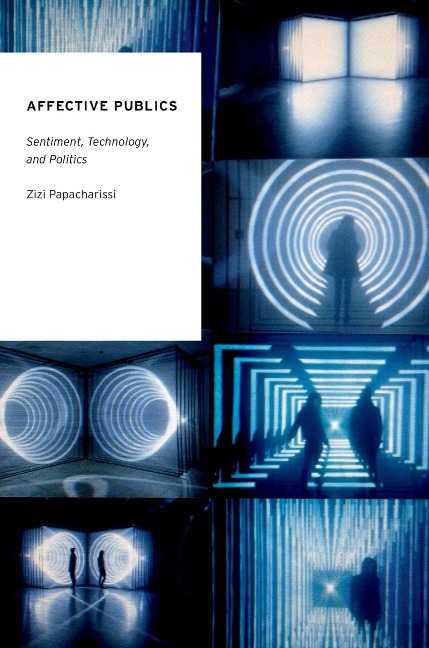
Over the past few decades, we have witnessed the growth of movements using digital means to connect with broader interest groups and express their points of view. These movements emerge out of distinct contexts and yield different outcomes, but tend to share one thing in common: online and offline solidarity shaped around the public display of emotion. Social media facilitate feelings of engagement, in ways that frequently make people feel re-energized about politics. In doing so, media do not make or break revolutions but they do lend emerging, storytelling publics their own means for feeling their way into events, frequently by making those involved a part of the developing story. Technologies network us but it is our stories that connect us to each other, making us feel close to some and distancing us from others. Affective Publics explores how storytelling practices facilitate engagement among movements tuning into a current issue or event by employing three case studies: Arab Spring movements, various iterations of Occupy, and everyday casual political expressions as traced through the archives of trending topics on Twitter. It traces how affective publics materialize and disband around connective conduits of sentiment every day and find their voice through the soft structures of feeling sustained by societies. Using original quantitative and qualitative data, Affective Publics demonstrates, in this groundbreaking analysis, that it is through these soft structures that affective publics connect, disrupt, and feel their way into everyday politics.
Zizi Papacharissi is professor and head of the Communication Department at the University of Illinois-Chicago. Her books include A Private Sphere: Democracy in a Digital Age (Polity Press, 2010), A Networked Self: Identity, Community, and Culture on Social Network Sites (Routledge, 2010), and Journalism and Citizenship: New Agendas (Taylor & Francis, 2009). She has also authored over 40 journal articles, book chapters or reviews, and serves on the editorial board of eleven journals, including the Journal of Communication, Human Communication Research, and New Media and Society. Papacharissi is the editor of the Journal of Broadcasting and Electronic Media, and the new open access Sage journal Social Media and Society.
Acknowledgments Prelude Chapter One: The Present Affect Chapter Two: Affective News and Networked Publics Chapter Three: Affective Demands and the New Political Chapter Four: The Personal as Political: Everyday Disruptions of the Political Mainstream Chapter Five: Affective Publics Notes References Index
Dieses eBook wird im PDF-Format geliefert und ist mit einem Adobe Kopierschutz (DRM) versehen. Sie können dieses eBook mit allen Geräten lesen, die das PDF-Format und den Adobe Kopierschutz (DRM) unterstützen.
Zum Beispiel mit den folgenden Geräten:
• tolino Reader
Laden Sie das eBook direkt über den Reader-Shop auf dem tolino herunter oder übertragen Sie das eBook auf Ihren tolino mit einer kostenlosen Software wie beispielsweise Adobe Digital Editions.
• Sony Reader & andere eBook Reader
Laden Sie das eBook direkt über den Reader-Shop herunter oder übertragen Sie das eBook mit der kostenlosen Software Sony READER FOR PC/Mac oder Adobe Digital Editions auf ein Standard-Lesegeräte mit epub- und Adobe DRM-Unterstützung.
• Tablets & Smartphones
Möchten Sie dieses eBook auf Ihrem Smartphone oder Tablet lesen, finden Sie hier unsere kostenlose Lese-App für iPhone/iPad und Android Smartphone/Tablets.
• PC & Mac
Lesen Sie das eBook direkt nach dem Herunterladen mit einer kostenlosen Lesesoftware, beispielsweise Adobe Digital Editions, Sony READER FOR PC/Mac oder direkt über Ihre eBook-Bibliothek in Ihrem Konto unter „Meine eBooks“ - „online lesen“.
Schalten Sie das eBook mit Ihrer persönlichen Adobe ID auf bis zu sechs Geräten gleichzeitig frei.
Bitte beachten Sie, dass die Kindle-Geräte das Format nicht unterstützen und dieses eBook somit nicht auf Kindle-Geräten lesbar ist.