Und dann auf "Zum Home-Bildschirm [+]".

Stöbern
genialokal zum Startbildschirm hinzufügen
Installieren Sie die genialokal App auf Ihrem Startbildschirm für einen schnellen Zugriff und eine komfortable Nutzung.
Installieren Sie die genialokal App auf Ihrem Startbildschirm für einen schnellen Zugriff und eine komfortable Nutzung.
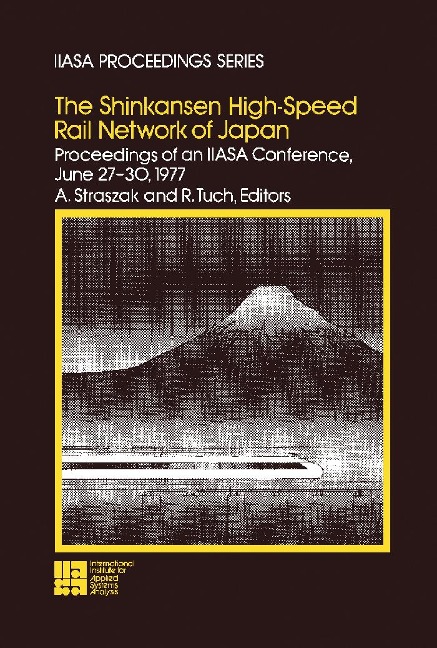
The Shinkansen High-Speed Rail Network of Japan contains the proceedings of the International Institute for Applied Systems Analysis Conference on the Shinkansen High-Speed Rail Network of Japan, held on June 27-30, 1977. The conference provided a forum for discussing the Shinkansen high-speed rail network as a total system of planning, organization, and management for the application of advanced technology in rail transport and its development into a safe, reliable, and acceptable mode of mass transit in Japan. The organizational characteristics of the program and the application of mathematical models and computer systems are highlighted. Comprised of 39 chapters, this volume begins with an overview of the history and general features of the Shinkansen, along with its installation, operation, and management. The achievements and future problems of the Shinkansen are also considered. The next section assesses the Shinkansen's socio-economic impact, with emphasis on models and their applications. Subsequent chapters analyze the environmental problems associated with the Shinkansen and the framework for evaluating its environmental impact; implications of national development in Japan; and planning and organization of the Shinkansen. The final section is devoted to the high-speed operation, train safety, and operational management of the Shinkansen. This book will be of interest to transportation engineers and officials.
-Introduction 1. Welcoming Address 2. The Shinkansen as Part of the Management and Technology Area Studies on Large-Scale Planning ProjectsGeneral Features of the Shinkansen 3. History of the Shinkansen 4. Installations, Operation, and Management of the Shinkansen 5. Achievements and Future Problems of the ShinkansenSocio-Economic Impact: Models and Applications 6. Determination of Socio-Economic Impact: Problems for Consideration 7. Regional Economic Impact of the Shinkansen 8. Application of the Spatial Econometric Model (SPAMETRI) to the Evaluation of the Economic Effects of the Shinkansen 9. Impact of the Sanyo Shinkansen on Local Communities 10. Socio-Economic Impact Models as Tools for Aiding Decision-Making Assessments 11. DiscussionEnvironmental Problems Associated with the Shinkansen 12. Introduction and Framework for Assessing the Environmental Impacts of the Shinkansen 13. Environmental Problems and the Shinkansen 14. Environmental Preservation and the Shinkansen 15. The Shinkansen as an Environmental Component of Japan 16. Environmental Problems 17. Application of an Environmental Framework for the Study of the Shinkansen 18. DiscussionImplications of National Development in Japan 19. Background of Development in Japan 20. Migration, Population Distribution, and Population Policy in Japan 21. The Shinkansen and the Future Image of Japan 22. Comprehensive National Development Plans in Japan: Their Logic and Reality 23. Goal and Conflict Analysis of Public Policy Plans 24. DiscussionPlanning and Organization of the Shinkansen 25. Decision-Making and Planning of the Shinkansen 26. The Shinkansen Project: Formation and Construction Setup 27. The Organization of JNR with Special Reference to the Shinkansen 28. Organization of the Shinkansen 29. DiscussionHigh-Speed Operation, Train Safety, and Operational Management 30. The Role of Transportation Studies at IIASA 31. High-Speed Operation System: Ground Facilities 32. High-Speed Operation System: Vehicles 33. Accident Prevention System 34. Train Operation Control System 35. Maintenance System: Vehicles 36. Maintenance System: Fixed Facilities 37. Seat Reservation System and Computer Application in JNR 38. DiscussionFinal Remarks 39. Final RemarksAppendixConference Participants