Und dann auf "Zum Home-Bildschirm [+]".

Stöbern
genialokal zum Startbildschirm hinzufügen
Installieren Sie die genialokal App auf Ihrem Startbildschirm für einen schnellen Zugriff und eine komfortable Nutzung.
Installieren Sie die genialokal App auf Ihrem Startbildschirm für einen schnellen Zugriff und eine komfortable Nutzung.
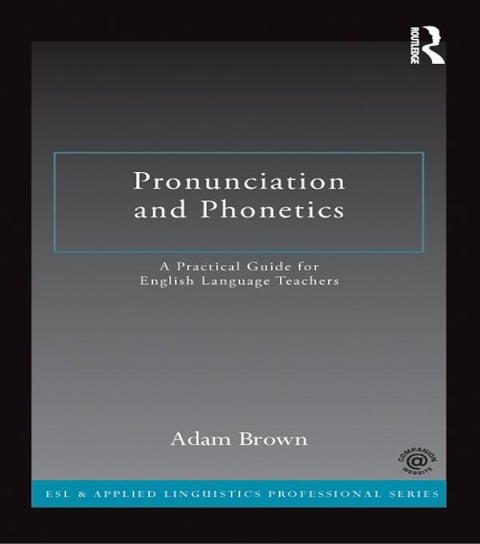
This engaging, succinct text is an introduction to both phonetics and phonology as applied to the teaching of pronunciation to English language learners. Section 1 selectively covers the main areas of phonetics and phonology, without going into any area in more depth than the average English language teacher requires or that the average English language teacher trainee can handle. Section 2 focuses on practical issues related to learners and how they learn languages, and what represents good practice in terms of classroom activities for pronunciation-including aspects such as targets, motivation and priorities. The chapters end with activities to help the reader understand concepts. Section 3 provides innovative sample activities which put into practice the theoretical points covered in the first two sections, answers to the various exercises, recommended further reading (both print and non-print), a glossary of technical phonetic terms, and a bibliography of works on pronunciation teaching. The text is accompanied by a Companion Website with audio recordings of model pronunciations and audio material relating to the activities.
Adam Brown is Head (International Business), Senior lecturer and research committee member, Centre for Research in International Education (CRIE), AIS St Helens, Auckland, New Zealand.
Contents Symbols for English Sounds Preface Section I: Phonetics 1: Introduction 2: Accents of English worldwide 3: Airstreams and the vocal cords 4: Cardinal vowels 5: Vowels 6: The vocal organs and consonant classification 7: Plosives and nasals 8: Fricatives and affricates 9: Approximants 10: Non-English sounds 11: Syllable structure 12: Phonemes 13: Accent differences 14: Phonology 15: Weakening and linking 16: Assimilation and elision 17: Connected speech processes 18: Pausing and speed 19: Word stress 20: Tone groups 21: Tones 22: Rhythm 23: Voice quality Section II: Pronunciation Teaching 24: Targets 25: Integration 26: The effectiveness of pronunciation teaching 27: Motivation and affect 28: Fossilization 29: First language influence 30: Importance 31: Spelling: History 32: Spelling: Literacy 33: Nonverbal communication 34: Listening 35: Testing Section III: Sample Exercises Sample exercises Answers to exercises Resources Glossary References
Dieses eBook wird im PDF-Format geliefert und ist mit einem Adobe Kopierschutz (DRM) versehen. Sie können dieses eBook mit allen Geräten lesen, die das PDF-Format und den Adobe Kopierschutz (DRM) unterstützen.
Zum Beispiel mit den folgenden Geräten:
• tolino Reader
Laden Sie das eBook direkt über den Reader-Shop auf dem tolino herunter oder übertragen Sie das eBook auf Ihren tolino mit einer kostenlosen Software wie beispielsweise Adobe Digital Editions.
• Sony Reader & andere eBook Reader
Laden Sie das eBook direkt über den Reader-Shop herunter oder übertragen Sie das eBook mit der kostenlosen Software Sony READER FOR PC/Mac oder Adobe Digital Editions auf ein Standard-Lesegeräte mit epub- und Adobe DRM-Unterstützung.
• Tablets & Smartphones
Möchten Sie dieses eBook auf Ihrem Smartphone oder Tablet lesen, finden Sie hier unsere kostenlose Lese-App für iPhone/iPad und Android Smartphone/Tablets.
• PC & Mac
Lesen Sie das eBook direkt nach dem Herunterladen mit einer kostenlosen Lesesoftware, beispielsweise Adobe Digital Editions, Sony READER FOR PC/Mac oder direkt über Ihre eBook-Bibliothek in Ihrem Konto unter „Meine eBooks“ - „online lesen“.
Schalten Sie das eBook mit Ihrer persönlichen Adobe ID auf bis zu sechs Geräten gleichzeitig frei.
Bitte beachten Sie, dass die Kindle-Geräte das Format nicht unterstützen und dieses eBook somit nicht auf Kindle-Geräten lesbar ist.