Und dann auf "Zum Home-Bildschirm [+]".

Stöbern
genialokal zum Startbildschirm hinzufügen
Installieren Sie die genialokal App auf Ihrem Startbildschirm für einen schnellen Zugriff und eine komfortable Nutzung.
Installieren Sie die genialokal App auf Ihrem Startbildschirm für einen schnellen Zugriff und eine komfortable Nutzung.

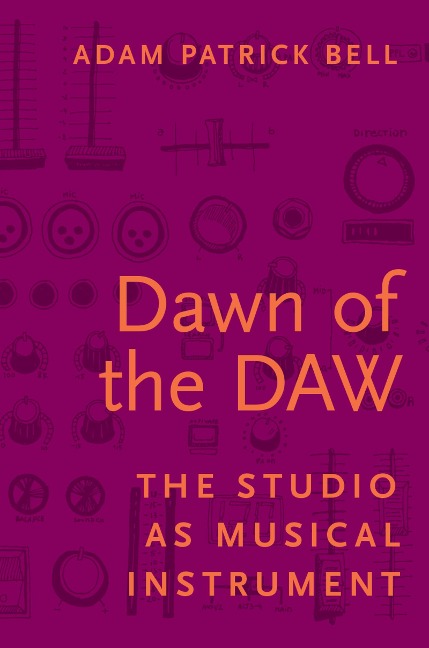
Dawn ot the DAW tells the story of how the dividing line between the traditional roles of musicians and recording studio personnel (producers, recording engineers, mixing engineers, technicians, etc.) has eroded throughout the latter half of the twentieth century to the present. Whereas those equally adept in music and technology such as Raymond Scott and Les Paul were exceptions to their eras, the millennial music maker is ensconced in a world in which the symbiosis of music and technology is commonplace. As audio production skills such as recording, editing, and mixing are increasingly co-opted by musicians teaching themselves in their do-it-yourself (DIY) recording studios, conventions of how music production is taught and practiced are remixed to reflect this reality. Dawn of the DAW first examines DIY recording practices within the context of recording history from the late nineteenth century to the present. Second, Dawn of the DAW discusses the concept of "the studio as musical instrument" and the role of the producer, detailing how these constructs have evolved throughout the history of recorded music in tandem. Third, Dawn of the DAW details current practices of DIY recording--how recording technologies are incorporated into music making, and how they are learned by DIY studio users in the musically--chic borough of Brooklyn. Finally, Dawn of the DAW examines the broader trends heard throughout, summarizing the different models of learning and approaches to music making. Dawn of the DAW concludes by discussing the ramifications of these new directions for the field of music education.
Adam Patrick Bell is an Assistant Professor of Music Education in the School of Creative and Performing Arts at the University of Calgary, Canada. He has written several peer-reviewed articles and chapters on the topics of music technology in music education, and disability in music education. Prior to his career in higher education, Bell worked as a kindergarten teacher, elementary music teacher, and support worker for adolescents with disabilities. Bell has also worked as a freelance producer, creating commercial music for clients including Coca-Cola.
Preface Part I Chapter 1 - A History of DIY Recording: Striving for Self-Sufficiency Chapter 2 - The Studio: Instrument of the Producer Part II Preface to Part II - Made In Brooklyn Chapter 3 - Track 1: Michael Chapter 4 - Track 2: Tara Chapter 5 - Track 3: Tyler Chapter 6 - Track 4: Jimmy Part III Preface to Part III - Learning Producing | Producing Learning Chapter 7 - Mixing the Multitrack: Cross Case Analyses Chapter 8 - Mastering the Multitrack: Conclusions Bibliography Index
Dieses eBook wird im PDF-Format geliefert und ist mit einem Adobe Kopierschutz (DRM) versehen. Sie können dieses eBook mit allen Geräten lesen, die das PDF-Format und den Adobe Kopierschutz (DRM) unterstützen.
Zum Beispiel mit den folgenden Geräten:
• tolino Reader
Laden Sie das eBook direkt über den Reader-Shop auf dem tolino herunter oder übertragen Sie das eBook auf Ihren tolino mit einer kostenlosen Software wie beispielsweise Adobe Digital Editions.
• Sony Reader & andere eBook Reader
Laden Sie das eBook direkt über den Reader-Shop herunter oder übertragen Sie das eBook mit der kostenlosen Software Sony READER FOR PC/Mac oder Adobe Digital Editions auf ein Standard-Lesegeräte mit epub- und Adobe DRM-Unterstützung.
• Tablets & Smartphones
Möchten Sie dieses eBook auf Ihrem Smartphone oder Tablet lesen, finden Sie hier unsere kostenlose Lese-App für iPhone/iPad und Android Smartphone/Tablets.
• PC & Mac
Lesen Sie das eBook direkt nach dem Herunterladen mit einer kostenlosen Lesesoftware, beispielsweise Adobe Digital Editions, Sony READER FOR PC/Mac oder direkt über Ihre eBook-Bibliothek in Ihrem Konto unter „Meine eBooks“ - „online lesen“.
Schalten Sie das eBook mit Ihrer persönlichen Adobe ID auf bis zu sechs Geräten gleichzeitig frei.
Bitte beachten Sie, dass die Kindle-Geräte das Format nicht unterstützen und dieses eBook somit nicht auf Kindle-Geräten lesbar ist.