Und dann auf "Zum Home-Bildschirm [+]".

Stöbern
genialokal zum Startbildschirm hinzufügen
Installieren Sie die genialokal App auf Ihrem Startbildschirm für einen schnellen Zugriff und eine komfortable Nutzung.
Installieren Sie die genialokal App auf Ihrem Startbildschirm für einen schnellen Zugriff und eine komfortable Nutzung.

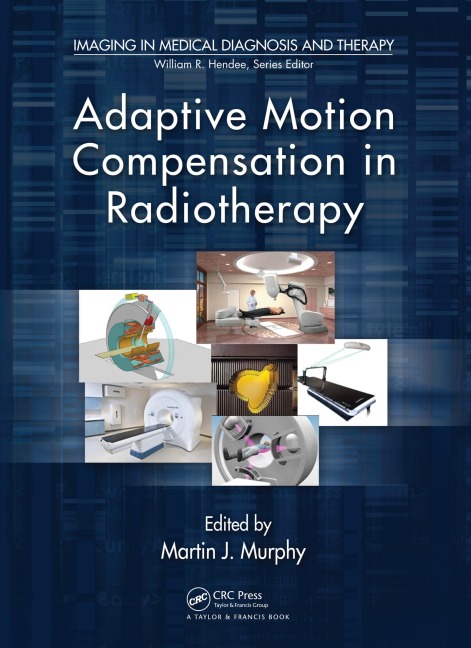
External-beam radiotherapy has long been challenged by the simple fact that patients can (and do) move during the delivery of radiation. Recent advances in imaging and beam delivery technologies have made the solution-adapting delivery to natural movement-a practical reality. Adaptive Motion Compensation in Radiotherapy provides the first detailed
Dr. Martin J. Murphy received his Ph.D. in physics from the University of Chicago in 1980. Following postdoctoral fellowships in nuclear physics at the University of California/Berkeley and the University of Washington and a stint as a research scientist in gamma-ray astronomy at the Lockheed Palo Alto Research Laboratories, he entered the field of radiation therapy research and development in 1992 as Director of System Development of the CyberKnife at Accuray Incorporated. In 1995, he joined the Department of Radiation Oncology at Stanford University as a senior research scientist to continue development of the CyberKnife's image guidance and target tracking capabilities. In 2003, Dr Murphy joined the Department of Radiation Oncology at Virginia Commonwealth University, where he is presently engaged in several research programs involving medical image registration, CT reconstruction, and real-time motion-adaptive control systems.
Introduction. Real-Time Tumor Localization. Theoretical Aspects of Target Detection and Tracking. Respiratory Gating. The CyberKnife Image-Guided Frameless Radiosurgery System. Fundamentals of Tracking with a LINAC MLC. Couch-Based Target Alignment. Robotic LINAC Tracking Based on Correlation and Prediction. Treatment Planning for Motion Adaptation in Radiation Therapy. Treatment Planning for Motion Management via DMLC Tracking. Real-Time Motion Adaptation in Tomotherapy using a Binary MLC. Combination of a LINAC with 1.5 T MRI for Real-Time Image-Guided Radiotherapy. The ViewRayTM System. Fault Detection in Image-Based Tracking.