Und dann auf "Zum Home-Bildschirm [+]".

Stöbern
genialokal zum Startbildschirm hinzufügen
Installieren Sie die genialokal App auf Ihrem Startbildschirm für einen schnellen Zugriff und eine komfortable Nutzung.
Installieren Sie die genialokal App auf Ihrem Startbildschirm für einen schnellen Zugriff und eine komfortable Nutzung.
Ihr gewünschter Artikel ist in 0 Buchhandlungen vorrätig - wählen Sie hier eine Buchhandlung in Ihrer Nähe aus:

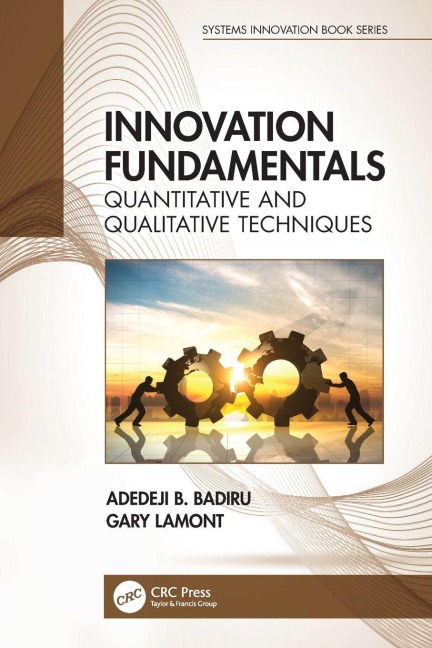
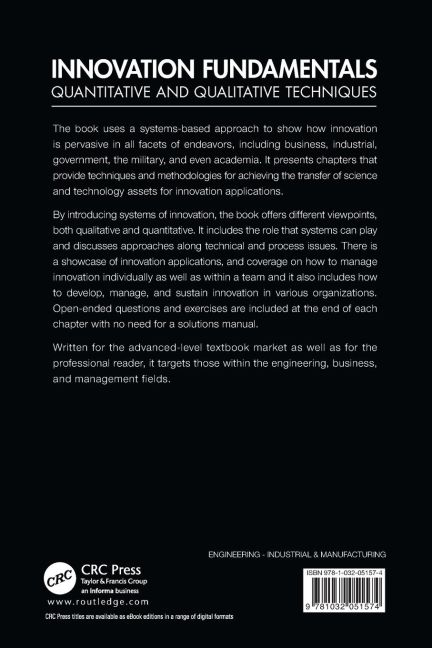
This book uses a systems-based approach to show how innovation is pervasive in all facets of endeavors, including business, industrial, government, the military, and even academia. This book presents chapters that provide techniques and methodologies for achieving the transfer of science and technology assets for innovation applications.
Adedeji B. Badiru is a Professor of Systems Engineering at the Air Force Institute of Technology (AFIT). He is a registered professional engineer and a fellow of the Institute of Industrial Engineers as well as a Fellow of the Nigerian Academy of Engineering. He has a BS degree in Industrial Engineering, MS in Mathematics, and MS in Industrial Engineering from Tennessee University, and Ph.D. in Industrial Engineering from the University of Central Florida. He is the author of several books and technical journal articles and has received several awards and recognitions for his accomplishments. Gary Lamont is a Professor of Computer Engineering at the Air Force Institute of Technology. His earned his BS degree in Physics, MS in Electrical Engineering, and PhD from the University of Minnesota Institute of Technology. His awards include IEEE Fritz Russ Bio-Engineering Award, IEEE Senior Life Member, Eta Kappa NU AFIT Teacher of the Year, and WPAFB Professional Employee of the Year. He is the author, co-author, or co-editor of five books and eight book chapters.
1. Systems Thinking for Innovation. 2. Fundamentals of Innovation: Quantitative and Qualitative Techniques. 3. Set-Theoretic Systems for Innovation. 4. Half-life of Innovation Using Learning Curves. 5. Innovation Economic Analysis. 6. Human-Systems Integration for Innovation. 7. Innovation through Industrial Engineering Techniques. 8. Managing Innovation Projects. 9. Utility Modeling for Innovation. 10. Innovation Workforce Development and Management. Appendix: Technical Conversion Factors.