Und dann auf "Zum Home-Bildschirm [+]".

Stöbern
genialokal zum Startbildschirm hinzufügen
Installieren Sie die genialokal App auf Ihrem Startbildschirm für einen schnellen Zugriff und eine komfortable Nutzung.
Installieren Sie die genialokal App auf Ihrem Startbildschirm für einen schnellen Zugriff und eine komfortable Nutzung.
Ihr gewünschter Artikel ist in 0 Buchhandlungen vorrätig - wählen Sie hier eine Buchhandlung in Ihrer Nähe aus:

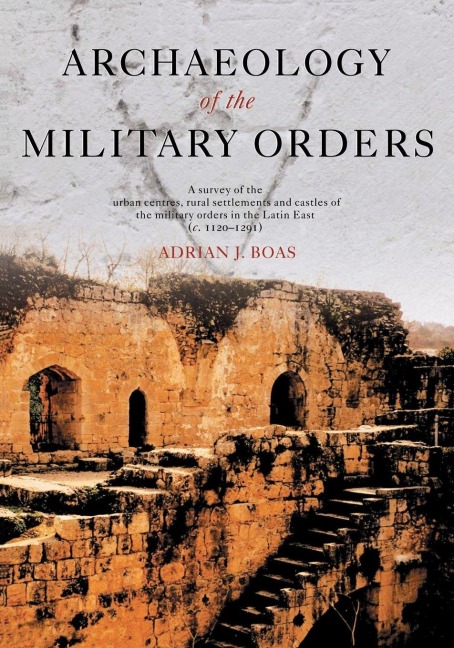
Including previously unpublished and little known material, this cutting-edge book presents a detailed discussion of the archaeological evidence of the five military orders in the Latin East:
the Hospitallers the Templars the Teutonic Knights the Leper Knights of St Lazarus the Knights of St Thomas.
Discussing in detail the distinctive architecture relating to their various undertakings (such as hospitals in Jerusalem and Acre) Adrian Boas places emphasis on the importance of the Military Orders in the development of military architecture in the Middle Ages. The three principal sections of the book consist of chapters relating to the urban quarters of the Orders in Jerusalem, Acre and other cities, their numerous rural possessions, and the tens of castles built or purchased and expanded in the twelfth and thirteenth centuries.
A highly illustrated and detailed study, this comprehensive volume will be an essential read for any archaeology student or scholar of this period.
Adrian Boas, retired archaeologist, is the author of several academic books on the archaeology and history of the Crusades. His first novel, The Sulphur Priest, is set in a medieval castle in Western Galilee.
Background PART I Urban administrative centres 1 The urban Quarters of the Templars 2 The urban Quarters of the Hospitallers 3 The urban quarters of the Teutonic Knights 4 The urban quarters of the Leper Knights of St Lazarus 5 The quarter of the Knights of St Thomas PART II The rural activity of the Military Orders 6 Expansion into the countryside 7 Sugar-cane cultivation and the sugar industry PART III The defence of the Latin East 8 Castles and the defensive role of the Military Orders 9 The choice of plan: castle typology, design, location and function 10 Non-defensive components of a castle 11 Elements of fortification 12 Stonemasonry and construction techniques 13 Weapons, arms and armour PART IV Additional archaeological evidence 14 Daily life of the Military Orders 15 Works of art in urban sites and castles of the Military Orders. Conclusion