Und dann auf "Zum Home-Bildschirm [+]".

Stöbern
genialokal zum Startbildschirm hinzufügen
Installieren Sie die genialokal App auf Ihrem Startbildschirm für einen schnellen Zugriff und eine komfortable Nutzung.
Installieren Sie die genialokal App auf Ihrem Startbildschirm für einen schnellen Zugriff und eine komfortable Nutzung.
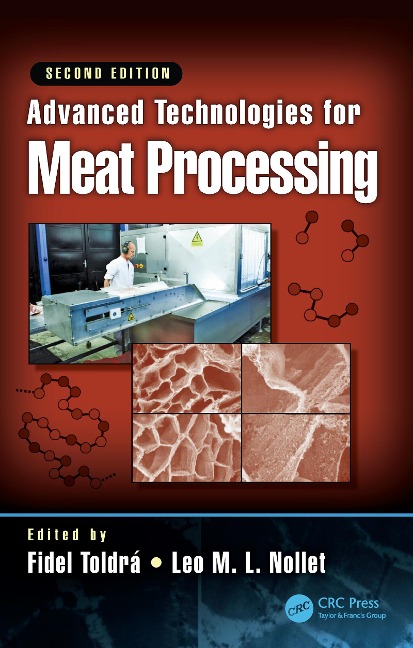
As with the first edition, the main goal of Advanced Technologies for Meat Processing is to provide the reader with recent developments in new advanced technologies for the full meat- processing chain. This book is written by distinguished international contributors with recognized expertise and excellent reputations, and brings together all the advances in a wide and varied number of technologies that are applied in different stages of meat processing. This second edition contains 21 chapters, combining updated and revised versions of several chapters with entirely new chapters that deal with new online monitoring techniques like hyperspectral imaging and Raman spectroscopy, the use of nanotechnology for sensor devices or new packaging materials and the application of omics technologies like nutrigenomics and proteomics for meat quality and nutrition. The book starts with the control and traceability of genetically modified farm animals, followed by four chapters reporting the use of online non-destructive monitoring techniques like hyperspectral imaging and Raman spectroscopy, real-time PCR for pathogens detection, and nanotechnology-based sensors. Then, five chapters describe different advanced technologies for meat decontamination, such as irradiation, hydrostatic and hydrodynamic pressure processing, other non-thermal technologies, and the reduction in contaminants generation. Nutrigenomics in animal nutrition and production is the object of a chapter that is followed by five chapters dealing with nutritional-related issues like bioactive peptides, functional meats, fat and salt reduction, processing of nitrite-free products, and the use of proteomics for the improved processing of dry-cured meats. The last four chapters are reporting the latest developments in bacteriocins against meat-borne pathogens, the functionality of bacterial starters, modified atmosphere packaging and the use of new nanotechnology-based materials for intelligent and edible packaging.
Leo M.L. Nollet received M.S. (1973) and Ph.D. (1978) degrees in Biology from the Katholieke Universiteit Leuven, Belgium. He has retired from the food science faculty of University College Ghent, Belgium. Dr. Nollet is the editor and associate editor of numerous books. He edited for M. Dekker, New York- now CRC Press of Francis and Taylor Group- the first and second edition of Food Analysis by HPLC and Handbook of Food Analysis. The last edition is a three-volume book. He edited also Handbook of Water Analysis (first and second edition) and Chromatographic Analysis of the Environment 3rd Edition (CRC Press). Fidel Toldrá earned a bachelor's degree in chemistry in 1980, a high degree in food technology in 1981, and a Ph.D. in chemistry in 1984. He is research professor and head of the Laboratory of Meat Science at the Instituto de Agroquímica y Tecnología de Alimentos (CSIC), Valencia, Spain. He is also associate professor of food technology at the Polytechnical University of Valencia. Professor Toldrá has received several awards such as the 2002 International Prize for Meat Science and Technology. He has authored and coauthored many book chapters, research articles, and patents. He has authored one book and coedited nine others. Professor Toldrá is the editor of the journal Trends in Food Science and technology, editor-in-chief of the new journal Current Nutrition & Food Science, and a member of the editorial boards of Meat Science, Food Chemistry, and Journal of Muscle Foods.
Bioengineering of Farm Animals: Meat Quality and Safety. Gene Technology for Meat Quality. Automation for the Modern Slaughterhouse. New Spectroscopic Techniques for Online Monitoring of Meat Quality. Hyperspectral Imaging Technique for Online Monitoring of Meat Quality and Safety. Raman spectroscopy for predicting meat tenderness. Real-Time PCR for the Detection of Pathogens in Meat. Nanotechnology-based sensors for pathogens detection. Meat Decontamination by Irradiation. Advances in High Hydrostatic Pressure to Meat and Meat Processing. Hydrodynamic Pressure Processing to Improve Meat Quality and Safety. Functional Properties of Bioactive Peptides Derived From Meat Proteins. New Approaches for the Development of Functional Meat Products. Salt reduction in processed meats. Fat reduction in processed meats. Processing of Nitrite-Free Cured Meats. Proteomic tools for Improved Processing of Dry-Cured Meats. Nutrigenomics in animal feed and nutrition. The Use of Bacteriocins Against Meat-Borne Pathogens. Latest Developments in Meat Bacterial Starters. Nanotechnology-based packaging materials for processed meats. Reduction in contaminants generation in processed meats.
Dieses eBook wird im PDF-Format geliefert und ist mit einem Adobe Kopierschutz (DRM) versehen. Sie können dieses eBook mit allen Geräten lesen, die das PDF-Format und den Adobe Kopierschutz (DRM) unterstützen.
Zum Beispiel mit den folgenden Geräten:
• tolino Reader
Laden Sie das eBook direkt über den Reader-Shop auf dem tolino herunter oder übertragen Sie das eBook auf Ihren tolino mit einer kostenlosen Software wie beispielsweise Adobe Digital Editions.
• Sony Reader & andere eBook Reader
Laden Sie das eBook direkt über den Reader-Shop herunter oder übertragen Sie das eBook mit der kostenlosen Software Sony READER FOR PC/Mac oder Adobe Digital Editions auf ein Standard-Lesegeräte mit epub- und Adobe DRM-Unterstützung.
• Tablets & Smartphones
Möchten Sie dieses eBook auf Ihrem Smartphone oder Tablet lesen, finden Sie hier unsere kostenlose Lese-App für iPhone/iPad und Android Smartphone/Tablets.
• PC & Mac
Lesen Sie das eBook direkt nach dem Herunterladen mit einer kostenlosen Lesesoftware, beispielsweise Adobe Digital Editions, Sony READER FOR PC/Mac oder direkt über Ihre eBook-Bibliothek in Ihrem Konto unter „Meine eBooks“ - „online lesen“.
Schalten Sie das eBook mit Ihrer persönlichen Adobe ID auf bis zu sechs Geräten gleichzeitig frei.
Bitte beachten Sie, dass die Kindle-Geräte das Format nicht unterstützen und dieses eBook somit nicht auf Kindle-Geräten lesbar ist.