Und dann auf "Zum Home-Bildschirm [+]".

Stöbern
genialokal zum Startbildschirm hinzufügen
Installieren Sie die genialokal App auf Ihrem Startbildschirm für einen schnellen Zugriff und eine komfortable Nutzung.
Installieren Sie die genialokal App auf Ihrem Startbildschirm für einen schnellen Zugriff und eine komfortable Nutzung.
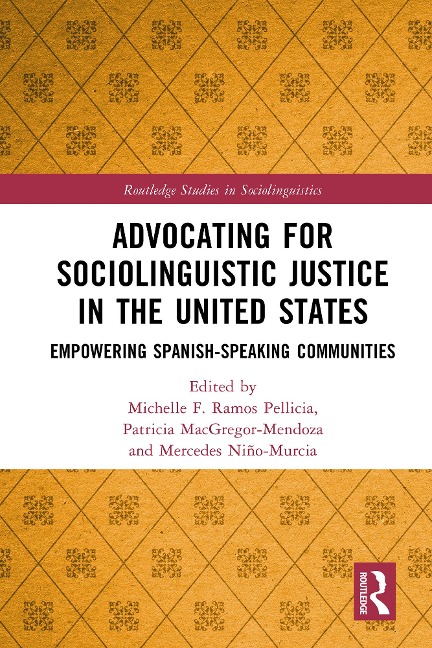
This collection focuses on social awareness and critical language awareness with the goal of enlightening and empowering multilingual and multicultural communities across the U.S. Each chapter brings to light the trauma, gaps in services and misguided societal perceptions that adversely impact communities whose linguistic and cultural background and/or status as migrants place them in vulnerable situations. In doing so, the authors and editors demonstrate how an increased awareness of diverse communities' linguistic and cultural wealth can be leveraged to build strength and resilience in order to overcome physical, verbal or symbolic violence and provide remedies for inequities in educational, medical, and legal contexts. Showcasing discussions of the intersectionality and contexts in which language, power, migration, and the cultural funds of knowledge of minoritized communities interact, this volume will be of interest to students, scholars, and educators in sociolinguistics, applied linguistics, and language education.
Michelle F. Ramos Pellicia (Ph.D., The Ohio State University) is a Professor of Sociolinguistics specializing in Latinx communities at California State University San Marcos. Patricia MacGregor-Mendoza is Professor of Spanish and Linguistics in the Department of Languages and Linguistics at New Mexico State University, USA. Mercedes Niño-Murcia is Professor Emerita of Hispanic Linguistics in the Departments of Linguistics and Spanish & Portuguese at the University of Iowa, USA.
Contents List of Contributors Preface Acknowledgements Part 1: Raising Awareness of The Cultural and Linguistic Wealth of Multilingual Communities Chapter 1: Literacy Pedagogies in Tension: Young Latiné Children Literacy Competencies in the Rural Midwest, Laura Anna Edwards Chapter 2: Signs of Language Justice? Solidarity, Belonging, and Strategies for Fostering Linguistic Equity, Jhonni Rochelle Charisse Carr Chapter 3: Heritage Spanish in the News: Understanding, Reevaluating, and Embracing One's Heritage Language on the National Stage, Meghann Peace Part 2: Inspiring Paths for Empowering Members of Multilingual Communities Chapter 4: Discursively Silencing Latinx Child Immigrants in United States Mainstream Media, Megan Strom Chapter 5: "En Busca de un Mejor Futuro": Interpreting for Undocumented Children in the Greater New Orleans Area as a Means of Advocating for Social Justice, Lisbeth A. Philip and Silvia Gómez Juárez Chapter 6: Public Verbal Violence against Spanish-Speaking Migrants in the USA, Mercedes Niño-Murcia Chapter 7: The Role of Heritage Bilingualism in Bringing Social Justice to Research, Ethan Kutlu and Diego Pascual y Cabo Part 3: Providing a Path for Educational Parity for Multilingual Students Chapter 8: The Language/Linguistics Classroom as a Decolonizing Space through the Use of Culturally Sustaining Pedagogies, Michelle F. Ramos Pellicia Chapter 9: Aprender con el Corazón: Awakening Consciousness and Negotiating Identity in the Name of Equity and Social Justice in the SHL Classroom, Gabriela Moreno Chapter 10: The Fallacy of Academic Accountability for Culturally and Linguistically Diverse Learners: How the Linguistic Features of High-Stakes Tests Structure Inequity, Patricia MacGregor-Mendoza Chapter 11: Unlocking Word Structure in School: A Vehicle for Social Justice for Multilingual Learners, Michelle A. Duffy and Jean Ann Chapter 12: Promoting Awareness of Social Justice Issues through Technology-Mediated Project-Based Language Learning, Ruslan Suvorov and Jesse Gleason Index
Dieses eBook wird im PDF-Format geliefert und ist mit einem Adobe Kopierschutz (DRM) versehen. Sie können dieses eBook mit allen Geräten lesen, die das PDF-Format und den Adobe Kopierschutz (DRM) unterstützen.
Zum Beispiel mit den folgenden Geräten:
• tolino Reader
Laden Sie das eBook direkt über den Reader-Shop auf dem tolino herunter oder übertragen Sie das eBook auf Ihren tolino mit einer kostenlosen Software wie beispielsweise Adobe Digital Editions.
• Sony Reader & andere eBook Reader
Laden Sie das eBook direkt über den Reader-Shop herunter oder übertragen Sie das eBook mit der kostenlosen Software Sony READER FOR PC/Mac oder Adobe Digital Editions auf ein Standard-Lesegeräte mit epub- und Adobe DRM-Unterstützung.
• Tablets & Smartphones
Möchten Sie dieses eBook auf Ihrem Smartphone oder Tablet lesen, finden Sie hier unsere kostenlose Lese-App für iPhone/iPad und Android Smartphone/Tablets.
• PC & Mac
Lesen Sie das eBook direkt nach dem Herunterladen mit einer kostenlosen Lesesoftware, beispielsweise Adobe Digital Editions, Sony READER FOR PC/Mac oder direkt über Ihre eBook-Bibliothek in Ihrem Konto unter „Meine eBooks“ - „online lesen“.
Schalten Sie das eBook mit Ihrer persönlichen Adobe ID auf bis zu sechs Geräten gleichzeitig frei.
Bitte beachten Sie, dass die Kindle-Geräte das Format nicht unterstützen und dieses eBook somit nicht auf Kindle-Geräten lesbar ist.