Und dann auf "Zum Home-Bildschirm [+]".

Stöbern
genialokal zum Startbildschirm hinzufügen
Installieren Sie die genialokal App auf Ihrem Startbildschirm für einen schnellen Zugriff und eine komfortable Nutzung.
Installieren Sie die genialokal App auf Ihrem Startbildschirm für einen schnellen Zugriff und eine komfortable Nutzung.
Ihr gewünschter Artikel ist in 0 Buchhandlungen vorrätig - wählen Sie hier eine Buchhandlung in Ihrer Nähe aus:

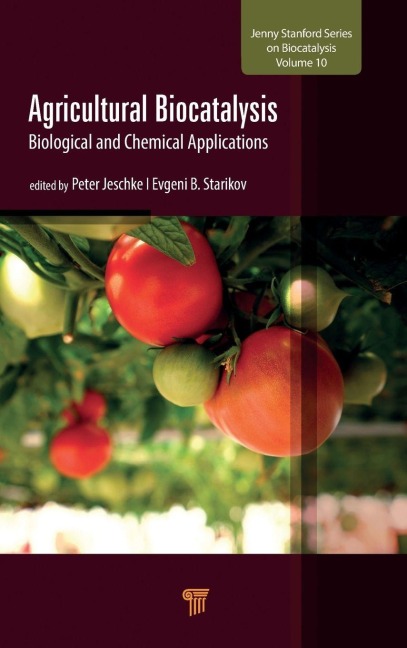
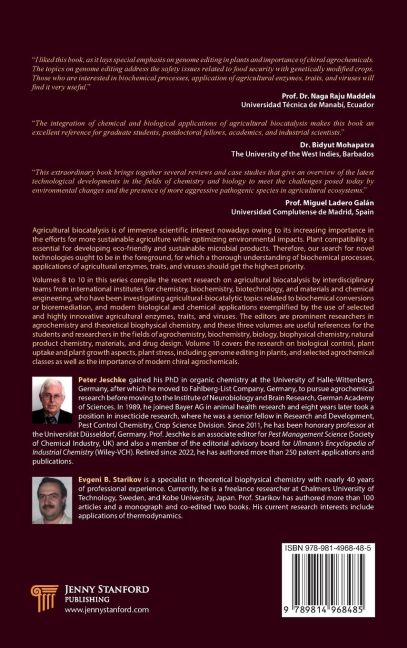
Volume 3 covers the research on biological control, plant uptake and plant growth aspects, plant stress, including genome editing in plants, and selected agrochemical classes as well as the importance of modern chiral agrochemicals.
Peter Jeschke gained his PhD in organic chemistry at the University of Halle-Wittenberg, Germany, after which he moved to Fahlberg-List Company, Germany, to pursue agrochemical research before moving to the Institute of Neurobiology and Brain Research, German Academy of Sciences. In 1989, he joined Bayer AG in animal health research and eight years later took a position in insecticide research, where he was a senior fellow in Research and Development, Pest Control Chemistry, Crop Science Division. Since 2011, he has been honorary professor at the Universität Düsseldorf, Germany. Prof. Jeschke is an associate editor for Pest Management Science (Society of Chemical Industry, UK) and also a member of the editorial advisory board for Ullmann's Encyclopedia of Industrial Chemistry (Wiley-VCH). Retired since 2022, he has authored more than 250 patent applications and publications. Evgeni B. Starikov is a specialist in theoretical biophysical chemistry with nearly 40 years of professional experience. Currently, he is a freelance researcher at Chalmers University of Technology, Sweden, and Kobe University, Japan. Prof. Starikov has authored more than 100 articles and a monograph and co-edited two books. His current research interests include applications of thermodynamics.
Section 1: Biological Control 1. Biological Control of Phytopathogenic Fungi: Mechanisms and Potentials 2. Sustainable Phage-Based Strategies to Control Bacterial Diseases in Agriculture 3. Elimination of Gut Bacteria from Helicoverpa armigera Using Antibiotics Reduces the Binding and Pore-Forming Activity of Cry Toxins Section 2: Plant Uptake and Plant Growth 4. Metal Nanoparticles Applications and Their Release into Surrounding: Perspectives of Plant Uptake and Effects on Phytohormones 5. Utilization of Plant Growth Promoting Rhizobacteria with Multiple Beneficial Traits in Agricultural Biotechnology for Crop Improvement Section 3: Plant Stress 6. Salinity Stress in Plants and Role of Microbes in Its Alleviation 7. Auxin and Stringolactone Interaction in Extreme Phosphate Conditions Section 4: Genome Editing in Plants 8. Food and Feed Safety Considerations for Gene-Edited and Other Genetically Modified Crops 9. Agrobacterium tumefaciens-Mediated Transformation Systems for Genetic Manipulation in Agriculturally Important Fungi Section 5: Agrochemicals 10. Potential Effect of Organophosphate Compounds on Non-Target Sites of Cotton Bollworm, Helicoverpa Armigera 11. Agricultural Fungicides Targeting the Cytochrome bc1 Complex 12. Chiral Agrochemicals 13. Asymmetric Biosynthesis of L-Phosphinothricin