Und dann auf "Zum Home-Bildschirm [+]".

Stöbern
genialokal zum Startbildschirm hinzufügen
Installieren Sie die genialokal App auf Ihrem Startbildschirm für einen schnellen Zugriff und eine komfortable Nutzung.
Installieren Sie die genialokal App auf Ihrem Startbildschirm für einen schnellen Zugriff und eine komfortable Nutzung.
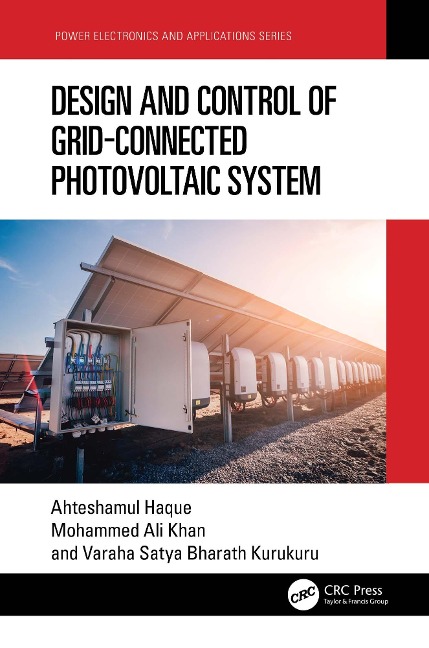
The current model for electricity generation and distribution is dominated by centralized power plants which are typically associated with combustion (coal, oil, and natural gas) or nuclear generation units. These power models require distribution from the center to outlying consumers and have many disadvantages concerning the electric utilities, transmission and distribution, and greenhouse gas emissions. This resulted in the modelling and development of cleaner renewable power generation with alternative sources such as photovoltaic (PV), wind, and other sources. Further, due to matured PV technology, constant drop-in installation cost, greenhouse emissions reductions, energy efficiency, reduced transmission and distribution investments, minimization of electric losses, and network support, the development of PV systems is proliferating. In view of this development, this book provides an idea for setting up the PV plant from initial study of the site to plan sizing. Once the first planning is covered, the book focuses on the modeling aspects of power electronics converter and control elements associated with it keeping the operating standards specified for the development of distributed generation systems in check. This book will be useful for industrial professionals and researchers who are working toward modeling of PV plants, and their control in grid connected operation. All the necessary information related to these fields is available in the book.
Mohammed Ali Khan (S'17-M'22) is currently working as a Post-Doctoral Researcher at the Centre for Industrial Electronics (CIE), University of Southern Denmark (SDU), Sønderborg, Denmark. He received his B.Tech. degree in Electrical and Electronics Engineering from Karunya University, Coimbatore, India, in 2013, and M.Tech. degree in Power System from Amity University, Noida, India, in 2016. He completed his Ph.D. in Power Management of Grid Connected Distribution Generation at Advanced Power Electronics Research Laboratory, Department of Electrical Engineering, Jamia Millia Islamia (A Central University), New Delhi, India, in 2021. He had also worked as Post-Doctoral Researcher in the Department of Electrical Power Engineering, Faculty of Electrical Engineering and Communication, Brno University of Technology, Brno, Czech Republic from December 2021 to January 2023. He was a Visiting Researcher at the Center of Reliable Power Electronics, Aalborg University, Aalborg, Denmark, from October to December 2020. He had also worked as Guest Faculty in the Department of Electrical Engineering, Jamia Millia Islamia (A Central University), New Delhi, India from 2017 to 2020. He has many publications in peer-reviewed journals and presented his research articles in several international conferences. His area of research is artificial intelligence, power electronics, and their application in renewable energy systems, power quality improvements, and reliability. Ahteshamul Haque (M'13-SM'14) received the B.Tech. degree in Electrical Engineering from Aligarh Muslim University, Aligarh, India, in 1999, the master's degree in Electrical Engineering from IIT Delhi, New Delhi, India, in 2000, and the Ph.D. degree in Electrical Engineering from the Department of Electrical Engineering, Jamia Millia Islamia University, New Delhi, India, in 2015. Prior to academics, he was working in the research and development unit of world reputed multinational industries and his work is patented in the USA and Europe. He is currently an Associate Professor with the Department of Electrical Engineering, Jamia Millia Islamia University. He has established Advance Power Electronics Research Laboratory, Department of Electrical Engineering, Jamia Millia Islamia. He is working as a Principal Investigator of the MHRD-SPARC project and other research and development projects. He is the recipient of IEEE PES Outstanding Engineer Award for the year 2019. He has authored or co-authored around 100 publications in international journals and conference proceedings. He is Senior Member of IEEE. His current research interests include power converter topologies, control of power converters, renewable energy, and energy efficiency, reliability analysis, electric vehicle operations. V S Bharath Kurukuru (S'18- M'22) received his B.Tech. degree in Electrical and Electronics Engineering from Avanthi's Research and Technological Academy, Vizianagaram, India, in 2014, and M.Tech. degree in Power Systems from Amity University, Noida, India, in 2016. He completed his Ph.D. degree in Intelligent Monitoring of Solar Photovoltaic System with the Advanced Power Electronics Research Laboratory, Department of Electrical Engineering, Jamia Millia Islamia (A Central University), New Delhi, India, in 2021. He is currently working as a Scientist (Packaging & Multiphysics) at Power Electronics Research Division, Silicon Austria Labs GmbH, Villach, Austria. He was a Visiting Researcher at the Center of Reliable Power Electronics, Aalborg University, Aalborg, Denmark, from August to October 2019. His area of research is fault diagnosis, condition monitoring, and reliability of power electronics converters in renewable energy systems and electric vehicles.
1: Site Study for Grid-Connected PV Systems. 2: Power Electronics Converter Designing. Part 1: DC Side. 3: Power Electronics Converter Designing. Part 2: AC Side. 4: Standard for Operation of Distributed Generation Systems. 5: Standalone Control Operation of PV Inverter. 6: Grid-Connected Operation of PV Inverter. 7: Advance Control Feature for Grid-Connected PV System.
Dieses eBook wird im PDF-Format geliefert und ist mit einem Adobe Kopierschutz (DRM) versehen. Sie können dieses eBook mit allen Geräten lesen, die das PDF-Format und den Adobe Kopierschutz (DRM) unterstützen.
Zum Beispiel mit den folgenden Geräten:
• tolino Reader
Laden Sie das eBook direkt über den Reader-Shop auf dem tolino herunter oder übertragen Sie das eBook auf Ihren tolino mit einer kostenlosen Software wie beispielsweise Adobe Digital Editions.
• Sony Reader & andere eBook Reader
Laden Sie das eBook direkt über den Reader-Shop herunter oder übertragen Sie das eBook mit der kostenlosen Software Sony READER FOR PC/Mac oder Adobe Digital Editions auf ein Standard-Lesegeräte mit epub- und Adobe DRM-Unterstützung.
• Tablets & Smartphones
Möchten Sie dieses eBook auf Ihrem Smartphone oder Tablet lesen, finden Sie hier unsere kostenlose Lese-App für iPhone/iPad und Android Smartphone/Tablets.
• PC & Mac
Lesen Sie das eBook direkt nach dem Herunterladen mit einer kostenlosen Lesesoftware, beispielsweise Adobe Digital Editions, Sony READER FOR PC/Mac oder direkt über Ihre eBook-Bibliothek in Ihrem Konto unter „Meine eBooks“ - „online lesen“.
Schalten Sie das eBook mit Ihrer persönlichen Adobe ID auf bis zu sechs Geräten gleichzeitig frei.
Bitte beachten Sie, dass die Kindle-Geräte das Format nicht unterstützen und dieses eBook somit nicht auf Kindle-Geräten lesbar ist.