Und dann auf "Zum Home-Bildschirm [+]".

Stöbern
genialokal zum Startbildschirm hinzufügen
Installieren Sie die genialokal App auf Ihrem Startbildschirm für einen schnellen Zugriff und eine komfortable Nutzung.
Installieren Sie die genialokal App auf Ihrem Startbildschirm für einen schnellen Zugriff und eine komfortable Nutzung.
Ihr gewünschter Artikel ist in 0 Buchhandlungen vorrätig - wählen Sie hier eine Buchhandlung in Ihrer Nähe aus:

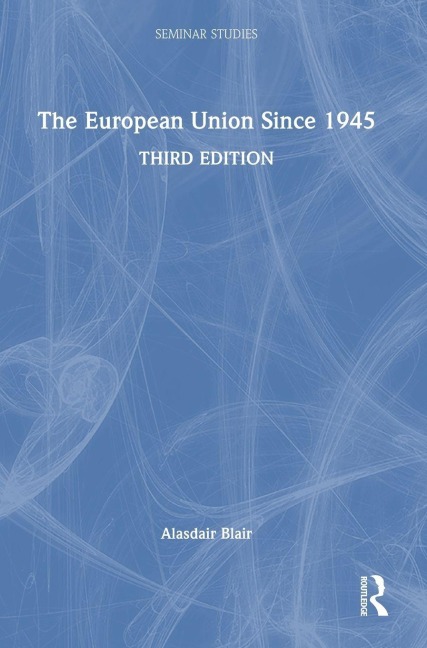
In this fully revised and updated third edition, Alasdair Blair examines the economic, political, personal and social factors that have shaped the process of European integration since the end of the Second World War.
Alasdair Blair is Jean Monnet Professor of International Relations and Associate Pro-Vice Chancellor of Education at De Montfort University. He has written widely on British foreign policy, European integration, and the scholarship of teaching and learning in Political Science. He has written over 10 books and 50 journal articles. He is the lead editor of the Journal of Political Science Education and was previously a co-editor of European Political Science and review editor of European Foreign Affairs Review. He is a national teaching fellow, a principal fellow of Advance HE, and a senior certified member of the Association for Learning Technology.
Introduction to the series Publisher's acknowledgements Maps Preface to the Third Edition Abbreviations The Enlargement of the EU Chronology Who's Who Glossary PART ONE: BACKGROUND 1. THE CONTEXT OF EUROPEAN INTEGRATION An increasingly divided Europe Theorising European integration The issue of sovereignty Challenges ahead PART TWO: ANALYSIS 2. THE ROAD TO ROME: 1945-57 The Emergence of European Unity The Hague Congress The Coal and Steel Community The Failure of the European Defence Community The Treaties of Rome 3. CONSTRUCTING THE COMMUNITY: 1958-70 Institutional Design Policies and Competencies The Nationalist Backlash The Spirit of the Hague 4. THE ENLARGED COMMUNITY: 1970-84 The First Enlargement Britain's Indecision Eurosclerosis Transatlantic Difficulties Britain's Budgetary Question 5. THE TRANSFORMATION OF EUROPE: 1985-1993 Creating the Single Market The Single European Act The Road to 1992 Europe's Changing Map The Maastricht Treaty 6. BUILDING A NEW EUROPE: 1994-2010 Enlarging the EU Treaty of Amsterdam Treaty of Nice The Fifth Enlargement and Constitutional Reform Lisbon and Beyond 7. AN INCREASINGLY UNSTABLE EUROPE: 2010-2025 Eurozone Crisis Migration Crisis Brexit and its Implications The Rise of Populism, Eurosceptics and Democratic Backsliding The Changing Nature of European and World Politics PART THREE: ASSESSMENT 8. THE FUTURE OF EUROPEAN INTEGRATION European and Global Challenges Polycrisis Boundaries of Europe Nature of Membership The Future of European Integration PART FOUR: DOCUMENTS Further Reading References Index