Und dann auf "Zum Home-Bildschirm [+]".

Stöbern
genialokal zum Startbildschirm hinzufügen
Installieren Sie die genialokal App auf Ihrem Startbildschirm für einen schnellen Zugriff und eine komfortable Nutzung.
Installieren Sie die genialokal App auf Ihrem Startbildschirm für einen schnellen Zugriff und eine komfortable Nutzung.
Ihr gewünschter Artikel ist in 0 Buchhandlungen vorrätig - wählen Sie hier eine Buchhandlung in Ihrer Nähe aus:

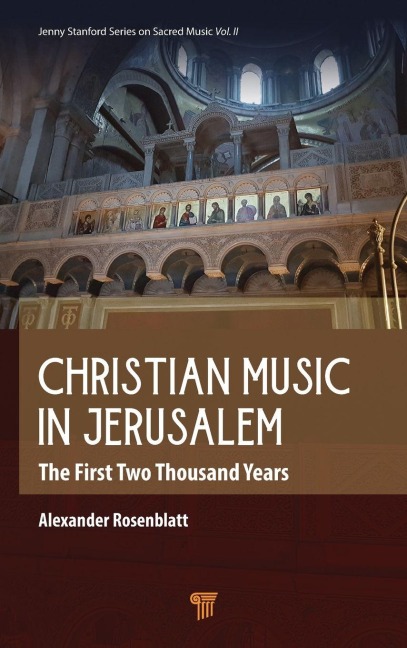
This book brings together several decades of research on the topic, including the last two decades of the author's own research. Each specific point of view was either formed beforehand or emerged in the process of ethnography and its analysis.
Alexander Rosenblatt is a harpsichordist and musicologist and currently a senior lecturer in the Department of Literature, Art, and Music at Zefat Academic College, Israel. He holds a PhD in ethnomusicology from the Hebrew University of Jerusalem (2013). He has been a postdoctoral fellow at the University of British Columbia, Vancouver, Canada (2013-2014); visiting researcher at the Centre for Studies in Religion and Society, University of Victoria, BC, Canada (2021); and visiting scholar at the University of Southern California, Los Angeles (2023). Dr Rosenblatt is a member of ICTMD (International Council for Traditional Music and Dance) since 2012; is an active member of the Israel Musicological Society and was its chairman from 2017 to 2019; and is a board member of FoMRFI (Fellowship of Makers and Researchers of Historical Instruments, Oxford, UK). His research areas include music and sociocultural issues, music of Christian worship, and the anthropology of art and music. He has authored several books and published scientific articles in peer-reviewed international journals.
Introduction PART I. OBSERVATIONS AND FIELD STUDIES 1. Music of Places and Music of Communities. 2. Christian Music in Israel: Documentation and Preservation. 3. Studies on Local Christian Music and Related Topics. PART II. INSIGHTS AND REFLECTIONS 4. Music of Local Churches: Frameworks, Sounds, Identities. 5. Discoveries from Longitudinal Studies. 6. Intra-Cultural and Cross-Cultural Perspective. Concluding Thoughts.