Und dann auf "Zum Home-Bildschirm [+]".

Stöbern
genialokal zum Startbildschirm hinzufügen
Installieren Sie die genialokal App auf Ihrem Startbildschirm für einen schnellen Zugriff und eine komfortable Nutzung.
Installieren Sie die genialokal App auf Ihrem Startbildschirm für einen schnellen Zugriff und eine komfortable Nutzung.
Ihr gewünschter Artikel ist in 0 Buchhandlungen vorrätig - wählen Sie hier eine Buchhandlung in Ihrer Nähe aus:

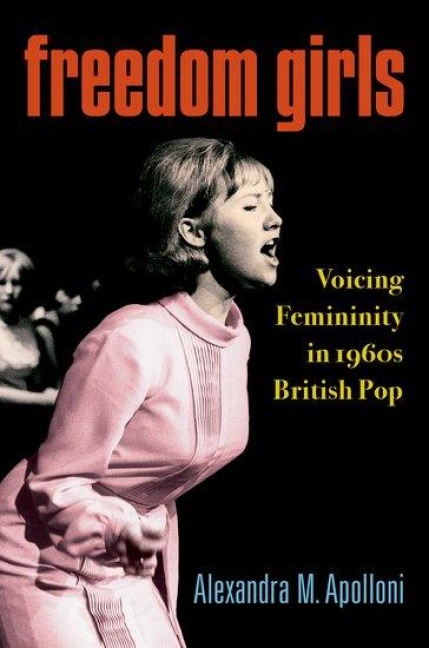
Freedom Girls: Voicing Femininity in 1960s British Pop shows how the vocal performances of girl singers in 1960s Britain defined-and sometimes defied-ideas about what it meant to be a young woman in the 1960s British pop music scene. The singing and expressive voices of Sandie Shaw, Cilla Black, Millie Small, Dusty Springfield, Lulu, Marianne Faithfull, and P.P. Arnold, reveal how vocal sound shapes access to social mobility, and consequently, access to power and musical authority. The book examines how Sandie Shaw and Cilla Black's ordinary girl personas were tied to whiteness and, in Black's case, her Liverpool origins. It shows how Dusty Springfield and Jamaican singer Millie Small engaged with the transatlantic sounds of soul and and ska, respectively, transforming ideas about musical genre, race, and gender. It reveals how attitudes about sexuality and youth in rock culture shaped the vocal performances of Lulu and Marianne Faithfull, and how P.P. Arnold has re-narrated rock history to center Black women's vocality.
Freedom Girls draws on a broad array of archival sources, including music magazines, fashion and entertainment magazines produced for young women, biographies and interviews, audience research reports, and others to inform analysis of musical recordings (including such songs as "As Tears Go By," "Son of a Preacher Man," and others) and performances on television programs such as Ready Steady Go!, Shindig, and other 1960s music shows. These performances reveal the historical and contemporary connections between voice, social mobility, and musical authority, and demonstrate how singers used voice to navigate the boundaries of race, class, and gender.
Alexandra Apolloni is a writer, singer, and music historian. She holds a PhD in Musicology from UCLA and an undergraduate degree in Music and Women's Studies from Wilfrid Laurier University in Waterloo, Canada. Currently, she directs the Scholars as Leaders; Scholars as Learners program for the Faculty of Arts and Science Dean's Office at Yale. Previously, she was the Program and Research Developer at the UCLA Center for the Study of Women. From 2019 to 2021, Alexandra served as Vice President of the International Association for the Study of Popular Music, US-Branch.
- Introduction
- Vocal Manners for Moderns
- Part I: Ordinary, Extraordinary Voices
- Chapter 1: Chart Chicks and Gear Girls: The Limits of Mod Femininity
- Chapter 2: A girl in a million, just like a million": Sandie Shaw and Ordinary Girlhood
- Chapter 3: Sounding Like Liverpool: Region, Memory, and Cilla Black's Accent
- Part II:
- Chapter 4: England meets Jamaica's Lollipop Girl: Millie Small, Voice, and Migration
- Chapter 5: Race, Self-Invention, and Dusty Springfield's Voice
- Part III: Voice, Age, and Sex
- Chapter 6: The Last Remaining Virgin in London: Lulu, Whiteness, and Youth
- Chapter 7: Sex, Freedom, and Marianne Faithfull's Voice at the Twilight of the Sixties
- Chapter 8: Remembering Rock and Roll with P.P. Arnold
- Epilogue
- Index