Und dann auf "Zum Home-Bildschirm [+]".

Stöbern
genialokal zum Startbildschirm hinzufügen
Installieren Sie die genialokal App auf Ihrem Startbildschirm für einen schnellen Zugriff und eine komfortable Nutzung.
Installieren Sie die genialokal App auf Ihrem Startbildschirm für einen schnellen Zugriff und eine komfortable Nutzung.
Ihr gewünschter Artikel ist in 0 Buchhandlungen vorrätig - wählen Sie hier eine Buchhandlung in Ihrer Nähe aus:

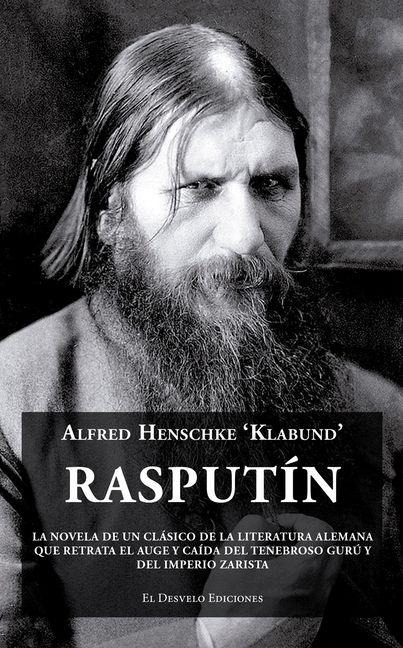
In the final years of the Tsarist empire, the figure of Grigori Rasputin emerges from the depths of the Siberian steppe to establish himself at the heart of power in St. Petersburg. In this work, Klabund constructs a raw portrait of the Russian monarchy's agony, where mystical faith and political ambition converge in a scene of utter decadence. The narrative follows the monk's rise from his humble origins to his establishment as spiritual advisor to Tsarina Alexandra, whose desperation over the health of the heir to the throne opens the palace doors to this figure's influence. Through cinematic, expressionist prose, the author dissects the mechanisms of a court suffocated by absolutism and deception. As World War I bleeds the country dry and corruption eats away at institutions, Rasputin acts as a catalyst for the social forces that will lead to the revolution. The text explores the duality of a man perceived simultaneously as both saint and demon, whose presence precipitates the end of an era. The conflict escalates with the emergence of figures such as Prince Felix Yusupov, determined to eliminate the man he considers the nation's shame. The story of the conspirators and the final fate of the Romanovs intertwine in a dance toward chaos. This work offers a perspective on the fragility of power and the clash between a decaying feudal world and the dawn of a new social structure that will define the course of the 20th century.
Alfred Henschke alias Klabund, (Crossen del Oder, hoy Krosno Odrzań, skie, 1890 - Davos 1928), fue un prolífico, multifacético e inquieto escritor alemán cultivador de prácticamente todos los géneros y subgéneros. Su Círculo de tiza, uno de los mayores éxitos teatrales de la República de Weimar, inspiró a Brecht El círculo de tiza caucasiano. El cabaret fue también para Klabund su estrado de expresión (el Voltaire en Zurich, el Simplicissimus en Munich, el Schall und Rauch o el café Größenwahn en Berlín). Y la tuberculosis, su inseparable compañera desde los 16 años. Locarno, Arosa, Brioni y Davos, sus refugios donde componía novelas históricas (Moreau, Mohamed, Bracke, Pjotr, Rasputín o Borgia), miles de poemas con predilección por el componente erótico y chansons. Un total de 70 obras en 20 años bajo el ritmo trepidante de quien sabe que tiene los días contados.