Und dann auf "Zum Home-Bildschirm [+]".

Stöbern
genialokal zum Startbildschirm hinzufügen
Installieren Sie die genialokal App auf Ihrem Startbildschirm für einen schnellen Zugriff und eine komfortable Nutzung.
Installieren Sie die genialokal App auf Ihrem Startbildschirm für einen schnellen Zugriff und eine komfortable Nutzung.


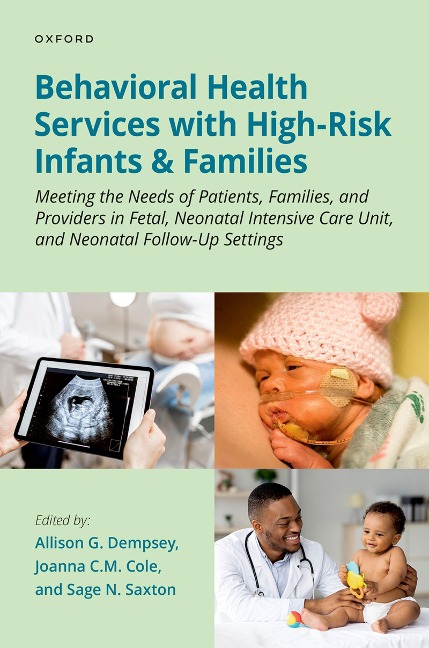
There are relatively high rates of complications in the fetal and neonatal periods (1 in 33 fetuses born with birth defects and 1 in 10 preterm births in the US). With advances in maternal-fetal care and growing services and life-extending medical innovations in the neonatal period, more families are presenting to Neonatal Intensive Care Units (NICUs) and often for longer lengths of time. The growing recognition of mental health needs of families and providers in fetal care centers, NICUs, and neonatal follow-up programs has led to a quickly increasing presence of behavioral health providers in these settings. Behavioral Health Services with High-Risk Infants & Families is a practical guide for mental health clinicians working in fetal care, NICU, and neonatal follow-up care. The book provides a broad overview of common medical conditions in fetal and NICU settings (e.g., congenital anomalies, premature birth, hypoxic injury in the perinatal period), prevalence, and symptoms of behavioral health challenges, specific considerations for assessment and intervention, and cross-cutting issues to assist the clinician with optimizing behavioral health care integration with mothers, partners, babies, and families. Additionally, information about the provision of psychosocial support and education to staff is also included. The text represents a comprehensive, practical resource for behavioral health clinicians working with pregnant women, partners, infants, families, and providers in perinatal and neonatal intensive care settings. The book features de-identified case examples, trauma-informed care prompts/scripts, specific questions for assessment and intakes, key medical terms, resource guides, and reference lists.
Allison G. Dempsey, PhD is a licensed psychologist and Associate Professor of Psychiatry at University of Colorado School of Medicine. She is the Director of the Connections Program for High-Risk Infants and Families and the Perinatal Behavioral Health Pathways Program. She has worked with high-risk infants and families for over a decade across fetal care, neonatal intensive care, and neonatal follow-up settings. She is the elected co-chair of the executive committee of the National Network of NICU Psychologists. Her clinical work focuses on the development and psychological and behavioral functioning of high-risk infants and their families across the continuum of medical settings from pregnancy through early childhood. Her research focuses on models of care for behavioral health service delivery with high-risk infants and families. Joanna C.M. Cole, PhD, PMH-C is a licensed clinical psychologist and Associate Professor of Clinical Psychology in Psychiatry at the Perelman School of Medicine at the University of Pennsylvania. She is the manager of psychosocial programs within the Center for Fetal Diagnosis and Treatment at the Children's Hospital of Philadelphia, caring for expectant parents diagnosed with a fetal birth defect. Dr. Cole provides psychotherapy with individuals and couples on effective coping strategies and emotional preparation for different stages in the medical experience, from pregnancy diagnosis and prenatal care, through the birth process and the neonatal intensive care stay. She also provides options counseling and grief support to help families plan for and cope with the intrauterine and/or neonatal death of their baby. She is the Associate Clinical Chair for the Family StEPS Program, a new initiative across CHOP's fetal and early childhood programs to provide resources, clinical care, and partnerships to help nurture parental-child attachment and development. Dr. Cole is also an active member in Postpartum Support International, where she acts as an international trainer and Curriculum Manager for the Perinatal Mood Disorders Components of Care 2-Day Training Course and Advanced Psychotherapy Course. Sage N. Saxton, PsyD is a licensed psychologist whose work focuses on children and families from birth through early childhood. Dr. Saxton is a Professor of Pediatrics with the Oregon Health & Science University's (OHSU) Institute on Development and Disability (IDD). She is the Director of the NICU Follow Up Program and has worked with high-risk infants and their families for over 13 years. Dr. Saxton is an active member of both the National Perinatal Association (NPA) and Postpartum Support International and serves on the Board of Directors for the NPA. She is the elected co-chair of the executive committee of the National Network of NICU Psychologists. Dr. Saxton's research interests include developmental and educational outcomes for children born prematurely, children's adjustment to traumatic loss, and the provision of hospital-based parental support. She is actively involved in programmatic development efforts nationally to improve family and patient centered NICU care.
SECTION I: ROLES AND PRACTICE ISSUES 1. History of Psychological Services in Neonatal Intensive Care Michael T. Hynan 2.Roles, Activities, and Opportunities of Behavioral Health Clinicians in Delivering Continuity of Care Tiffany Willis, LaTrice L. Dowtin, Dailyn Acosta, and Kara Hansen 3.Quality Improvement and Research Across Fetal and Neonatal Care Settings Pamela A. Geller, Ariana Albanese, Victoria A. Grunberg, John Chuo, and Chavis A. Patterson 4.Systems Interventions and Program Development Susanne Klawetter, Jill A. Hoffman, Kristi Roybal, and Sunah S. Hwang 5. Interdisciplinary Behavioral Health Teams Chavis A. Patterson, Mona Elgohail, Alison Hartman, Vincent C. Smith, and Pamela A. Geller 6. Teaching and Training Developing Professionals in Perinatal and Neonatal Settings LaTrice L. Dowtin, Tiffany Willis, Soudabeh Givrad, and Melissa Scala 7.Operations and Ethical Considerations Elizabeth Fischer, KristiLynn Cedars, Abbey Kruper, and Steven R. Leuthner SECTION II: CROSS-CUTTING MENTAL HEALTH ISSUES AND APPROACHES 8. Infant Mental Health for High-Risk Infants Across the Continuum of Care Miller Shivers, Annelise Cunningham, Natalia Henner, and Kerri Machut 9.Perinatal Mood and Anxiety Disorders Among Parents of High-Risk Fetuses and Infants Birdie Meyer, Brenda Papierniak, and Christena Raines 10. Screening for Perinatal Mood and Anxiety Disorders Across Settings Amy E. Baughcum, Olivia E. Clark, Shannon L. Gillespie, and Jeanne Decker 11. Psychotherapy and Medication Interventions for Perinatal Mood and Anxiety Disorders Across Settings Teni Davoudian, Jacquelyn Knapp, Lana Weber, and Nicole Cirino 12. Trauma and Trauma Informed Care Mary Coughlin 13. Addressing Perinatal Substance Use Across the Continuum of Care Jennifer J. Paul, Jessalyn Kelleher, Susanne Klawetter, and Sarah Nagle-Yang 14. Human Milk and Breastfeeding Diane L. Spatz and Elizabeth D. Morris 15. Shared Decision-Making Across Settings Jeannie Zuk, Kristin Carter, Beth McManus, and Brooke Dorsey Holliman 16. Perinatal Crisis and Traumatic Bereavement Mara Tesler Stein and Deborah L. Davis 17. The Value of Peer Support for High-Risk Pregnant Women and Their NICU Infants Sue L. Hall, Jenny Landry, and Erin Thatcher SECTION III: FETAL CARE SETTINGS 18. Specialty Care Settings: Perinatal Management, Fetal Therapy and the Fetal Therapy Center Christina Paidas Teefey, Sarah Robinson, and Julie S. Moldenhauer 19. Role of Behavioral Health Clinicians in Fetal Care Settings Lacy Chavis, Sakina Butt, and Elizabeth Vaught 20. Uncertainty and Coping in the NICU: Relationships Matter Zina Steinberg and Susan Kraemer SECTION IV: NEONATAL INTENSIVE CARE SETTINGS 21. Neonatal Intensive Care Settings Sara C. Handley and David Munson 22. Role of Behavioral Health Clinicians in the NICU Setting Rochelle Steinwurtzel, Sandhya Brachio, Sheau-Yan Ho, Solimar Santiago-Warner 23. Regulation, Relationships, and Reflection: Developmental Care in the NICU Ayelet Talmi and Joy V. Browne 24. Mental Health and Coping Challenges Among Families in the NICU Jennifer Harned Adams, Stacey R. Bromberg, and Anna Zimmerman SECTION V: NEONATAL FOLLOW-UP SETTINGS 25. A Brief History of Neonatal Follow Up and Why It's Done Howard Needelman, Beatrice Egboh, Whitney Strong-Bak, and Grace Winningham 26. Common Neurodevelopmental and Behavioral Challenges in Neonatal Follow-Up Kathryn E. Gustafson and Mollie G. Warren 27. Role of Behavioral Health Clinicians in Neonatal Follow-Up Settings Casey Hoffman and Annie Markovits 28. After the NICU: Primary Care Behavioral Health Services Verenea J Serrano, Jonna von Schulz, Melissa Buchholz, Kristina Malik, Amy Wrenn, and Ayelet Talmi
Dieses eBook wird im PDF-Format geliefert und ist mit einem Adobe Kopierschutz (DRM) versehen. Sie können dieses eBook mit allen Geräten lesen, die das PDF-Format und den Adobe Kopierschutz (DRM) unterstützen.
Zum Beispiel mit den folgenden Geräten:
• tolino Reader
Laden Sie das eBook direkt über den Reader-Shop auf dem tolino herunter oder übertragen Sie das eBook auf Ihren tolino mit einer kostenlosen Software wie beispielsweise Adobe Digital Editions.
• Sony Reader & andere eBook Reader
Laden Sie das eBook direkt über den Reader-Shop herunter oder übertragen Sie das eBook mit der kostenlosen Software Sony READER FOR PC/Mac oder Adobe Digital Editions auf ein Standard-Lesegeräte mit epub- und Adobe DRM-Unterstützung.
• Tablets & Smartphones
Möchten Sie dieses eBook auf Ihrem Smartphone oder Tablet lesen, finden Sie hier unsere kostenlose Lese-App für iPhone/iPad und Android Smartphone/Tablets.
• PC & Mac
Lesen Sie das eBook direkt nach dem Herunterladen mit einer kostenlosen Lesesoftware, beispielsweise Adobe Digital Editions, Sony READER FOR PC/Mac oder direkt über Ihre eBook-Bibliothek in Ihrem Konto unter „Meine eBooks“ - „online lesen“.
Schalten Sie das eBook mit Ihrer persönlichen Adobe ID auf bis zu sechs Geräten gleichzeitig frei.
Bitte beachten Sie, dass die Kindle-Geräte das Format nicht unterstützen und dieses eBook somit nicht auf Kindle-Geräten lesbar ist.