Und dann auf "Zum Home-Bildschirm [+]".

Stöbern
genialokal zum Startbildschirm hinzufügen
Installieren Sie die genialokal App auf Ihrem Startbildschirm für einen schnellen Zugriff und eine komfortable Nutzung.
Installieren Sie die genialokal App auf Ihrem Startbildschirm für einen schnellen Zugriff und eine komfortable Nutzung.
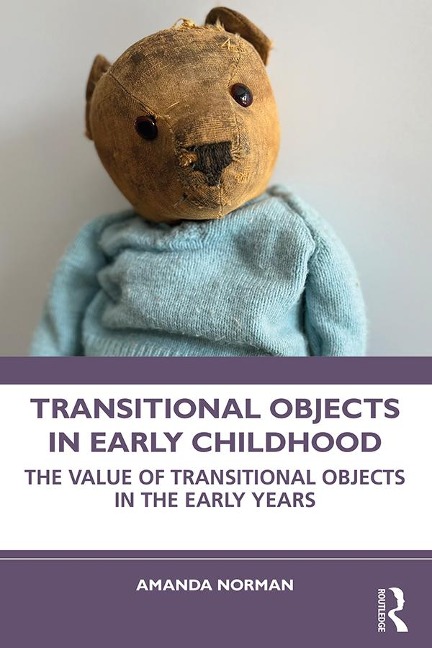
In this innovative book, Amanda Norman looks at D. W. Winnicott's theory of Transitional Objects in early years practice, the 'good-enough' parent, and the relationship between the young child and primary carer in relation to the value of Transitional Objects. Norman looks at how an understanding of psychological theories can be useful when caring for young children in both educational and research contexts, aiding those interested in understanding therapeutic relationships, and applying the principles to promote the use of Transitional Objects in their work. Throughout the book, Norman uses case studies from parents, children, and practitioner's perspectives in supporting physical and emotional development. Through these, she shows how observing Transitional Objects is particularly relevant to living in the west, where a low touch, high technology culture prevails, compounded by the recent pandemic. This volume contributes to a timely connection between the understanding and application of therapeutic approaches within early educational contexts. Including engaging exercises at the end of each chapter, this book is a perfect companion for those approaching the concept of Transitional Objects for the first time. Transitional Objects in Early Childhood is vital reading for those with an interest in the psychology of the infant/young child and their relationship and realities with the external world. It will be of particular interest to those specialising in infant and child care who wish to develop their knowledge of emotional development through play, as well as those working in a variety of social, education, and health contexts.
Amanda Norman is a Senior Lecturer at the University of Winchester, UK. She is the author of two books and has published works about infant care pedagogies and emotional well-being in academic peer reviewed and professional practice articles. As a practising therapeutic play specialist and early years consultant she continues to support and liaise with early professionals working in the sector, in addition to her academic role.
Introduction Part One: Transitional Objects and Early Childhood 1. A Historical Overview of Sentimental Objects and Their Meanings in Transitions 2. A Winnicott Partnership: The Winnicotts' Contributions to Psychoanalysis and Social Care 3. Attachment, Object Relations, and Transitional Objects 4. Transitional Objects: Parents, Personal to Public Part Two: Transitional Objects and Early Years Practice 5. Transitions and Formal Day Care 6. Transitional Objects in Early Years and Caring Contexts 7. A Cross-Disciplinary Approach to Transitional Objects: Symbolic, Transitional, and Sentimental Objects 8. Concluding Note: Looking Back, Moving Forward
Dieses eBook wird im PDF-Format geliefert und ist mit einem Adobe Kopierschutz (DRM) versehen. Sie können dieses eBook mit allen Geräten lesen, die das PDF-Format und den Adobe Kopierschutz (DRM) unterstützen.
Zum Beispiel mit den folgenden Geräten:
• tolino Reader
Laden Sie das eBook direkt über den Reader-Shop auf dem tolino herunter oder übertragen Sie das eBook auf Ihren tolino mit einer kostenlosen Software wie beispielsweise Adobe Digital Editions.
• Sony Reader & andere eBook Reader
Laden Sie das eBook direkt über den Reader-Shop herunter oder übertragen Sie das eBook mit der kostenlosen Software Sony READER FOR PC/Mac oder Adobe Digital Editions auf ein Standard-Lesegeräte mit epub- und Adobe DRM-Unterstützung.
• Tablets & Smartphones
Möchten Sie dieses eBook auf Ihrem Smartphone oder Tablet lesen, finden Sie hier unsere kostenlose Lese-App für iPhone/iPad und Android Smartphone/Tablets.
• PC & Mac
Lesen Sie das eBook direkt nach dem Herunterladen mit einer kostenlosen Lesesoftware, beispielsweise Adobe Digital Editions, Sony READER FOR PC/Mac oder direkt über Ihre eBook-Bibliothek in Ihrem Konto unter „Meine eBooks“ - „online lesen“.
Schalten Sie das eBook mit Ihrer persönlichen Adobe ID auf bis zu sechs Geräten gleichzeitig frei.
Bitte beachten Sie, dass die Kindle-Geräte das Format nicht unterstützen und dieses eBook somit nicht auf Kindle-Geräten lesbar ist.