Und dann auf "Zum Home-Bildschirm [+]".

Stöbern
genialokal zum Startbildschirm hinzufügen
Installieren Sie die genialokal App auf Ihrem Startbildschirm für einen schnellen Zugriff und eine komfortable Nutzung.
Installieren Sie die genialokal App auf Ihrem Startbildschirm für einen schnellen Zugriff und eine komfortable Nutzung.




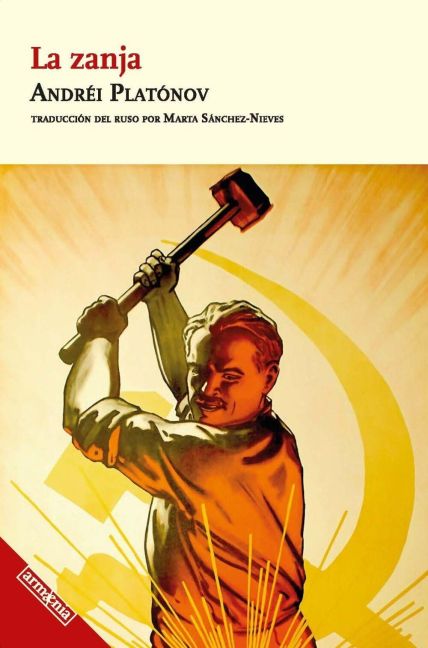
Rusia interior, años treinta. Un grupo de obreros excava los cimientos de un edificio monumental destinado a albergar el futuro socialista perfecto. Cuanto más trabajan y más profundamente cavan, más se desmorona el proyecto, hasta que el lugar comienza a parecerse a una tumba colectiva. Escrita como respuesta directa a las brutalidades de la colectivización estalinista, La zanja es la novela más abiertamente política de Platónov y una obra maestra indiscutible del siglo XX. En su intento por expresar lo indecible, el autor retuerce el lenguaje y lo transforma, reflejando tanto la violencia del discurso oficial como la desnuda dureza de la vida cotidiana. Esta edición incluye el texto definitivo del autor, un esclarecedor posfacio de Robert Chandler y Olga Meerson, y fragmentos inéditos suprimidos por el propio Platónov. Inner Russia, 1930s. A group of workers digs the foundations of a monumental building meant to house the perfect socialist future. The harder they work and the deeper they dig, the more the project collapses, until the site begins to resemble a vast collective grave. Written as a direct response to the brutalities of Stalinist collectivization, The Foundation Pit is Platonov's most overtly political novel and an undisputed masterpiece of twentieth-century literature. In his attempt to give voice to the unspeakable, Platonov bends and fractures language itself, capturing both the violence of official discourse and the stark simplicity of everyday life. This edition includes the author's definitive text, an illuminating afterword by Robert Chandler and Olga Meerson, and previously suppressed fragments.
Andréi Platónov (1899-1951) nació en un pueblo cerca de la ciudad rusa de Voronezh. Revolucionario convencido, comenzó a publicar poemas y relatos en 1920 y trabajó como experto en la recuperación de tierras en el centro de Rusia, donde sin embargo fue testigo de los estragos de la Gran Hambruna. En la década de 1930, Platónov cayó en desgracia con Stalin y su obra dejó de ser publicada hasta 1987. Sus libros más conocidos son Chevengur (Cátedra, 2001), Dzhan (Fulgencio Pimentel, 2017) y La patria de la electricidad y otros relatos (Galaxia Gutemberg, 2003). Andrei Platonov (1899-1951) was born in a village near the Russian city of Voronezh. A committed revolutionary, he began publishing poems and short stories in 1920 and worked as a land reclamation specialist in central Russia, where he nevertheless witnessed the devastation of the Great Famine. In the 1930s, Platonov fell into disgrace with Stalin and his work ceased to be published until 1987. His best-known books include Chevengur, Dzhan, and La patria de la electricidad y otros relatos.