Und dann auf "Zum Home-Bildschirm [+]".

Stöbern
genialokal zum Startbildschirm hinzufügen
Installieren Sie die genialokal App auf Ihrem Startbildschirm für einen schnellen Zugriff und eine komfortable Nutzung.
Installieren Sie die genialokal App auf Ihrem Startbildschirm für einen schnellen Zugriff und eine komfortable Nutzung.
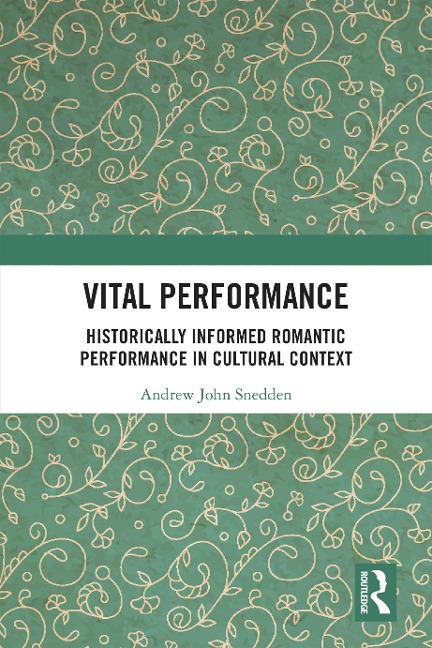
Historically Informed Performance, or HIP, has become an influential and exciting development for scholars, musicians, and audiences alike. Yet it has not been unchallenged, with debate over the desirability of its central goals and the accuracy of its results. The author suggests ways out of this impasse in Romantic performance style. In this wide-ranging study, pianist and scholar Andrew John Snedden takes a step back, examining the strengths and limitations of HIP. He proposes that many problems are avoided when performance styles are understood as expressions of their cultural era rather than as simply composer intention, explaining not merely how we play, but why we play the way we do, and why the nineteenth century Romantics played very differently. Snedden examines the principal evidence we have for Romantic performance style, especially in translation of score indications and analysis of early recordings, finally focusing on the performance styles of Liszt and Chopin. He concludes with a call for the reanimation of culturally appropriate performance styles in Romantic repertoire. This study will be of great interest to scholars, performers, and students, to anyone wondering about how our performances reflect our culture, and about how the Romantics played their own culturally-embedded music.
Andrew Snedden is an international scholar-musician and educator. He has worked as performer, university tutor and lecturer, as school music teacher, and as theatre and church music director. As pianist, he studied with close associates of Claudio Arrau, and is noted for his lecture-recitals, applying historically-informed performance practice to create entertaining performances of intelligence and passion. Most recently, in 2011 he marked the bicentenary of Liszt's birth by a series of lecture-recitals performing the composer's quintessential piano cycle The Years of Pilgramage. As scholar musician, he researches 19th century Romanticist performance practices as evidenced by the earliest recordings and textual sources, with a particular focus on Franz Liszt. He has recently completed a Ph.D., entitled Vital Performance: Culture, Worldview, and Romanticist Performance Practice with Application in Franz Liszt's Consolations and Années de Pèlerinage Première Année, which included ground-breaking Liszt recordings in a newly reconstructed nineteenth century style. He has completed the first of two books based on this research.
PART A: CULTURAL AND MUSICAL MEANING CHAPTER 1 HIP Hype or 'Yawning Chasm'? CHAPTER 2 Ghosts in the Machine: Cultural Exegeses of Modernism and Romanticism CHAPTER 3 Letter and Spirit: Culture and Performance Practice PART B: RECONSTRUCTING ROMANTICIST PERFORMANCE STYLE CHAPTER 4 Enigma: Deciphering the Past CHAPTER 5 The HIP Rosetta Stone? CHAPTER 6 Too Much Is Only Just Enough: Pianistic Romanticism CONCLUDING REMARKS - An Unfinished Journey
Dieses eBook wird im PDF-Format geliefert und ist mit einem Adobe Kopierschutz (DRM) versehen. Sie können dieses eBook mit allen Geräten lesen, die das PDF-Format und den Adobe Kopierschutz (DRM) unterstützen.
Zum Beispiel mit den folgenden Geräten:
• tolino Reader
Laden Sie das eBook direkt über den Reader-Shop auf dem tolino herunter oder übertragen Sie das eBook auf Ihren tolino mit einer kostenlosen Software wie beispielsweise Adobe Digital Editions.
• Sony Reader & andere eBook Reader
Laden Sie das eBook direkt über den Reader-Shop herunter oder übertragen Sie das eBook mit der kostenlosen Software Sony READER FOR PC/Mac oder Adobe Digital Editions auf ein Standard-Lesegeräte mit epub- und Adobe DRM-Unterstützung.
• Tablets & Smartphones
Möchten Sie dieses eBook auf Ihrem Smartphone oder Tablet lesen, finden Sie hier unsere kostenlose Lese-App für iPhone/iPad und Android Smartphone/Tablets.
• PC & Mac
Lesen Sie das eBook direkt nach dem Herunterladen mit einer kostenlosen Lesesoftware, beispielsweise Adobe Digital Editions, Sony READER FOR PC/Mac oder direkt über Ihre eBook-Bibliothek in Ihrem Konto unter „Meine eBooks“ - „online lesen“.
Schalten Sie das eBook mit Ihrer persönlichen Adobe ID auf bis zu sechs Geräten gleichzeitig frei.
Bitte beachten Sie, dass die Kindle-Geräte das Format nicht unterstützen und dieses eBook somit nicht auf Kindle-Geräten lesbar ist.