Und dann auf "Zum Home-Bildschirm [+]".

Stöbern
genialokal zum Startbildschirm hinzufügen
Installieren Sie die genialokal App auf Ihrem Startbildschirm für einen schnellen Zugriff und eine komfortable Nutzung.
Installieren Sie die genialokal App auf Ihrem Startbildschirm für einen schnellen Zugriff und eine komfortable Nutzung.
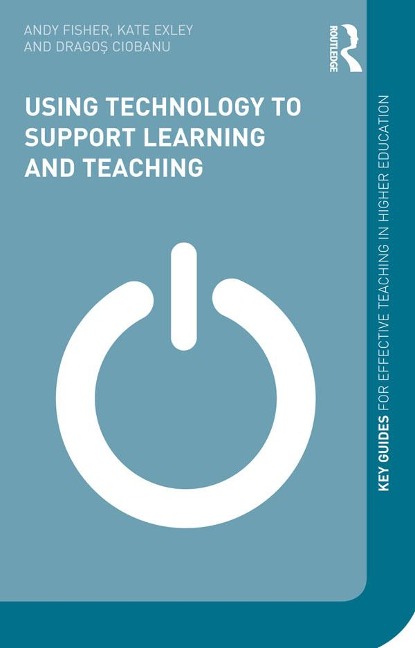
The climate of Higher Education is changing rapidly. The students are more likely to see themselves as consumers and have increasingly high expectations regarding teaching and learning. Universities are in part aiming to meet this need by increasing the use of technology; for example, whether to increase access to teaching materials outside the classroom or to make lectures more interactive. Although there is no illusion amongst Higher Education intuitions that technology is a panacea, it is clear that technology is a vital tool in meeting expectations and one that will be used more and more. Consequently the context of this book is one in which technology needs to be understood as part of an overall teaching practice. Technology continues to move on a pace and is used increasingly within Higher Education to support and enhance teaching and learning. There are books which are steeped in technical detail and books which are steeped in theoretical pedagogy with little discussion about the impact on learning and student/teacher behaviour. Using Technology to Support Learning and Teaching fills a gap in the market by providing a jargon free (but pedagogically informed) set of guidance for teaching practitioners who wish to consider a variety of ways in which technology can enrich their practice and the learning of their students. It integrates a wide range of example cases from different kinds of HE institutions and different academic disciplines, illustrating practicable pedagogies to a wide range of readers. It is full of advice, hints and tips for practitioners wanting to use technology to support a style of teaching and learning that is also built on sound pedagogical principles. It will provide a quick user-friendly reference for practitioners wanting to incorporate technology into Higher Education in a way that adheres to their learning principles and values . This book is primarily for teaching practitioners, particularly those who are new to the industry.This book would also prove useful on training courses for practitioners; such as the Postgraduate Certificate for Higher Education. The authors also intend that the book be of value to newer teachers (perhaps taking teacher training programmes) who wish to see where recommended approaches link to pedagogy.
Andy Fisher is Associate Professor at the University of Nottingham, UK. Kate Exley is Senior Staff Development Officer at the University of Leeds, UK, and a consultant in HE. Dragos Ciobanu is Lecturer in Translation Studies at the University of Leeds, UK.
Chapter 1: Some Theory Chapter 2: Inclusive Practice: Disability and Diversity Chapter 3: Collaboration and Networking - The use of Social Media Chapter 4: Technology for Interaction Chapter 5: Technology for Assessment and Feedback Chapter 6: Podcasting and Vodcasting Chapter 7: Virtual Learning Environments Chapter 8: Free resources Chapter 9: Immersive Environments Chapter 10: New Developments
Dieses eBook wird im PDF-Format geliefert und ist mit einem Adobe Kopierschutz (DRM) versehen. Sie können dieses eBook mit allen Geräten lesen, die das PDF-Format und den Adobe Kopierschutz (DRM) unterstützen.
Zum Beispiel mit den folgenden Geräten:
• tolino Reader
Laden Sie das eBook direkt über den Reader-Shop auf dem tolino herunter oder übertragen Sie das eBook auf Ihren tolino mit einer kostenlosen Software wie beispielsweise Adobe Digital Editions.
• Sony Reader & andere eBook Reader
Laden Sie das eBook direkt über den Reader-Shop herunter oder übertragen Sie das eBook mit der kostenlosen Software Sony READER FOR PC/Mac oder Adobe Digital Editions auf ein Standard-Lesegeräte mit epub- und Adobe DRM-Unterstützung.
• Tablets & Smartphones
Möchten Sie dieses eBook auf Ihrem Smartphone oder Tablet lesen, finden Sie hier unsere kostenlose Lese-App für iPhone/iPad und Android Smartphone/Tablets.
• PC & Mac
Lesen Sie das eBook direkt nach dem Herunterladen mit einer kostenlosen Lesesoftware, beispielsweise Adobe Digital Editions, Sony READER FOR PC/Mac oder direkt über Ihre eBook-Bibliothek in Ihrem Konto unter „Meine eBooks“ - „online lesen“.
Schalten Sie das eBook mit Ihrer persönlichen Adobe ID auf bis zu sechs Geräten gleichzeitig frei.
Bitte beachten Sie, dass die Kindle-Geräte das Format nicht unterstützen und dieses eBook somit nicht auf Kindle-Geräten lesbar ist.