Und dann auf "Zum Home-Bildschirm [+]".

Stöbern
genialokal zum Startbildschirm hinzufügen
Installieren Sie die genialokal App auf Ihrem Startbildschirm für einen schnellen Zugriff und eine komfortable Nutzung.
Installieren Sie die genialokal App auf Ihrem Startbildschirm für einen schnellen Zugriff und eine komfortable Nutzung.
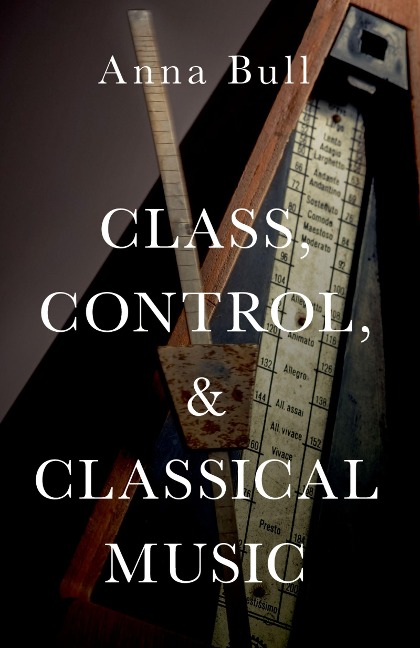
Why is classical music predominantly the preserve of the white middle classes? Contemporary associations between classical music and social class remain underexplored, with classical music primarily studied as a text rather than as a practice until recent years. In order to answer this question, this book outlines a new approach for a socio-cultural analysis of classical music, asking how musical institutions, practices, and aesthetics are shaped by wider conditions of economic inequality, and how music might enable and entrench such inequalities or work against them. This approach is put into practice through a richly detailed ethnography which locates classical music within one of the cultures that produces it - middle-class English youth - and foregrounds classical music as bodily practice of control and restraint. Drawing on the author's own background as a classical musician, this closely observed account examines youth orchestra and youth choir rehearsals as a space where young people learn the unspoken rules of this culture of weighty tradition and gendered control. It highlights how the middle-classes' habitual roles - boundary drawing around their protected spaces and reproducing their privilege through education - can be traced within the everyday spaces of classical music. These practices are camouflaged, however, by the ideology of 'autonomous art' that classical music carries.
Rather than solely examining the social relations around the music, the book demonstrates how this reproductive work is facilitated by its very aesthetic, of 'controlled excitement', 'getting it right', precision, and detail. This book is of particular interest at the present moment, thanks to the worldwide proliferation of El Sistema-inspired programmes which teach classical music to children in underserved areas. While such schemes demonstrate a resurgence in defending the value of classical music, there has been a lack of debate over the ways in which its socio-cultural heritage shapes its conventions today. This book locates these contestations within contemporary debates on class, gender and whiteness, making visible what is at stake in such programmes.
Anna Bull is Lecturer in Education & Social Justice at the University of York. Her research interests include class and gender inequalities in classical music education and staff sexual misconduct in higher education. Bull has published in leading sociology and music education journals, and has also written for a variety of non-academic publications including The Guardian and Arts Professional. Before becoming a sociologist, Anna worked as a pianist and cellist in her native New Zealand and across Scotland with ensembles including Scottish Opera, the New Zealand Symphony Orchestra, the New Zealand Chamber Orchestra, and Live Music Now!.
Acknowledgements Introduction Chapter 1. Locating classical music in culture Chapter 2. Boundary-drawing around the proper: from the Victorians to the present Chapter 3. 'Everyone here is going to have bright futures'. Capitalising on musical standard Chapter 4. 'Getting it right' as an affect of self-improvement Chapter 5. Rehearsing restraint: how the body is transcended Chapter 6. 'Sometimes I feel like I'm his dog': gendered power and the ethics of charismatic authority Chapter 7. 'Instead of destroying my body I have a reason for maintaining it.' Young women's re-imagining of the body through singing opera Chapter 8. A community in sound: constructing the valued self Conclusion Appendix One References
Dieses eBook wird im PDF-Format geliefert und ist mit einem Adobe Kopierschutz (DRM) versehen. Sie können dieses eBook mit allen Geräten lesen, die das PDF-Format und den Adobe Kopierschutz (DRM) unterstützen.
Zum Beispiel mit den folgenden Geräten:
• tolino Reader
Laden Sie das eBook direkt über den Reader-Shop auf dem tolino herunter oder übertragen Sie das eBook auf Ihren tolino mit einer kostenlosen Software wie beispielsweise Adobe Digital Editions.
• Sony Reader & andere eBook Reader
Laden Sie das eBook direkt über den Reader-Shop herunter oder übertragen Sie das eBook mit der kostenlosen Software Sony READER FOR PC/Mac oder Adobe Digital Editions auf ein Standard-Lesegeräte mit epub- und Adobe DRM-Unterstützung.
• Tablets & Smartphones
Möchten Sie dieses eBook auf Ihrem Smartphone oder Tablet lesen, finden Sie hier unsere kostenlose Lese-App für iPhone/iPad und Android Smartphone/Tablets.
• PC & Mac
Lesen Sie das eBook direkt nach dem Herunterladen mit einer kostenlosen Lesesoftware, beispielsweise Adobe Digital Editions, Sony READER FOR PC/Mac oder direkt über Ihre eBook-Bibliothek in Ihrem Konto unter „Meine eBooks“ - „online lesen“.
Schalten Sie das eBook mit Ihrer persönlichen Adobe ID auf bis zu sechs Geräten gleichzeitig frei.
Bitte beachten Sie, dass die Kindle-Geräte das Format nicht unterstützen und dieses eBook somit nicht auf Kindle-Geräten lesbar ist.