Und dann auf "Zum Home-Bildschirm [+]".

Stöbern
genialokal zum Startbildschirm hinzufügen
Installieren Sie die genialokal App auf Ihrem Startbildschirm für einen schnellen Zugriff und eine komfortable Nutzung.
Installieren Sie die genialokal App auf Ihrem Startbildschirm für einen schnellen Zugriff und eine komfortable Nutzung.
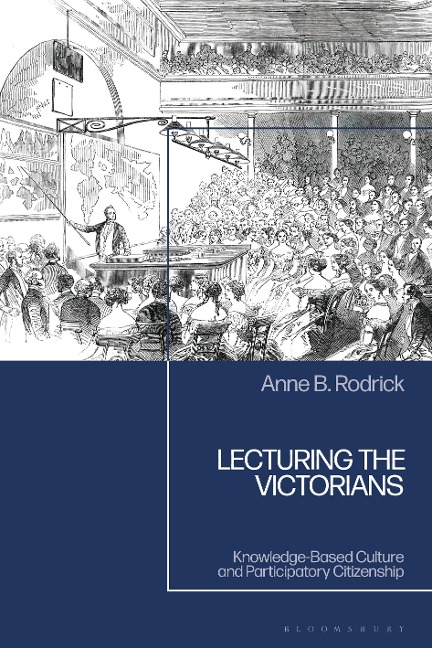
"We are a much-lectured people," wrote Robert Spence Watson in 1897. Beginning at mid-century, cities and towns across England used the popular lecture for purposes ranging from serious education to effervescent entertainment and from regional pride to imperial belonging. Over time, the popular lecture became the quintessential embodiment of Victorian knowledge-based culture, which itself ranged from the production of new knowledge in the most elite of learned societies to the consumption of established knowledge in middle-class clubs and the hundreds of humble mechanics' institutions initially founded to provide scientific instruction to workers.
What did the "average" Victorian talk and think about? How did the knowledge-based culture of lecture and debate enable men and women to demonstrate both civic engagement and cultural competence? How does this knowledge-based culture and its changing expression give us ways to look at Victorian citizenship long before the extension of the franchise? With engaging and accessible prose Anne Rodrick draws from a variety of primary sources to provide fascinating answers to these pertinent questions.
Based on the analysis of several thousand lectures and debates delivered over more than 50 years, this book digs deeply into what those individuals below the most elite levels thought, heard, debated, and claimed as a badge of cultural competence. By the turn of the 20th century, the popular lecture was competing for attention with new institutions of leisure and of higher education, and the discourse surrounding its place in contemporary England helps illuminate important debates over access to and deployment of knowledge and culture.
Anne B. Rodrick teaches European history at Wofford College, USA, where she also directs the Humanities program and the Medicine in the Liberal Arts Program.
Introduction: The Growth of Knowledge-Based Culture
Part 1: 1850-1870
1: "The Desire to form a little Lecture Union": Early Lecture Circuits
2. Shaping "Intelligent Public Opinion": The Development of Civic Institutions
3. "The General Literature and Thought of our Country and Time": Mid-Century Lectures, Debates, and Discussions
Part II: 1870-1900
4. "The improvement and social well-being of mankind": The Sunday Lecture Society and its Kindred Societies, 1870-1893
5. "So Healthy A Growth In Our Large Outside Centres": Suburban Institutes and the Dilution of Cultural Competence
6. Agencies and Attitudes: The Late Victorian Ecosystem of Knowledge
Conclusion: Whither the Popular Lecture?
Bibliography
Index
Dieses eBook wird im PDF-Format geliefert und ist mit einem Adobe Kopierschutz (DRM) versehen. Sie können dieses eBook mit allen Geräten lesen, die das PDF-Format und den Adobe Kopierschutz (DRM) unterstützen.
Zum Beispiel mit den folgenden Geräten:
• tolino Reader
Laden Sie das eBook direkt über den Reader-Shop auf dem tolino herunter oder übertragen Sie das eBook auf Ihren tolino mit einer kostenlosen Software wie beispielsweise Adobe Digital Editions.
• Sony Reader & andere eBook Reader
Laden Sie das eBook direkt über den Reader-Shop herunter oder übertragen Sie das eBook mit der kostenlosen Software Sony READER FOR PC/Mac oder Adobe Digital Editions auf ein Standard-Lesegeräte mit epub- und Adobe DRM-Unterstützung.
• Tablets & Smartphones
Möchten Sie dieses eBook auf Ihrem Smartphone oder Tablet lesen, finden Sie hier unsere kostenlose Lese-App für iPhone/iPad und Android Smartphone/Tablets.
• PC & Mac
Lesen Sie das eBook direkt nach dem Herunterladen mit einer kostenlosen Lesesoftware, beispielsweise Adobe Digital Editions, Sony READER FOR PC/Mac oder direkt über Ihre eBook-Bibliothek in Ihrem Konto unter „Meine eBooks“ - „online lesen“.
Schalten Sie das eBook mit Ihrer persönlichen Adobe ID auf bis zu sechs Geräten gleichzeitig frei.
Bitte beachten Sie, dass die Kindle-Geräte das Format nicht unterstützen und dieses eBook somit nicht auf Kindle-Geräten lesbar ist.