Und dann auf "Zum Home-Bildschirm [+]".

Stöbern
genialokal zum Startbildschirm hinzufügen
Installieren Sie die genialokal App auf Ihrem Startbildschirm für einen schnellen Zugriff und eine komfortable Nutzung.
Installieren Sie die genialokal App auf Ihrem Startbildschirm für einen schnellen Zugriff und eine komfortable Nutzung.

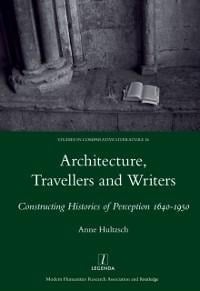
Does the way in which buildings are looked at, and made sense of, change over the course of time? How can we find out about this? By looking at a selection of travel writings spanning four centuries, Anne Hultzsch suggests that it is language, the description of architecture, which offers answers to such questions. The words authors use to transcribe what they see for the reader to re-imagine offer glimpses at modes of perception specific to one moment, place and person. Hultzsch constructs an intriguing patchwork of local and often fragmentary narratives discussing texts as diverse as the 17th-century diary of John Evelyn, Daniel Defoe's Robinson Crusoe (1719) and an 1855 art guide by Swiss art historian Jacob Burckhardt. Further authors considered include 17th-century collector John Bargrave, 18th-century novelist Tobias Smollett, poet Johann Wolfgang von Goethe, critic John Ruskin as well as the 20th-century architectural historian Nikolaus Pevsner. Anne Hultzsch teaches at the Bartlett School of Architecture, University College London.
Anne Hultzsch
1. Introduction: A Manual 2. Rendering Buildings into Words: Pevsner and Evelyn 3. Ordering the Unfamiliar: Bargrave and the Early Grand Tour 4. Reading Books: Defoe, Smollett, and the Country-House Guidebook 5. Thinking in Metaphor: Evelyn and Ruskin 6. Looking through the Lens: Evelyn, Goethe, and Burckhardt 7. Conclusions