Und dann auf "Zum Home-Bildschirm [+]".

Stöbern
genialokal zum Startbildschirm hinzufügen
Installieren Sie die genialokal App auf Ihrem Startbildschirm für einen schnellen Zugriff und eine komfortable Nutzung.
Installieren Sie die genialokal App auf Ihrem Startbildschirm für einen schnellen Zugriff und eine komfortable Nutzung.
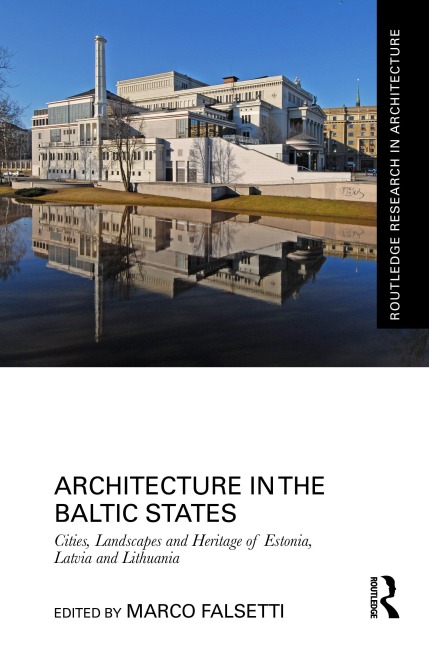
This book explores the architecture of the Baltic States, a region still relatively unexplored in architectural literature. Nevertheless, this collection of chapters provides readers with a comprehensive overview of the urban architectural environment of the three countries that make up the Baltic region: Lithuania, Latvia and Estonia. Organised in three parts, with each part focusing on one of the three Baltic States (plus a fourth, smaller section dedicated to the large complexes of the Spa Towns), the book contains contributions from leading authorities on the subject, including planners, architects, historians, geographers and semioticians. Each part is organized thematically: heritage and legacy, urban history, progress towards modernity and contemporary architecture, with the overall aim of the book being to present the architectural issues and cultural directions of architecture in the Baltic countries. The relative peripherality of the Baltic area has, throughout its history, led to the emergence of a strong tendency towards experimentation, alongside the distinctive urban fabric of medieval Tallinn, baroque Vilnius and 20th-century Riga. This book therefore offers readers an indispensable overview of the continuous transformation of the urban architectural environment in the Baltic region. Architecture in the Baltic States will be of interest to researchers and students of architecture, urban history, urban morphology and heritage.
Marco Falsetti is Architect and holds a PhD (University of Rome 'Sapienza', 2016). Currently a Lecturer in Geopolitics of Architectural Design on the Master's degree course in Medical Intelligence (Humanitas University Consortium), until 2022 he taught Architectural Design and Principles of Urban Planning at the University of Rome 'Sapienza'. His work tackles a range of scales and seeks to bridge the gap between urban phenomena and geopolitical dynamics, tracing the cross-disciplinary tendencies that have shaped the formal codes of the modern since the post-war era. His research has received recognition from important institutions in the field of art and architecture such as Accademia San Luca, MAXXI, Milan Triennale, and Venice Biennale. He has been nominated multiple times for the Italian Scientific Prize, placing second in the Architecture category in 2021 for his work on Kenzo Tange, and in 2024 for his work on Louis I. Kahn. He edited the Italian edition of Louis Kahn's writings (2023) and authored the books Rome and the Legacy of Louis I. Kahn' (2018 with E. Barizza), Kenzo Tange. Gli anni della rivoluzione formale 1940/1970 (2021 with G. Ciotoli), and Gaetano Rapisardi (2022 with C. Barucci). In 2023, he has been Guest Professor at Texas A&M University, and in 2024 Visiting Researcher at UPenn and Harvard GSD.
List of contributors List of figures Acknowledgements Introduction: A Baltic Atlas - Interwoven Perspectives on the Northeastern Borders of Europe Marco Falsetti 1 Architectural Landscapes of Lithuanian Modernity in the 20th Century Marija Dremaite 2 Preserving and Creating Urban Heritage in 20th Century Lithuania Vilte JanuSauskaite 3 Marco Falsetti 4 5 The Rise of the Modern Movement in Latvia Janis KrastinS 6 Contemporary Architecture of Latvia Janis KrastinS 7 A Land Rich or Poor in Outstanding Monuments? Heritage Protection between Russian Imperialism, Baltic German Patriotism and Estonian Nationalism (until 1930s) 8 Greater Tallinn. Urban Development of Estonian Capital, 1910-1940 Karin Hallas-Murula 9 The Cultural Reinvention of Monuments and Memorials in Estonia Federico Bellentani 10 Complexity and Contradiction in Estonian Architecture 11 Architectural Giants in Baltic Spa Towns. Druskinkai, Jurmala, and Pärnu Index
Dieses eBook wird im PDF-Format geliefert und ist mit einem Adobe Kopierschutz (DRM) versehen. Sie können dieses eBook mit allen Geräten lesen, die das PDF-Format und den Adobe Kopierschutz (DRM) unterstützen.
Zum Beispiel mit den folgenden Geräten:
• tolino Reader
Laden Sie das eBook direkt über den Reader-Shop auf dem tolino herunter oder übertragen Sie das eBook auf Ihren tolino mit einer kostenlosen Software wie beispielsweise Adobe Digital Editions.
• Sony Reader & andere eBook Reader
Laden Sie das eBook direkt über den Reader-Shop herunter oder übertragen Sie das eBook mit der kostenlosen Software Sony READER FOR PC/Mac oder Adobe Digital Editions auf ein Standard-Lesegeräte mit epub- und Adobe DRM-Unterstützung.
• Tablets & Smartphones
Möchten Sie dieses eBook auf Ihrem Smartphone oder Tablet lesen, finden Sie hier unsere kostenlose Lese-App für iPhone/iPad und Android Smartphone/Tablets.
• PC & Mac
Lesen Sie das eBook direkt nach dem Herunterladen mit einer kostenlosen Lesesoftware, beispielsweise Adobe Digital Editions, Sony READER FOR PC/Mac oder direkt über Ihre eBook-Bibliothek in Ihrem Konto unter „Meine eBooks“ - „online lesen“.
Schalten Sie das eBook mit Ihrer persönlichen Adobe ID auf bis zu sechs Geräten gleichzeitig frei.
Bitte beachten Sie, dass die Kindle-Geräte das Format nicht unterstützen und dieses eBook somit nicht auf Kindle-Geräten lesbar ist.