Und dann auf "Zum Home-Bildschirm [+]".

Stöbern
genialokal zum Startbildschirm hinzufügen
Installieren Sie die genialokal App auf Ihrem Startbildschirm für einen schnellen Zugriff und eine komfortable Nutzung.
Installieren Sie die genialokal App auf Ihrem Startbildschirm für einen schnellen Zugriff und eine komfortable Nutzung.

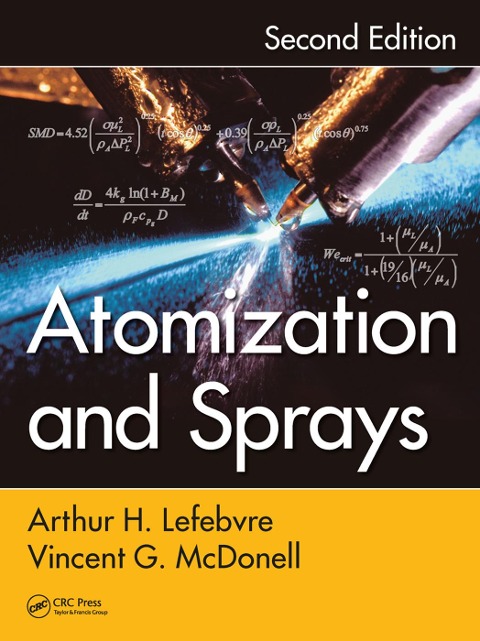
The second edition of this long-time bestseller provides a framework for designing and understanding sprays for a wide array of engineering applications. The text contains correlations and design tools that can be easily understood and used in relating the design of atomizers to the resulting spray behavior. Written to be accessible to readers with a modest technical background, the emphasis is on application rather than in-depth theory. Numerous examples are provided to serve as starting points for using the information in the book. Overall, this is a thoroughly updated edition that still retains the practical focus and readability of the original work by Arthur Lefebvre.
Arthur H. Lefebvre (1923-2003) was Emeritus Professor at Purdue University. With industrial and academic experience spanning more than four decades, he wrote over 150 technical papers on both fundamental and practical aspects of atomization and combustion. The honors he received include the ASME Gas Turbine and ASME R. Tom Sawyer Awards, ASME George Westinghouse Gold Medal, and the IGTI Scholar Award. He was also the first recipient of the AIAA Propellants and Combustion Award. Vincent G. McDonell is Associate Director of the UCI Combustion Laboratory at the University of California, Irvine, where he also serves as an Adjunct Professor in the Mechanical and Aerospace Engineering department. Dr. McDonell, who received his PhD from the University of California, Irvine, also serves as Vice Chair for the Board of Directors at ILASS-Americas. He has done extensive research work in the areas of atomization and combustion, holds a patent in the area, and has authored or co-authored numerous papers in the field.
Preface General Considerations Introduction Atomization Atomizers Factors Influencing Atomization Spray Characteristics Applications Glossary References Basic Processes in Atomization Introduction Static Drop Formation Breakup of Drops Disintegration of Liquid Jets Disintegration of Liquid Sheets Summary Nomenclature References Drop Size Distributions of Sprays Introduction Graphical Representation of Drop Size Distributions Mathematical Distribution Functions Empirical Distribution Functions Mean Diameters Representative Diameters Drop Size Dispersion Concluding Remarks Nomenclature References Atomizers Introduction Atomizer Requirements Pressure Atomizers Rotary Atomizers Air-Assist Atomizers Airblast Atomizers Effervescent Atomizers Electrostatic Atomizers Ultrasonic Atomizers Whistle Atomizers References Flow in Atomizers Introduction Flow Number Plain-Orifice Atomizer Pressure-Swirl Atomizer Rotary Atomizer Airblast Atomizer Nomenclature References Atomizer Performance Introduction Plain-Orifice Atomizer Pressure-Swirl Atomizers Rotary Atomizers Air-Assist Atomizers Airblast Atomizers Effervescent Atomizer Electrostatic Atomizers Ultrasonic Atomizers Nomenclature References External Spray Characteristics Introduction Spray Properties Penetration Spray Cone Angle Circumferential Liquid Distribution Airblast Atomizers Drop Drag Coefficients Nomenclature References Drop Evaporation Introduction Steady-State Evaporation Unsteady-State Analysis Drop Lifetime Convective Effects on Evaporation Calculation of Effective Evaporation Constant Influence of Evaporation on Drop Size Distribution Drop Burning Multicomponent Fuel Drops Nomenclature References Spray Size and Patternation Methods Introduction Factors Influencing Drop Size Measurement Mechanical Methods Electrical Methods Optical Methods Concluding Remarks References Author Index Subject Index