Und dann auf "Zum Home-Bildschirm [+]".

Stöbern
genialokal zum Startbildschirm hinzufügen
Installieren Sie die genialokal App auf Ihrem Startbildschirm für einen schnellen Zugriff und eine komfortable Nutzung.
Installieren Sie die genialokal App auf Ihrem Startbildschirm für einen schnellen Zugriff und eine komfortable Nutzung.
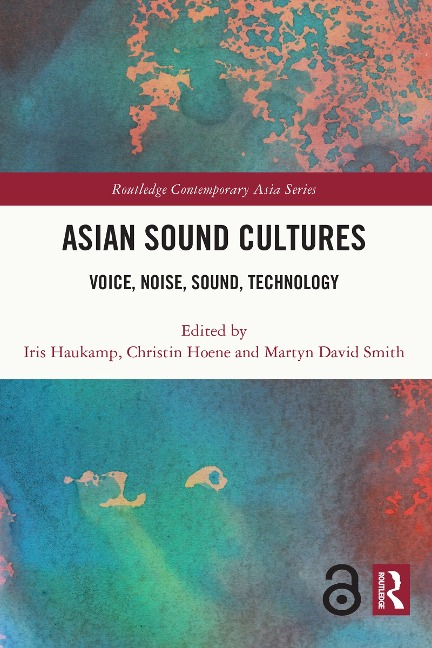
This book examines the meanings, uses, and agency of voice, noise, sound, and sound technologies across Asia. Including a series of wide-ranging and interdisciplinary case studies, the book reveals sound as central to the experience of modernity in Asia and as essential to the understanding of the historical processes of cultural, social, political, and economic transformation throughout the long twentieth century. Presenting a broad range of topics - from the changing sounds of the Kyoto kimono making industry to radio in late colonial India - the book explores how the study of Asian sound cultures offers greater insight into historical accounts of local and global transformation. Challenging us to rethink and reassemble important categories in sound studies, this book will be a vital resource for students and scholars of sound studies, Asian studies, history, postcolonial studies, and media studies.
Iris Haukamp is Associate Professor in Japanese Film at Tokyo University of Foreign Studies, Japan. Christin Hoene is Assistant Professor in Literary Studies at Maastricht University, Netherlands. Martyn David Smith is a historian of modern and contemporary Japan and Lecturer in Japanese Studies at the University of Sheffield, UK.
Part 1: The politics of voice 1. The phonographic politics of 'corporeal voice': Speech recordings for imperial subjectification and wartime mobilization in colonial Taiwan and Korea 2. In dark times: Poetic dissonance in the Thai-Malay borderlands 3. Sonic aesthetics and social disparity: The voice of villains in Ryoo Seung-wan's Veteran (2015) and The Unjust (2010) Part 2: Modern noise 4. Aesthetic ruptures and sociabilities: Tateyama Noboru (1876-1926), quotidian noise, and sokyoku-jiuta 5. The 'hell of modern sound': A history of urban noise in modern Japan 6. Feel the power of my exoticism: Japanese noise music and claims of a distinct Japanese sound Part 3: Sound and power 7. Listening to the talkies: Atarashiki tsuchi's (1937) acoustic construction of Japan for western consumption 8. Recovering the lost Cantonese sounds in pre-handover Hong Kong: Sinophone politics in Dung Kai-cheung's 'The Rise and Fall of Wing Shing Street' (1995) 9. When the looms stop, the baby cries: The changing sounds of the Kyoto kimono-making industry Part 4: Technology and imperialism 10. Early radio in late colonial India: Historiography, geography, audiences 11. (Re) Diffusion of beautiful sound: Chinese broadcast in post-war Bangkok 12. Arranging sounds from daily life: Amateur sound-recording contests and audio culture in Japan in the 1960s and 1970s 13. The dual fate of the twin horn in Thailand: From United States anti-communist weapon to the Phetchabun processional bands' sound system
Dieses eBook wird im PDF-Format geliefert und ist mit einem Adobe Kopierschutz (DRM) versehen. Sie können dieses eBook mit allen Geräten lesen, die das PDF-Format und den Adobe Kopierschutz (DRM) unterstützen.
Zum Beispiel mit den folgenden Geräten:
• tolino Reader
Laden Sie das eBook direkt über den Reader-Shop auf dem tolino herunter oder übertragen Sie das eBook auf Ihren tolino mit einer kostenlosen Software wie beispielsweise Adobe Digital Editions.
• Sony Reader & andere eBook Reader
Laden Sie das eBook direkt über den Reader-Shop herunter oder übertragen Sie das eBook mit der kostenlosen Software Sony READER FOR PC/Mac oder Adobe Digital Editions auf ein Standard-Lesegeräte mit epub- und Adobe DRM-Unterstützung.
• Tablets & Smartphones
Möchten Sie dieses eBook auf Ihrem Smartphone oder Tablet lesen, finden Sie hier unsere kostenlose Lese-App für iPhone/iPad und Android Smartphone/Tablets.
• PC & Mac
Lesen Sie das eBook direkt nach dem Herunterladen mit einer kostenlosen Lesesoftware, beispielsweise Adobe Digital Editions, Sony READER FOR PC/Mac oder direkt über Ihre eBook-Bibliothek in Ihrem Konto unter „Meine eBooks“ - „online lesen“.
Schalten Sie das eBook mit Ihrer persönlichen Adobe ID auf bis zu sechs Geräten gleichzeitig frei.
Bitte beachten Sie, dass die Kindle-Geräte das Format nicht unterstützen und dieses eBook somit nicht auf Kindle-Geräten lesbar ist.