Und dann auf "Zum Home-Bildschirm [+]".

Stöbern
genialokal zum Startbildschirm hinzufügen
Installieren Sie die genialokal App auf Ihrem Startbildschirm für einen schnellen Zugriff und eine komfortable Nutzung.
Installieren Sie die genialokal App auf Ihrem Startbildschirm für einen schnellen Zugriff und eine komfortable Nutzung.

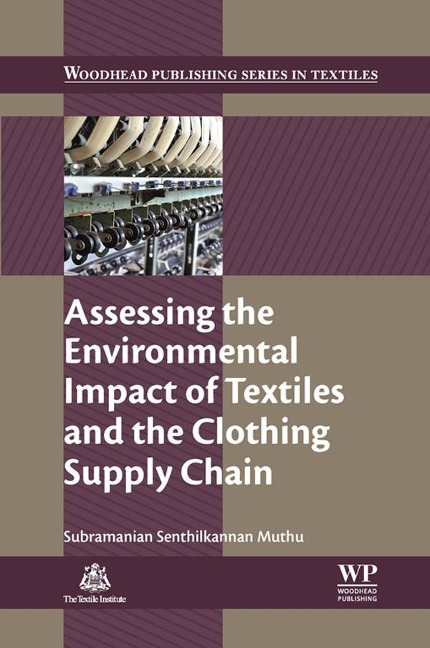
The textile industry impacts the environment in a number of ways, including its use of resources, its impact on global warming, and the amount of pollution and waste it generates. Assessing the Environmental Impact of Textiles and the Clothing Supply Chain reviews methods used to calculate this environmental impact, including product carbon footprints (PCFs), ecological footprints (EFs), and life cycle assessment (LCA). The first chapters provide an introduction to the textile supply chain and its environmental impact, and an overview of the methods used to measure this impact. The book goes on to consider different environmental impacts of the industry, including greenhouse gas emissions, the water and energy footprints of the industry, and depletion of resources, as well as the use of LCA to assess the overall environmental impact of the textile industry. It then deals with the practice of measuring these impacts before forming a conclusion about the environmental impact of the industry. Assessing the Environmental Impact of Textiles and the Clothing Supply Chain provides a standard reference for R&D managers in the textile industry and academic researchers in textile science.Reviews the main methods used to calculate the textile industry's use of resources, its impact on global warming and the pollution and waste it generatesReviews the key methods, their principles and how they can be applied in practice to measure and reduce the environmental impact of textile productsIncludes the following calculation methods: product carbon footprints (PCFs), ecological footprints (EFs) and life cycle assessment (LCA)
Author contact details Woodhead Publishing Series in Textiles Chapter 1: The textile supply chain and its environmental impact Abstract: 1.1 Introduction 1.2 The textile supply chain: an overview 1.3 The production of natural fibres 1.4 The production of synthetic fibres 1.5 Spinning 1.6 Fabric manufacture 1.7 Finishing processes 1.8 Apparel manufacture 1.9 Distribution and retail 1.10 Usage and disposal 1.11 Summary: key challenges in assessing and reducing environmental impacts Chapter 2: Ways of measuring the environmental impact of textile processing: an overview Abstract: 2.1 Introduction 2.2 Ways of measuring the environmental impact of textile processing and textile products 2.3 Environmental legislation relating to textiles 2.4 Current environmental standards and schemes in the industry 2.5 Summary: key methods reviewed in this book Chapter 3: Textile processing and greenhouse gas emissions: methods for calculating the product carbon footprint (PCF) of textile products Abstract: 3.1 Introduction 3.2 The main principles of carbon footprint measurement 3.3 Carbon footprint assessment methodology 3.4 Applications of product carbon footprint (PCF) assessment to key stages in the supply chain 3.5 Application of PCF assessment in textiles 3.6 Summary: key challenges in calculating the PCF in textiles Chapter 4: Calculating the water and energy footprints of textile products Abstract: 4.1 Introduction 4.2 Water footprints: an introduction 4.3 Methods for assessing water footprints 4.4 Applications of water footprint assessment to key stages in the textile supply chain 4.5 Energy footprints: introduction and methods of assessment 4.6 Applications of energy footprint assessment to key stages in the textile supply chain 4.7 Summary: key challenges in calculating water and energy footprints Chapter 5: Textile processing and resource depletion: calculating the ecological footprint of textile products Abstract: 5.1 Introduction 5.2 Main principles and methods 5.3 Application to key stages in the supply chain 5.4 Summary: key challenges in calculating ecological footprints (EFs) in textiles Chapter 6: Estimating the overall environmental impact of textile processing: life cycle assessment (LCA) of textile products Abstract: 6.1 Introduction 6.2 History of life cycle assessment (LCA) 6.3 Basic principles of LCA 6.4 LCA goal and scope definition 6.5 Life cycle inventory analysis 6.6 Life cycle impact assessment (LCIA) 6.7 Life cycle interpretation 6.8 Standards for LCA 6.9 Different LCA methods 6.10 Different LCIA methods 6.11 Tools for calculation of LCAs 6.12 Advantages and limitations of LCA 6.13 Summary Chapter 7: Life cycle assessment (LCA) and product carbon footprint (PCF) modelling of textile products Abstract: 7.1 Introduction 7.2 Modelling for product carbon footprint (PCF) and life cycle assessment (LCA) of textile products 7.3 Available databases for LCA and PCF modelling of textiles and the clothing supply chain 7.4 Key issues in using databases 7.5 Difficulties in modelling and simulation 7.6 Summary Chapter 8: End-of-life management of textile products Abstract: 8.1 Introduction 8.2 End-of-life product management options 8.3 Reuse of textile products 8.4 Recycling of textile products 8.5 Incineration and landfilling of textile products 8.6 Biodegradation of textile products 8.7 Summary Chapter 9: Measuring the environmental impact of textiles in practice: calculating the product carbon footprint (PCF) and life cycle assessment (LCA) of particular textile products Abstract: 9.1 Introduction 9.2 Cotton clothing: life cycle assessment (LCA) studies of T-shirts 9.3 Cotton clothing: LCA studies of jeans 9.4 Woollen clothing: LCA study of a sweater 9.5 Synthetic clothing: LCA studies of polyester garments 9.6 Linen textiles: LCA of a linen shirt 9.7 Technical textiles: LCA studies of medical textile products 9.8 Nonwovens: LCA studies of nappies (diapers) 9.9 Summary Chapter 10: Assessing the environmental impact of textiles: summary and conclusions Abstract: 10.1 Introduction 10.2 Which assessment methods to use and when 10.3 Current problems in environmental assessment 10.4 Future trends Index