Und dann auf "Zum Home-Bildschirm [+]".

Stöbern
genialokal zum Startbildschirm hinzufügen
Installieren Sie die genialokal App auf Ihrem Startbildschirm für einen schnellen Zugriff und eine komfortable Nutzung.
Installieren Sie die genialokal App auf Ihrem Startbildschirm für einen schnellen Zugriff und eine komfortable Nutzung.

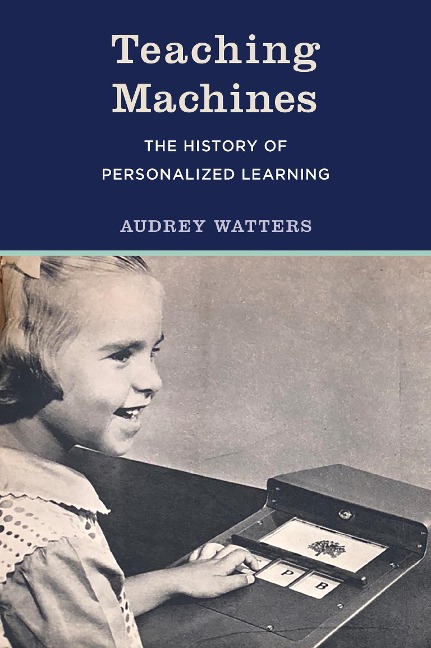


How ed tech was born: Twentieth-century teaching machines--from Sidney Pressey's mechanized test-giver to B. F. Skinner's behaviorist bell-ringing box. Contrary to popular belief, ed tech did not begin with videos on the internet. The idea of technology that would allow students to "go at their own pace" did not originate in Silicon Valley. In Teaching Machines, education writer Audrey Watters offers a lively history of predigital educational technology, from Sidney Pressey's mechanized positive-reinforcement provider to B. F. Skinner's behaviorist bell-ringing box. Watters shows that these machines and the pedagogy that accompanied them sprang from ideas--bite-sized content, individualized instruction--that had legs and were later picked up by textbook publishers and early advocates for computerized learning. Watters pays particular attention to the role of the media--newspapers, magazines, television, and film--in shaping people's perceptions of teaching machines as well as the psychological theories underpinning them. She considers these machines in the context of education reform, the political reverberations of Sputnik, and the rise of the testing and textbook industries. She chronicles Skinner's attempts to bring his teaching machines to market, culminating in the famous behaviorist's efforts to launch Didak 101, the "pre-verbal" machine that taught spelling. (Alternate names proposed by Skinner include "Autodidak," "Instructomat," and "Autostructor.") Telling these somewhat cautionary tales, Watters challenges what she calls "the teleology of ed tech"--the idea that not only is computerized education inevitable, but technological progress is the sole driver of events.
Audrey Watters is a writer on education and technology. She is the creator of the popular blog Hack Education (hackeducation.com) and the author of widely read annual reviews of educational technology news and products.
Introduction 1 1 B.F. Skinner Builds a Teaching Machine 19 2 Sidney Pressey and the Automatic Teacher 35 3 "Mechanical Education Wanted" 61 4 The Commercialization of B.F. Skinner's First Machines 81 5 B.F. Skinner Tries Again 107 6 Programmed Instruction: In Theory and Practice 135 7 Imagining the Mechanization of Teachers' Work 149 8 Hollins College and "The Roanoke Experiment" 167 9 Teaching Machines, Inc. 179 10 B.F. Skinner's Disillusionment 195 11 Programmed Instruction and the Practice of Freedom 213 12 Against B.F. Skinner 231 Conclusion 245 Acknowledgments 265 Notes 269 Index 301