Und dann auf "Zum Home-Bildschirm [+]".

Stöbern
genialokal zum Startbildschirm hinzufügen
Installieren Sie die genialokal App auf Ihrem Startbildschirm für einen schnellen Zugriff und eine komfortable Nutzung.
Installieren Sie die genialokal App auf Ihrem Startbildschirm für einen schnellen Zugriff und eine komfortable Nutzung.
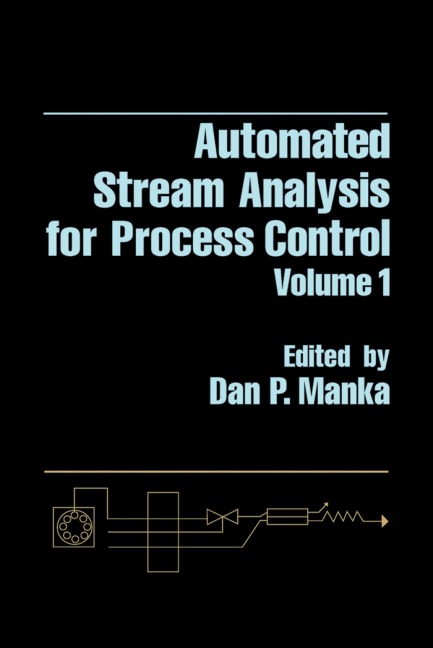
Automated Stream Analysis for Process Control, Volume 1 provides information pertinent to stream analyzers and its elements, including the system, construction, control, and operation. This book examines the results of the analysis, which must be used properly by the computer in order to regulate the process controls so that the process stream will obtain its ultimate goal. Organized into 12 chapters, this volume starts with an overview of the uses of liquid flow-injection analytical devices in process control applications within the chemical production plant. This text then examines the initial two techniques, namely, ion chromatography and ion exclusion chromatography that are used to analyze over 90 varieties of ions down to part-per-billion in aqueous streams in laboratory applications in academic, government, and industrial laboratories. Other chapters consider monitoring of gas streams generated from process development units. Chemists, chemical engineers, analytical chemists, as well as laboratory and plant managers will find this book extremely useful.
List of ContributorsPreface1 Process Ion Chromatography and Related Techniques I. Introduction II. Sample Preparation for Process Analyzers III. Process Ion Chromatography in Power Production IV. Ion Exclusion Chromatography for Brine Purity V. Total Dissolved Solids Analysis for Waste Control VI. Differential Conductivity-Ion Exchange Method VII. Summary References2 Flow-Injection Analysis: A New Approach to Near-Real-Time Process Monitoring I. Introduction II. Principles III. Features IV. Techniques V. Conclusions References3 The Monitoring of Cationic Species in a Nuclear Power Plant Using On-Line Atomic Absorption Spectroscopy I. Introduction II. Adaptations for the Plant Environment III. Modifications Required by Laboratory Experience IV. System Performance V. Test Conclusions References4 The Automation of Laboratory Gas Chromatographs for On-line Process Monitoring and Analysis I. Introduction II. Laboratory Analysis with Gas Chromatography III. Automated, On-Line Gas Chromatographic System IV. Specific Applications V. Conclusions References5 Process Liquid Chromatography I. Introduction II. The Chromatographic Process III. Liquid Chromatography versus Gas Chromatography IV. Requirements and Objectives of Process versus Laboratory Liquid Chromatography V. Sampling Systems VI. Multistream Applications VII. Sample Filtering VIII. Sample Dilution Systems IX. Solvent Handling, Mixing, and Degassing X. Analyzer Enclosure Safety XI. Analyzer XII. Liquid Chromatography Column Configurations and Considerations XIII. Introduction to Process Liquid Chromatographic Detectors XIV. Ultraviolet Optical Absorption Detector XV. Refractive Index Detector XVI. Dielectric Constant Detector XVII. Electrical Conductivity Detector XVIII. Other Detectors for Process Liquid Chromatography XIX. Introduction to Programmers XX. Conventional Electronic Programmer XXI. Minicomputer-Based Programmers XXII. Microprocessor-Based Programmer XXIII. Data Presentation Units XXIV. Process Size-Exclusion Chromatography and the Exclusion Process XXV. Applications XXVI. The Future of Process Liquid Chromatography References6 Automation in the Clinical Chemistry Laboratory. I. Concepts I. Introduction II. Automation and Process Control: Definition of Terms III. The Analytical Process in Clinical Laboratory Testing IV. General Features of an Ideal, State-of-the-Art Analyzer V. Conclusion References7 Automation in the Clinical Chemistry Laboratory. II. Classification and Examples I. Classification of Process-Controlled Analyzers in Clinical Chemistry II. Continuous Flow Analysis III. Discrete Analysis in Open Tubes IV. Discrete Analysis by Centrifugal Analyzers V. Automated Analyzers with Prepackaged Single-Test Reagents VI. Discrete Analysis by in Situ Techniques References8 Continuous Automated Analysis of Gases and Particulates in the Pulp and Paper Industry I. Introduction II. Monitoring of Gases III. Monitoring of Particulates IV. Data Recording, Processing, and Printing V. Concluding Remarks References9 Continuous Analysis of Oxygen in Coke Oven Gas I. Introduction II. Coke Oven Gas Flow Diagram III. Sampling Location IV. Sampling V. Analyzer Operation VI. Interferences VII. Daily Calibration VIII. Maintenance IX. Results X. Relationship of Oxygen Content with Procedure for Coal Charging Reference10 Improving the Quality of Infrared Gas Analyzers I. Introduction II. Sample Preparation III. Effect of Gas Flow IV. Effect of Pressure V. Effect of Room Temperature VI. Control with Pressure Regulators VII. Interference by Fine Solids Reference11 Waste Gas Analysis Techniques I. Introduction II.