Und dann auf "Zum Home-Bildschirm [+]".

Stöbern
genialokal zum Startbildschirm hinzufügen
Installieren Sie die genialokal App auf Ihrem Startbildschirm für einen schnellen Zugriff und eine komfortable Nutzung.
Installieren Sie die genialokal App auf Ihrem Startbildschirm für einen schnellen Zugriff und eine komfortable Nutzung.
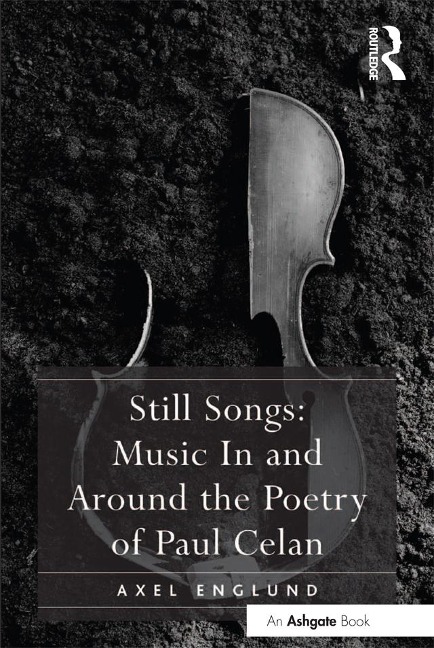
What does it mean for poetry and music to turn to each other, in the shadow of the Holocaust, as a means of aesthetic self-reflection? How can their mutual mirroring, of such paramount importance to German Romanticism, be reconfigured to retain its validity after the Second World War? These are the core questions of Axel Englund's book, which is the first to address the topic of Paul Celan and music. Celan, a Jewish Holocaust survivor who has long been recognized as one of the most important poets of the German language, persistently evoked music and song in his oeuvre, from the juvenilia to the posthumous collections. Conversely, few post-war writers have inspired as large a body of contemporary music, including works by Harrison Birtwistle, György Kurtág, Wolfgang Rihm, Peter Ruzicka and many others. Through rich close readings of poems and musical compositions, Englund's book engages the artistic media in a critical dialogue about the conditions of their existence. In so doing, it reveals their intersection as a site of profound conflict, where the very possibility of musical and poetic meaning is at stake, and confrontations of aesthetic transcendentality and historical remembrance are played out in the wake of twentieth-century trauma.
Axel Englund is Associate Professor of Literature at Stockholm University, Sweden. His research is primarily concerned with interrelations between the arts and media, in particular the music and poetry of the modernist era. His other fields of interest include twentieth-century exile literature, concepts of aesthetic authenticity, and representations of gender and sexuality in opera. In 2011, Englund was an Anna Lindh Fellow at Stanford University (Freeman Spogli Institute of International Studies) and he has held visiting scholarships at Columbia University (Department of Germanic Languages and Literatures) and Freie Universität Berlin (Institut für Theaterwissenschaft).
Introduction; Chapter 1 Play Death Sweeter: Musicality, Metaphoricity, Murder; Chapter 2 Fire in the Harp, in her Hair: The Lied and the Lullaby; Chapter 3 Rises and Plays: Interruptive Repetition and the Law of Musical Purity; Chapter 4 Into You, Into You I Sing: Spasmodic Speech and the Borders of the Human Body; Chapter 5 We Resound: Music In and Beyond the First Person Plural; Chapter 6 Shattered the Songs: Dissonances of a German-Jewish Musicality;
Dieses eBook wird im PDF-Format geliefert und ist mit einem Adobe Kopierschutz (DRM) versehen. Sie können dieses eBook mit allen Geräten lesen, die das PDF-Format und den Adobe Kopierschutz (DRM) unterstützen.
Zum Beispiel mit den folgenden Geräten:
• tolino Reader
Laden Sie das eBook direkt über den Reader-Shop auf dem tolino herunter oder übertragen Sie das eBook auf Ihren tolino mit einer kostenlosen Software wie beispielsweise Adobe Digital Editions.
• Sony Reader & andere eBook Reader
Laden Sie das eBook direkt über den Reader-Shop herunter oder übertragen Sie das eBook mit der kostenlosen Software Sony READER FOR PC/Mac oder Adobe Digital Editions auf ein Standard-Lesegeräte mit epub- und Adobe DRM-Unterstützung.
• Tablets & Smartphones
Möchten Sie dieses eBook auf Ihrem Smartphone oder Tablet lesen, finden Sie hier unsere kostenlose Lese-App für iPhone/iPad und Android Smartphone/Tablets.
• PC & Mac
Lesen Sie das eBook direkt nach dem Herunterladen mit einer kostenlosen Lesesoftware, beispielsweise Adobe Digital Editions, Sony READER FOR PC/Mac oder direkt über Ihre eBook-Bibliothek in Ihrem Konto unter „Meine eBooks“ - „online lesen“.
Schalten Sie das eBook mit Ihrer persönlichen Adobe ID auf bis zu sechs Geräten gleichzeitig frei.
Bitte beachten Sie, dass die Kindle-Geräte das Format nicht unterstützen und dieses eBook somit nicht auf Kindle-Geräten lesbar ist.