Und dann auf "Zum Home-Bildschirm [+]".

Stöbern
genialokal zum Startbildschirm hinzufügen
Installieren Sie die genialokal App auf Ihrem Startbildschirm für einen schnellen Zugriff und eine komfortable Nutzung.
Installieren Sie die genialokal App auf Ihrem Startbildschirm für einen schnellen Zugriff und eine komfortable Nutzung.



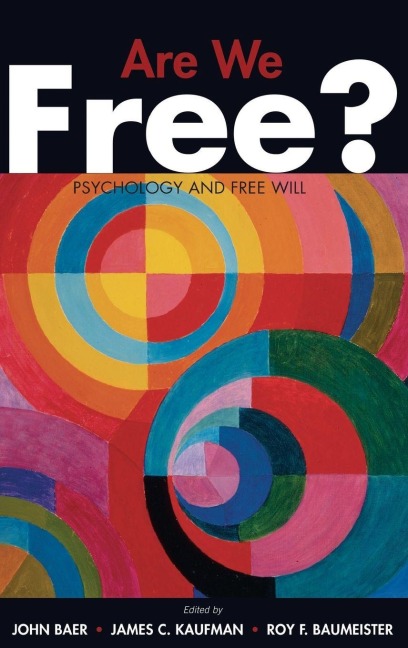
Do people have free will, or this universal belief an illusion? If free will is more than an illusion, what kind of free will do people have? How can free will influence behavior? Can free will be studied, verified, and understood scientifically? How and why might a sense of free will have evolved? These are a few of the questions this book attempts to answer.
People generally act as though they believe in their own free will: they don't feel like automatons, and they don't treat one another as they might treat robots. While acknowledging many constraints and influences on behavior, people nonetheless act as if they (and their neighbors) are largely in control of many if not most of the decisions they make. Belief in free will also underpins the sense that people are responsible for their actions. Psychological explanations of behavior rarely mention free will as a factor, however. Can psychological science find room for free will? How do leading psychologists conceptualize free will, and what role do they believe free will plays in shaping behavior?
In recent years a number of psychologists have tried to solve one or more of the puzzles surrounding free will. This book looks both at recent experimental and theoretical work directly related to free will and at ways leading psychologists from all branches of psychology deal with the philosophical problems long associated with the question of free will, such as the relationship between determinism and free will and the importance of consciousness in free will. It also includes commentaries by leading philosophers on what psychologists can contribute to long-running philosophical struggles with this most distinctly human belief. These essays should be of interest not only to social scientists, but to intelligent and thoughtful readers everywhere.
- 1: John Baer, James C. Kaufman, and Roy F. Baumeister: Introduction: Psychology and Free Will
- 2: Shaun Nichols: How Can Psychology Contribute to the Free Will Debate?
- 3: David G. Myers: Determined and Free
- 4: Carol S. Dweck and Daniel C. Molden: Self-Theories: The Construction of Free Will
- 5: Roy F. Baumeister: Free Will, Consciousness, and Cultural Animals
- 6: Albert Bandura: Reconstrual of "Free Will" from the Agentic Perspective of Social Cognitive Theory
- 7: John A. Bargh: Free Will is Un-natural
- 8: John F. Kihlstrom: The Automaticity Juggernaut - or, Are We Automatons After All?
- 9: Azim F. Shariff, Jonathan Schooler, Kathleen D. Vohs: The Hazards of Claiming to Have Solved the Hard Problem of Free Will
- 10: Henry L. Roediger III, Michael K. Goode, Franklin M. Zaromb: Free Will and the Control of Action
- 11: Daniel M. Wegner: Self is Magic
- 12: Daniel C. Dennett: Some Observations on the Psychology of Thinking about Free Will
- 13: George S. Howard: Whose will? How free?
- 14: William R. Miller and David J. Atencio: Free Will as a Proportion of Variance
- 15: Dean Keith Simonton: Willing Creation: The Yin and Yang of the Creative Life
- 16: John Baer: Free Will Requires Determinism
- 17: Steven Pinker: The Fear of Determinism
- 18: Alfred R. Mele: Psychology and Free Will: A Commentary