Und dann auf "Zum Home-Bildschirm [+]".

Stöbern
genialokal zum Startbildschirm hinzufügen
Installieren Sie die genialokal App auf Ihrem Startbildschirm für einen schnellen Zugriff und eine komfortable Nutzung.
Installieren Sie die genialokal App auf Ihrem Startbildschirm für einen schnellen Zugriff und eine komfortable Nutzung.
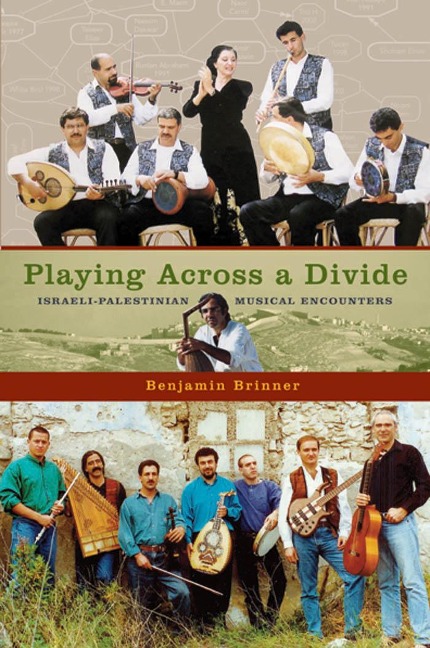
In the last decade of the twentieth century and on into the twenty-first, Israelis and Palestinians saw the signing of the Oslo Peace Accords, the establishment of the Palestinian Authority, the assassination of Israeli Prime Minister Yitzhak Rabin, and the escalation of suicide bombings and retaliations in the region. During this tumultuous time, numerous collaborations between Israeli and Palestinian musicians coalesced into a significant musical scene informed by these extremes of hope and despair on both national and personal levels. Following the bands Bustan Abraham and Alei Hazayit from their creation and throughout their careers, as well as the collaborative projects of Israeli artist Yair Dalal, Playing Across a Divide demonstrates the possibility of musical alternatives to violent conflict and hatred in an intensely contested, multicultural environment. These artists' music drew from Western, Middle Eastern, Central Asian, and Afro-diasporic musical practices, bridging differences and finding innovative solutions to the problems inherent in combining disparate musical styles and sources. Creating this new music brought to the forefront the musicians' contrasting assumptions about sound production, melody, rhythm, hybridity, ensemble interaction, and improvisation. Author Benjamin Brinner traces the tightly interconnected field of musicians and the people and institutions that supported them as they and their music circulated within the region and along international circuits. Brinner argues that the linking of Jewish and Arab musicians' networks, the creation of new musical means of expression, and the repeated enactment of culturally productive musical alliances provide a unique model for mutually respectful and beneficial coexistence in a chronically disputed land.
Benjamin Brinner is Professor in the Department of Music, U.C. Berkeley, and winner of ASCAP's Deems Taylor Award for Knowing Music, Making Music. He has studied and taught music in the U.S. and Israel, and conducted research in Indonesia and Israel.
Part 1: Setting the Stage Chapter 1. First Encounters Chapter 2. Arab Musicians in Israel and the West Bank Chapter 3. Israeli Musical Life Part 2: Musicians, Bands, Networks Chapter 4. Alei Hazayit Chapter 5. Bustan Abraham Chapter 6. Interaction in Two Small Networks Chapter 7. Riding the Peace Train - Yair Dalal Chapter 8. A Larger Network - The Ethnic Music Scene in Israel Part 3: New Forms of Musical Expression Chapter 9. Musical Mixtures -Fusion of Styles and Styles of Fusion Chapter 10. Composition, Improvisation, Performance Part 4: Roots & Routes Chapter 11. Representations of Place and Time Chapter 12. Roots in the Past, Routes to the Future References Discography Videography List of figures Audio Recordings Glossary
Dieses eBook wird im PDF-Format geliefert und ist mit einem Adobe Kopierschutz (DRM) versehen. Sie können dieses eBook mit allen Geräten lesen, die das PDF-Format und den Adobe Kopierschutz (DRM) unterstützen.
Zum Beispiel mit den folgenden Geräten:
• tolino Reader
Laden Sie das eBook direkt über den Reader-Shop auf dem tolino herunter oder übertragen Sie das eBook auf Ihren tolino mit einer kostenlosen Software wie beispielsweise Adobe Digital Editions.
• Sony Reader & andere eBook Reader
Laden Sie das eBook direkt über den Reader-Shop herunter oder übertragen Sie das eBook mit der kostenlosen Software Sony READER FOR PC/Mac oder Adobe Digital Editions auf ein Standard-Lesegeräte mit epub- und Adobe DRM-Unterstützung.
• Tablets & Smartphones
Möchten Sie dieses eBook auf Ihrem Smartphone oder Tablet lesen, finden Sie hier unsere kostenlose Lese-App für iPhone/iPad und Android Smartphone/Tablets.
• PC & Mac
Lesen Sie das eBook direkt nach dem Herunterladen mit einer kostenlosen Lesesoftware, beispielsweise Adobe Digital Editions, Sony READER FOR PC/Mac oder direkt über Ihre eBook-Bibliothek in Ihrem Konto unter „Meine eBooks“ - „online lesen“.
Schalten Sie das eBook mit Ihrer persönlichen Adobe ID auf bis zu sechs Geräten gleichzeitig frei.
Bitte beachten Sie, dass die Kindle-Geräte das Format nicht unterstützen und dieses eBook somit nicht auf Kindle-Geräten lesbar ist.