Und dann auf "Zum Home-Bildschirm [+]".

Stöbern
genialokal zum Startbildschirm hinzufügen
Installieren Sie die genialokal App auf Ihrem Startbildschirm für einen schnellen Zugriff und eine komfortable Nutzung.
Installieren Sie die genialokal App auf Ihrem Startbildschirm für einen schnellen Zugriff und eine komfortable Nutzung.



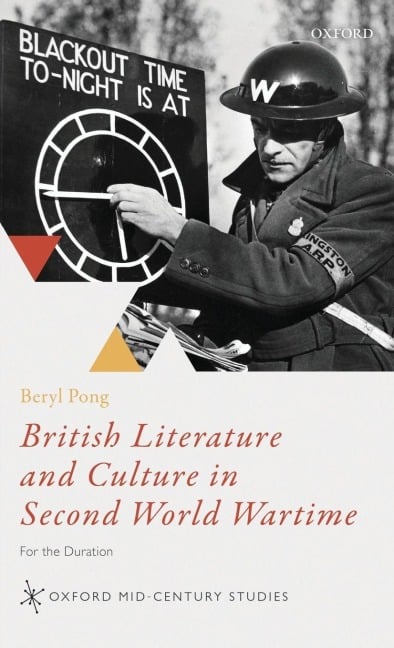
British Literature and Culture in Second World Wartime excavates British late modernism's relationship to war in terms of chronophobia: a joint fear of the past and future. As a wartime between, but distinct from, those of the First World War and the Cold War, Second World wartime involves an anxiety that is both repetition and imaginary: both a dread of past violence unleashed anew, and that of a future violence still ungraspable. Identifying a constellation of temporalities and affects under three tropes--time capsules, time zones, and ruins--this volume contends that Second World wartime is a pivotal moment when wartime surpassed the boundaries of a specific state of emergency, becoming first routine and then open-ended. It offers a synoptic, wide-ranging look at writers on the home front, including Henry Green, Elizabeth Bowen, Virginia Woolf, and Rose Macaulay, through a variety of genres, such as life-writing, the novel, and the short story. It also considers an array of cultural and archival material from photographers such as Cecil Beaton, filmmakers such as Charles Crichton, and artists such as John Minton. It shows how figures harnessed or exploited their media's temporal properties to formally register the distinctiveness of this wartime through a complex feedback between anticipation and retrospection, oftentimes fashioning the war as a memory, even while it was taking place. While offering a strong foundation for new readers of the mid-century, the book's overall theoretical focus on chronophobia will be an important intervention for those already working in the field.
Beryl Pong is a Vice-Chancellor's Fellow at the University of Sheffield.
- Introduction: Late Modernist Chronophobia
- Part I: Blitz-Time Capsules
- 1: Wartime Presentness
- 2: Psychological Blackout
- 3: Stopped Clocks
- Part II: War Time Zones
- 4: The Neutral Hour
- 5: La France à l'heure Anglaise
- 6: The Ecology of English Time
- Part III: The Temporality of Ruins
- 7: The Archaeology of Ruin-Time
- 8: Children of the Ruins
- 9: The Literary Cartography of Ruins
- Coda