Und dann auf "Zum Home-Bildschirm [+]".

Stöbern
genialokal zum Startbildschirm hinzufügen
Installieren Sie die genialokal App auf Ihrem Startbildschirm für einen schnellen Zugriff und eine komfortable Nutzung.
Installieren Sie die genialokal App auf Ihrem Startbildschirm für einen schnellen Zugriff und eine komfortable Nutzung.
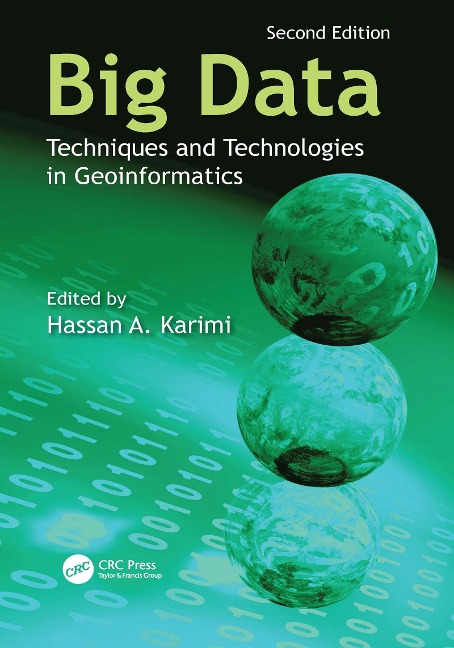
Over the past decade, since the publication of the first edition, there have been new advances in solving complex geoinformatics problems. Advancements in computing power, computing platforms, mathematical models, statistical models, geospatial algorithms, and the availability of data in various domains, among other things, have aided in the automation of complex real-world tasks and decision-making that inherently rely on geospatial data. Of the many fields benefiting from these latest advancements, machine learning, particularly deep learning, virtual reality, and game engine, have increasingly gained the interest of many researchers and practitioners. This revised new edition provides up-to-date knowledge on the latest developments related to these three fields for solving geoinformatics problems. FEATURES - Contains a comprehensive collection of advanced big data approaches, techniques, and technologies for geoinformatics problems - Provides seven new chapters on deep learning models, algorithms, and structures, including a new chapter on how spatial metaverse is used to build immersive realistic virtual experiences - Presents information on how deep learning is used for solving real-world geoinformatics problems This book is intended for researchers, academics, professionals, and students in such fields as computing and information, civil and environmental engineering, environmental sciences, geosciences, geology, geography, and urban studies.
Hassan A. Karimi is a Professor and the Director of the Geoinformatics Laboratory in the School of Computing and Information at the University of Pittsburgh. He earned a PhD in geomatics engineering at the University of Calgary. Dr. Karimi's research interests include computational geometry and topology, machine learning, spatial data analytics, navigation techniques and applications, location-based services, mobile computing, and distributed/parallel computing. His research in geoinformatics has resulted in over 230 publications in peer-reviewed journals and conference proceedings, as well as in many workshops and presentations at national and international forums. Dr. Karimi has published the following books with Taylor & Francis: Geospatial Data Science Techniques and Applications (2018), Indoor Wayfinding and Navigation (2015), Big Data: Techniques and Technologies in Geoinformatics (2014), Advanced Location-Based Technologies and Services (2013), CAD and GIS Integration (2010), and Telegeoinformatics: Location-Based Computing and Services (2004). He has published Universal Navigation on Smartphones (2011) with Springer and Handbook of Research on Geoinformatics (2009) with IGI.
1. Distributed and Parallel Computing. 2. GEOSS Clearinghouse Integrating Geospatial Resources to Support the Global Earth Observation System of Systems. 3. Using a Cloud Computing Environment to Process Large 3D Spatial Datasets. 4. Building Open Environments to Meet Big Data Challenges in Earth Sciences. 5. Developing Online Visualization and Analysis Services for NASA Satellite-Derived Global Precipitation Products during the Big Geospatial Data Era. 6. Algorithmic Design Considerations for Geospatial and/or Temporal Big Data. 7. Machine Learning on Geospatial Big Data. 8. Spatial Big Data: Case Studies on Volume, Velocity, and Variety. 9. Exploiting Big VGI to Improve Routing and Navigation Services. 10. Efficient Frequent Sequence Mining on Taxi Trip Records Using Road Network Shortcuts. 11. Geoinformatics and Social Media: New Big Data Challenge. 12. Insights and Knowledge Discovery from Big Geospatial Data Using TMC-Pattern. 13. Geospatial Cyberinfrastructure for Addressing the Big Data Challenges on the Worldwide Sensor Web. 14. OGC Standards and Geospatial Big Data. 15. Advanced Deep Learning Models and Algorithms for Spatial-Temporal Data. 16. Deep Learning for Spatial Data: Heterogeneity and Adaptation. 17. Assessing Multilevel Environmental and Air Quality Changes in Australia Pre- and Post-COVID-19 Lockdown: A Spatial Machine Learning Approach Utilizing Earth Observation Data. 18. Fairness-Aware Deep Learning in Space. 19. Integrating Large Language Models and Qualitative Spatial Reasoning. 20. Toward a Spatial Metaverse: Building Immersive Virtual Experiences with Georeferenced Digital Twin and Game Engine. 21. A Topological Machine Learning Approach with Multichannel Integration for Detecting Geospatial Objects.
Dieses eBook wird im PDF-Format geliefert und ist mit einem Adobe Kopierschutz (DRM) versehen. Sie können dieses eBook mit allen Geräten lesen, die das PDF-Format und den Adobe Kopierschutz (DRM) unterstützen.
Zum Beispiel mit den folgenden Geräten:
• tolino Reader
Laden Sie das eBook direkt über den Reader-Shop auf dem tolino herunter oder übertragen Sie das eBook auf Ihren tolino mit einer kostenlosen Software wie beispielsweise Adobe Digital Editions.
• Sony Reader & andere eBook Reader
Laden Sie das eBook direkt über den Reader-Shop herunter oder übertragen Sie das eBook mit der kostenlosen Software Sony READER FOR PC/Mac oder Adobe Digital Editions auf ein Standard-Lesegeräte mit epub- und Adobe DRM-Unterstützung.
• Tablets & Smartphones
Möchten Sie dieses eBook auf Ihrem Smartphone oder Tablet lesen, finden Sie hier unsere kostenlose Lese-App für iPhone/iPad und Android Smartphone/Tablets.
• PC & Mac
Lesen Sie das eBook direkt nach dem Herunterladen mit einer kostenlosen Lesesoftware, beispielsweise Adobe Digital Editions, Sony READER FOR PC/Mac oder direkt über Ihre eBook-Bibliothek in Ihrem Konto unter „Meine eBooks“ - „online lesen“.
Schalten Sie das eBook mit Ihrer persönlichen Adobe ID auf bis zu sechs Geräten gleichzeitig frei.
Bitte beachten Sie, dass die Kindle-Geräte das Format nicht unterstützen und dieses eBook somit nicht auf Kindle-Geräten lesbar ist.