Und dann auf "Zum Home-Bildschirm [+]".

Stöbern
genialokal zum Startbildschirm hinzufügen
Installieren Sie die genialokal App auf Ihrem Startbildschirm für einen schnellen Zugriff und eine komfortable Nutzung.
Installieren Sie die genialokal App auf Ihrem Startbildschirm für einen schnellen Zugriff und eine komfortable Nutzung.

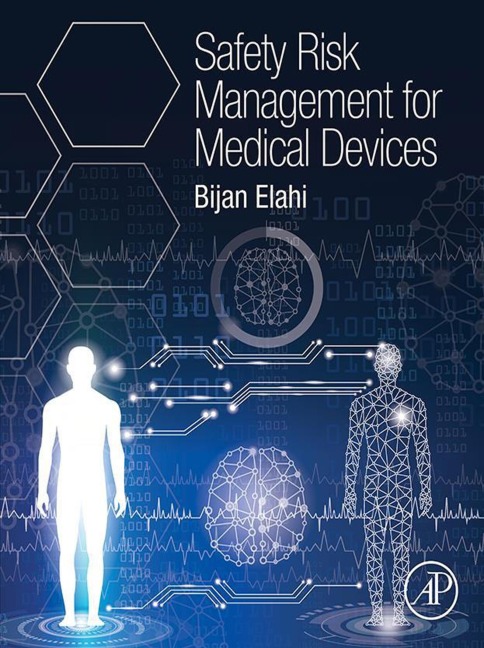
Safety Risk Management for Medical Devices demystifies risk management, providing clarity of thought and confidence to the practitioners of risk management as they do their work. Written with practicing engineers, safety management professionals, and students in mind, this book will help readers tackle the difficult questions, such as how to define risk acceptance criteria and how to determine when to stop risk reduction. This book delivers not only theory, but also practical guidance for applying the theory in daily risk management work. The reader is familiarized with the vocabulary of risk management and guided through a process to ensure compliance with the international standard ISO 14971-a requirement for all medical devices. This book outlines sensible, easily comprehensible, and state-of the-art methodologies that are rooted in current industry best practices. Opening chapters introduce the concept of risk, the legal basis for risk management, and the requirements for a compliant risk-management process. The next group of chapters discusses the connection between risk management and quality systems, usability engineering and biocompatibility. This book delves into the techniques of risk management, such as fault tree analysis and failure modes and effects analysis, and continues with risk estimation, risk control, and risk evaluation. Special topics such as software risk management, clinical investigations, and security are also discussed. The latter chapters address benefit-risk analysis, and production and postproduction monitoring. This book concludes with advice and wisdom for sensible, efficient, and successful safety risk management of medical devices.
- Teaches industry best practices on medical-device risk management in compliance with ISO 14971
- Provides practical, easy-to-understand, and step-by-step instructions on how to perform hazard analysis and manage the risks of medical devices
- Offers a worked-out example applying the risk management process on a hypothetical device
Bijan Elahi is an expert on a world scale in safety risk management for medical technology. Mr. Elahi's mission is to elevate knowledge and proficiency in medical device risk management to the highest levels worldwide via teaching, coaching, and mentoring, for the benefit of companies and society. He has 30+ years of experience in risk management, working with the largest medical device companies in the world, as well as with small start-ups. He is a lecturer at Eindhoven University of Technology (the Netherlands), where he teaches a graduate-level course in medical device risk management. The audience for this education is doctoral students in engineering as well as physicians and professionals in the medical device sector. Additionally, Mr. Elahi is a lecturer at Drexel University in Philadelphia (USA), and at Delft University of Technology (Netherlands). He is the recipient of the Educator of the Year Award by the International System Safety Society. In 2019 he received an award in recognition of Outstanding Development of Analytical Methods to Support Medical Device System Safety. Mr. Elahi has a long history of medical device development spanning class III implantable pulse generators, electro-mechanical, and disposable devices. His most recent product was a Deep Brain Stimulator (DBS) implant for Parkinson's disease. The knowledge that he imparts in his book is rooted in state-of-the-art practical knowledge in medical device development.Mr. Elahi is a Technical Fellow and a corporate advisor at Medtronic. In this role, he teaches and consults on medical device risk management to all Medtronic business units worldwide, including China, India, Middle East, Europe and North America. Mr. Elahi is a contributor to ISO 14971, and a member of the Editorial Board of the Journal of System Safety, a publication of the International System Safety Society. Mr. Elahi is a frequently invited speaker and lecturer at international conferences. Earlier in his distinguished career, he was a systems engineer on the Space Shuttle at NASA (USA). Mr. Elahi holds an MS Electrical Engineering degree from the University of Washington and a BS Aerospace Engineering degree from Iowa State University, United States.
1. Why do risk management?2. Fundamentals of risk management3. Understanding risk4. Risk Management standards5. Requirements of a compliant risk management process6. Quality management system7. Usability engineering and risk management8. Biocompatibility and risk management9. Risk management process10. Risk analysis techniques11. Safety vs. reliability12. Influence of security on safety13. Software risk management14. Integration of risk analyses15. Risk estimation16. Risk controls17. Risk evaluation18. Risk assessment and control table19. On testing20. Verification of risk controls21. Benefit-risk analysis22. Production and post-production monitoring23. Traceability24. Risk management for clinical investigations25. Risk management for legacy devices26. Relationship between ISO 14971 and other safety standards27. Risk management process metrics28. Risk management and product development process29. Critical thinking and risk management30. Advice and wisdom